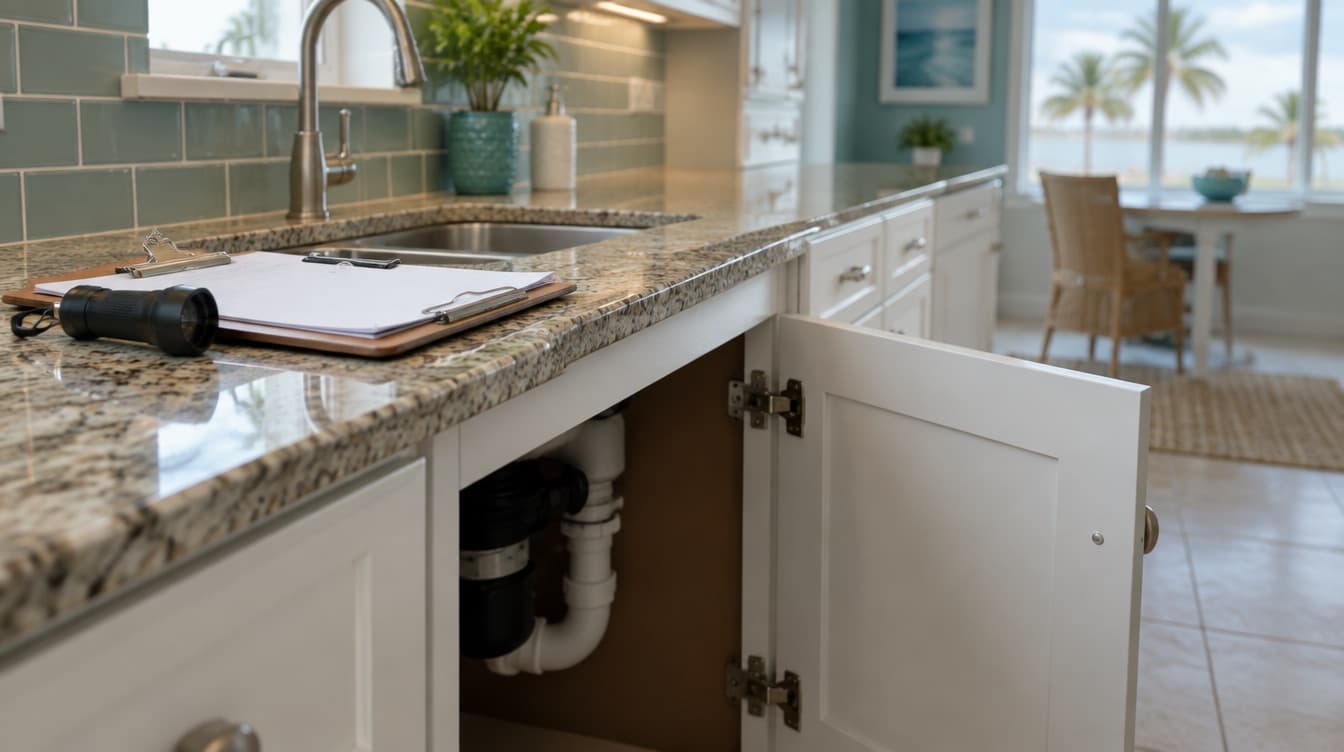
A home inspector can notice visible growth, staining, and moisture during a general home inspection and will usually note it as "possible microbial growth" with a recommendation for further evaluation, but a home inspector cannot perform a mold assessment, cannot sample for mold, and in Florida is not licensed to do either. Detecting that something is there and determining what it is, why it is there, and how far it goes are two different jobs.
That distinction confuses a lot of buyers, and it confuses some home inspectors too. In the contracts we get called into across the Treasure Coast and Palm Beach County, the phrase on the home inspection report is almost always the same, and the buyer's next question is almost always "so is there mold or not?" This note explains what a general home inspection can honestly tell you about mold, what it cannot, why the two licenses exist, and how to use a home inspector's findings well.
What can a home inspector tell you about mold?
A good home inspector can tell you that something looks like growth, that a surface is stained, that a material is wet, and that the conditions in the house are the kind that produce mold. That is real, valuable information, and it is the reason most mold assessments in a real estate transaction begin.
A home inspection is a visual, non invasive survey of the whole property against a standard of practice. The inspector is looking at the roof, the structure, the electrical, the plumbing, the air conditioning, the interior, and the exterior, with a limited amount of time in each. Many good home inspectors in this market carry a moisture meter and some carry a thermal camera, and they will use them on a stain if they see one. When they find visible growth on a bathroom ceiling, staining under a sink, a wet reading at a baseboard, or a musty odor in a closet, they document it and write a version of "possible microbial growth observed, recommend evaluation by a licensed mold assessor."
That sentence is the honest limit of their role, not a dodge. Our note on what "possible microbial growth" on a home inspection report actually means goes into how to read it.
What a home inspector is also well placed to notice, and what a thoughtful one will mention, are the conditions that produce mold in Florida homes even before growth appears. An air conditioning system that is clearly oversized for the house. A condensate line with no float switch and a stained air handler closet floor. Bathroom exhaust fans that terminate in the attic. Negative grading that pushes water toward the slab. Sweating ducts. A crawl space with no vapor barrier. Those observations often matter more to a buyer than the growth itself.
What can't a home inspector tell you about mold?
A home inspector cannot tell you whether the growth is mold, what kind it is, whether it is active, how far it extends beyond what is visible, what the moisture source is when it is not obvious, or what it will take to fix, and cannot legally take a sample or write a mold assessment for a fee in Florida.
Each of those limits is a real gap for a buyer. Whether something is mold rather than dust, soot, or mineral staining is settled by a laboratory, not by looking. What kind it is matters when a seller is going to be asked to remediate or when someone in the household is sensitive, because the water damage indicator genera tell a different story than common outdoor types. Whether it is active is a moisture question that takes readings across the area and a comparison to dry reference points. How far it extends usually means the wall cavity, the space under the flooring, or the inside of the air handler, none of which a home inspection opens or explores. And the moisture source, which is the only thing that actually gets fixed, often takes a dedicated investigation to find.
There is also a legal boundary. Florida licenses mold assessors separately from home inspectors and requires the mold assessor license for anyone who performs a mold assessment for a fee. A home inspector who takes air samples, writes up spore counts, and calls it part of the home inspection is operating outside that license unless they also hold the assessor credential, and some do. The Florida mold licensing explained guide covers what each license permits. If your home inspector offers to add mold testing to the inspection for an extra fee, ask for the assessor license number and verify it on the state's search using the steps on our verify my license page.
The other thing a home inspector's mold note cannot do is tell you how worried to be. The phrase "possible microbial growth" attached to a small patch on a shower ceiling and the same phrase attached to a wet, staining wall cavity below a leaking window carry the same weight on the report, and only a dedicated look separates them.
Why are home inspections and mold assessments separate?
Because they answer different questions with different methods, and because Florida decided the person diagnosing mold should be licensed specifically for it and kept separate from the person profiting from its cleanup.
A home inspection asks "what is the condition of this house across every system?" It is broad by design and it is time limited. A mold assessment asks "where is the moisture, what has it done, and what should happen next?" It is narrow and deep. The assessor spends the whole visit on that one question, walks every room with a moisture meter and a thermal camera, records the indoor and outdoor humidity and temperature, examines the air handler and the ductwork closely, enters the attic where it can be entered, and decides, for a reason, whether laboratory sampling will answer something the inspection cannot. The report is a moisture investigation, not a checklist. Our overview of what a mold inspection includes in Florida describes the full scope.
The licensing separation carries a second purpose. Florida's mold statute prohibits a licensed assessor from performing remediation on a property they assessed within the previous twelve months and bans referral fees between assessors and remediators. The intent is that the diagnosis has no financial stake in the size of the problem. The Florida mold law page quotes the statute and explains each paragraph. When you are choosing who to call after a home inspector flags something, that independence is the thing to check first.
When a home inspector's mold note means you should act
Act when the note is attached to a moisture finding, an odor, a history, or a location that matters, and act early enough in the inspection period that a laboratory result can come back before your deadline.
A note about surface growth on a bathroom ceiling above a shower with a working fan is usually a cleaning and ventilation item, and a buyer can reasonably handle it without a separate assessment. A note about growth or staining anywhere with a wet moisture reading, growth in a closet on an exterior wall, growth or staining around the air handler, a musty odor the inspector mentioned, staining below a window on the weather side of the house, or any note paired with a seller disclosure of a past leak or remediation is a reason to bring in an assessor before the inspection period ends. The decision framework is laid out in our note on whether you need a mold inspection when buying a home.
Timing matters more than most buyers expect. The home inspection usually happens in the first few days of the contract, the report follows a day or two later, and only then do most buyers start looking for a mold assessor. If samples are taken, the lab commonly needs several business days and can take longer. If the contract gives you ten days, that math is tight. The fix is to call an assessor as soon as the home inspector mentions moisture during the walkthrough, rather than waiting for the written report, and to tell the assessor the deadline so the sampling decision can account for it.
How a mold assessor uses the home inspection report
As a map. A good home inspection report tells the assessor where to look first, what the house's systems are doing, and what the seller has already been told.
When we are called into a purchase, we ask for the home inspection report and the seller's disclosure before we arrive. The report tells us where the inspector saw staining, what the air conditioning looked like, whether the attic was entered, and whether any moisture readings were taken. The disclosure tells us what the seller admits to. We then inspect the whole house anyway, because the second problem is rarely where the first one was flagged, but we go into the flagged areas with instruments and with the specific question of whether the condition is active, how far it goes, and what is causing it.
The report we write back is built for the contract. It documents what was found, where, with moisture readings and labeled photographs, states what the source is or what it will take to find it, and lays out next steps in order, so that it can go to the seller's agent, to a remediator for a bid, or to your attorney without you having to interpret it. If sampling was warranted it comes with the chain of custody, the lab result, and a written interpretation. If sampling was not warranted, the report says so, which is its own kind of clean document for your file. Sterling's assessor has personally completed more than three hundred inspections since January 2026, many of them inside real estate contracts, and the real estate mold inspection page describes how we handle the timeline.
What to ask a home inspector about moisture before you hire one
Ask whether the inspector carries a moisture meter and a thermal camera, whether the attic is entered rather than viewed from the hatch, whether the air handler closet and condensate line are examined, and whether bathroom exhaust fans are traced to where they terminate. Those four questions predict how useful the mold portion of the report will be.
A home inspector who does all four will catch most of what a buyer needs to know about moisture, and their note will point an assessor to the right place. A home inspector who does none of them will still produce a report with a mold sentence in it, but the sentence will be about what happened to be visible from the middle of the room. In the Treasure Coast homes we inspect after a purchase closed, the problems that were missed were almost never in the middle of the room. They were in the attic above the bathroom, in the closet behind the clothes, on the floor of the air handler cabinet, and at the base of the wall behind the sofa on the weather side of the house. The instruments and the willingness to open the hatch are what find them, and they are worth asking about before the inspection is booked rather than after the report arrives.
What to do next
If you have a home inspection report in hand with a mold or moisture note on it, read the note for the location and for whether a moisture reading was taken. Check it against the seller's disclosure. Walk the house again if you can and look at the flagged spot and at the closets, the sinks, and the air handler closet. If the note involves anything beyond a surface condition on a bathroom ceiling, call a licensed assessor now and give them the deadline.
If you are choosing a home inspector and have not yet, ask whether they carry a moisture meter and a thermal camera and whether they enter attics. Those three answers will tell you a lot about how much their mold note will be worth.
And if you would like an independent look at a purchase anywhere from Vero Beach to Boca Raton, the process page describes the visit and you can request a quote with the address and the contract deadline. If Sterling inspects the house, Florida law bars us from remediating it for twelve months, and we take no referral fees, which means the report can say the home inspector's note was a bathroom fan, when that is what it turns out to be.
Frequently asked questions
Can a home inspector detect mold?
A home inspector can observe visible growth, staining, moisture readings, and musty odors during a general inspection and will note them as possible microbial growth with a recommendation for further evaluation. A home inspector cannot determine whether the growth is mold, what kind it is, how far it extends, or what the moisture source is, and in Florida cannot take samples or write a mold assessment without a separate mold assessor license.
Does a home inspection include mold testing?
No. A standard home inspection is a visual survey of the property's systems and does not include mold sampling or a mold assessment. Some home inspectors also hold a Florida mold assessor license and offer testing as a separate service, which you can verify by checking the license number on the state's public search. Otherwise, mold testing is a separate engagement with a licensed assessor.
What should I do if the home inspector found possible mold?
Read where the note is attached and whether a moisture reading was taken, compare it with the seller's disclosure, and decide quickly. Surface growth on a bathroom ceiling with a working fan is usually a cleaning item. Growth or staining with a wet reading, in a closet on an exterior wall, near the air handler, below a window, or paired with a disclosed leak is a reason to have a licensed mold assessor inspect before the inspection period ends.