Water Damage Restoration
Water extraction and structural drying, measured until it's actually dry.
Short answer
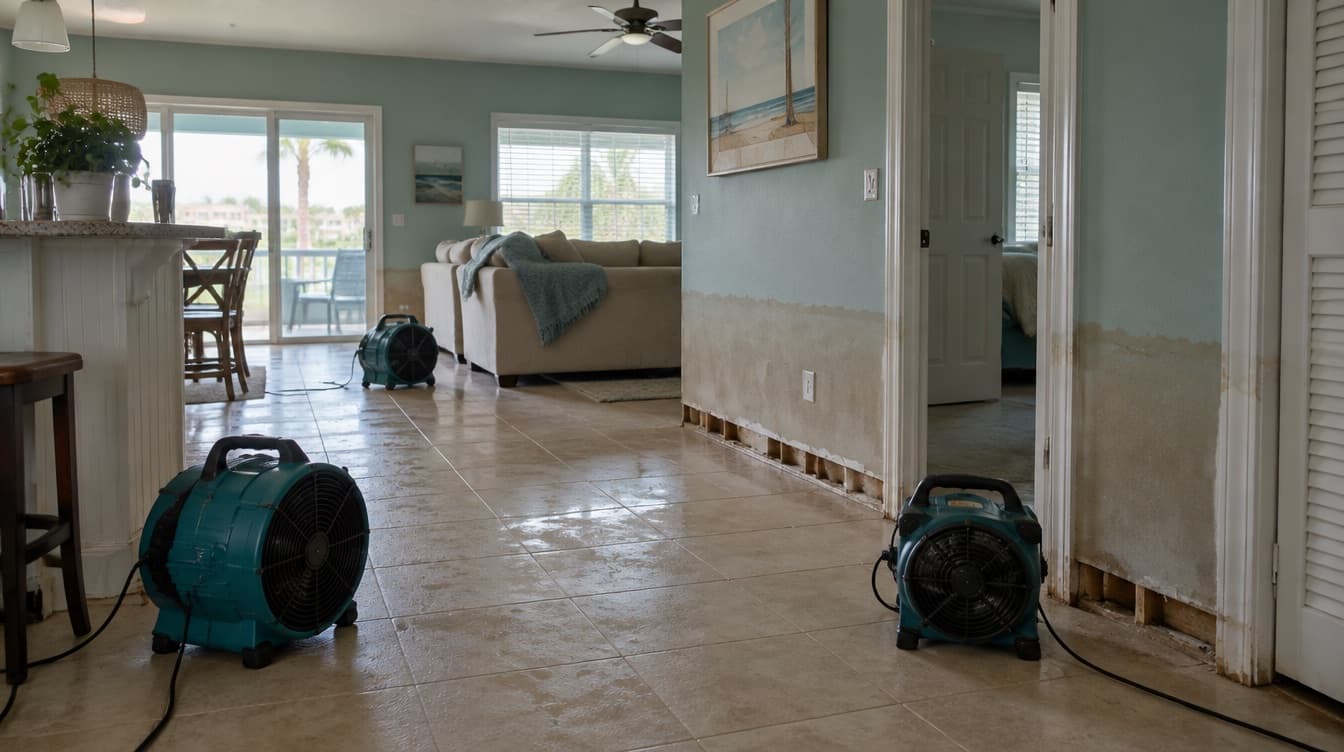
Water damage restoration starts with getting the water out and drying the structure before mold starts. Sterling answers every day from 7 AM to midnight, extracts standing water, removes materials that can't be saved, and sets commercial dehumidifiers and air movers, then takes moisture readings daily until materials reach their dry goal. The work follows IICRC S500.
Also called: water mitigation, water extraction, water removal, water damage cleanup, structural drying
What this service addresses
- Standing water on floors and in carpet
- Wet drywall, baseboards, and cabinets
- Water trapped under flooring and inside wall cavities
- Humidity in the affected rooms
- Where the water came from and how far it traveled
Who needs it
- Anyone with standing water from a burst pipe, supply line, or water heater
- Homes with an AC or condensate leak that soaked a ceiling or floor
- Homes where a roof leak or storm water got into the walls
- Anyone filing an insurance claim who needs the loss documented
- FL Licensed Mold Assessor · MRSA5798
- FL Licensed Mold Remediator · MRSR5761
- IICRC Certified Water Restoration Tech
- NORMI-Certified Assessor & Remediator
- Insured · GL + E&O
- Independent Inspections · FL 12-Month Rule
Why the first 48 hours matter
EPA guidance is to dry water-damaged materials within 24 to 48 hours to keep mold from growing. In a Florida house, where the indoor air is humid most of the year, that window is real. The fastest way to protect the house is to get the water out and the drying started the same day.
Drying is measured, not guessed. Every material gets a dry reference, read from an unaffected area of the same house. We read the wet areas against it every day, and the job is done when they match.
Documented from the first photo
Before anything is removed, we photograph the damage and map the wet areas. Then we record moisture readings every day until the materials match their dry reference. That's the record an adjuster reviews, and it's yours whether or not you file a claim.
What's included — and what isn't
Clear scope, honestly stated.
Included
- Emergency response every day, 7 AM to midnight
- Water extraction from floors, carpet, and pad
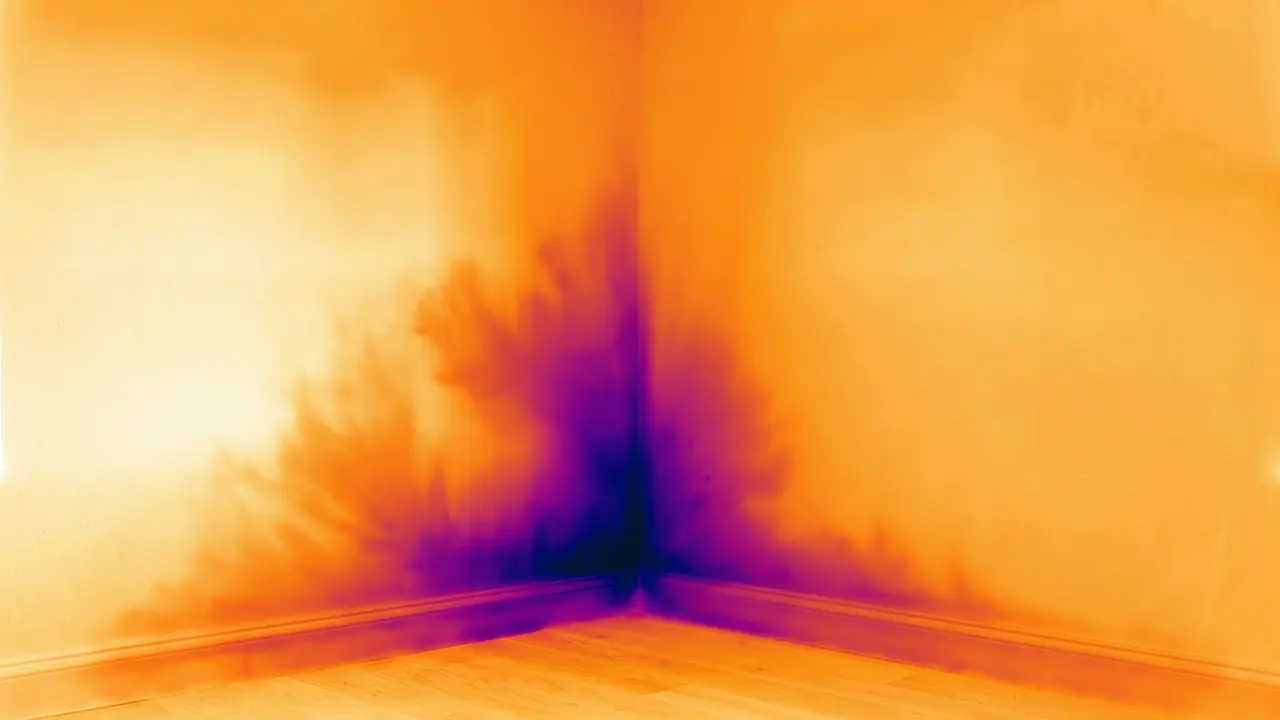
- Moisture mapping with meters and thermal imaging to find where the water went
- Removal of what can't be dried or saved, such as saturated pad or swollen baseboards
- Flood cuts in drywall where wall cavities have to dry
- Commercial dehumidifiers and air movers
- Daily moisture readings until materials reach their dry goal
- Photos, moisture readings, and daily drying records for your insurance claim
Not included
- Fixing the pipe, roof, or appliance that leaked, which needs a plumber, roofer, or appliance technician
- Rebuild (new drywall, paint, flooring, cabinets), which isn't part of the drying estimate
- Mold growth that has already started, which is remediation and quoted separately
A calm, methodical process.
Step 1: Respond
Call (786) 690-0329 any time. We make sure the water is stopped, or tell you how to shut it off, and head out.
Step 2: Extract
Standing water comes out first, from floors, carpet, and pad.
Step 3: Map
Meters and thermal imaging show where the water went, including behind walls and under floors.
Step 4: Remove
Materials that can't be saved come out, and drywall is cut where cavities need to dry.
Step 5: Dry
Dehumidifiers and air movers are placed for the rooms and materials involved.
Step 6: Monitor
We read moisture every day and pull equipment when the materials reach their dry goal.
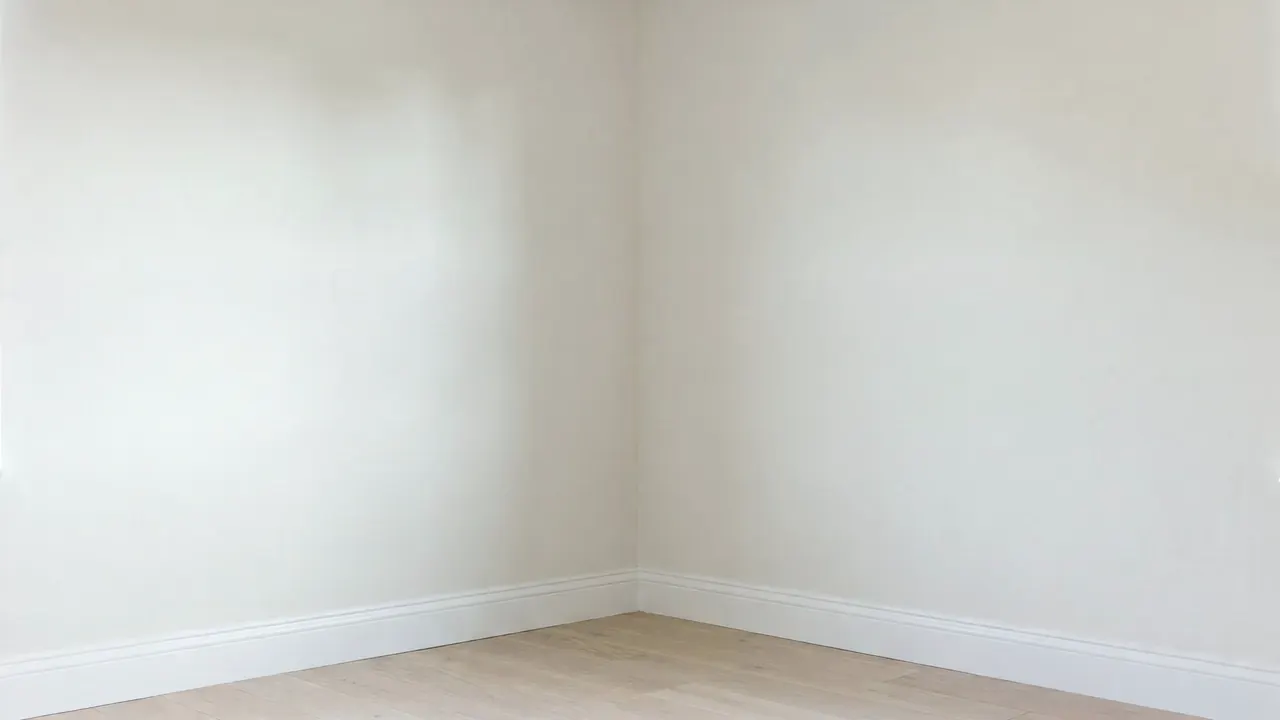
Thermal imaging reveals hidden moisture.
Drag the slider — infrared exposes the cold signature of moisture behind a wall that looks perfectly normal. It's the difference between guessing and knowing.
Methods & equipment
- IICRC S500 procedures
- Water extraction equipment
- Commercial dehumidifiers and air movers
- Pin and pinless moisture meters
- Thermal imaging
- Hygrometers for daily humidity readings
What you receive
- Photos of the damage and the work
- A map of the wet areas
- Daily drying records
- A written, itemized invoice
Typical timing
We answer every day from 7 AM to midnight. How long drying takes depends on how much water, which materials, and how long it sat; we measure every day and stop when the readings say dry, not on a fixed schedule.
Pricing
Quoted on site
Emergency jobs are quoted on site. Every job comes with the photos, moisture readings, and daily drying records adjusters ask for.
Financing is available for mold remediation and water damage work; ask about it with your free on-site estimate.
Water Damage Restoration — questions
Every day, 7 AM to midnight, at (786) 690-0329. If water is still running outside those hours, shut it off at the fixture or the main valve and call first thing.
You may also need
Sewage Cleanup
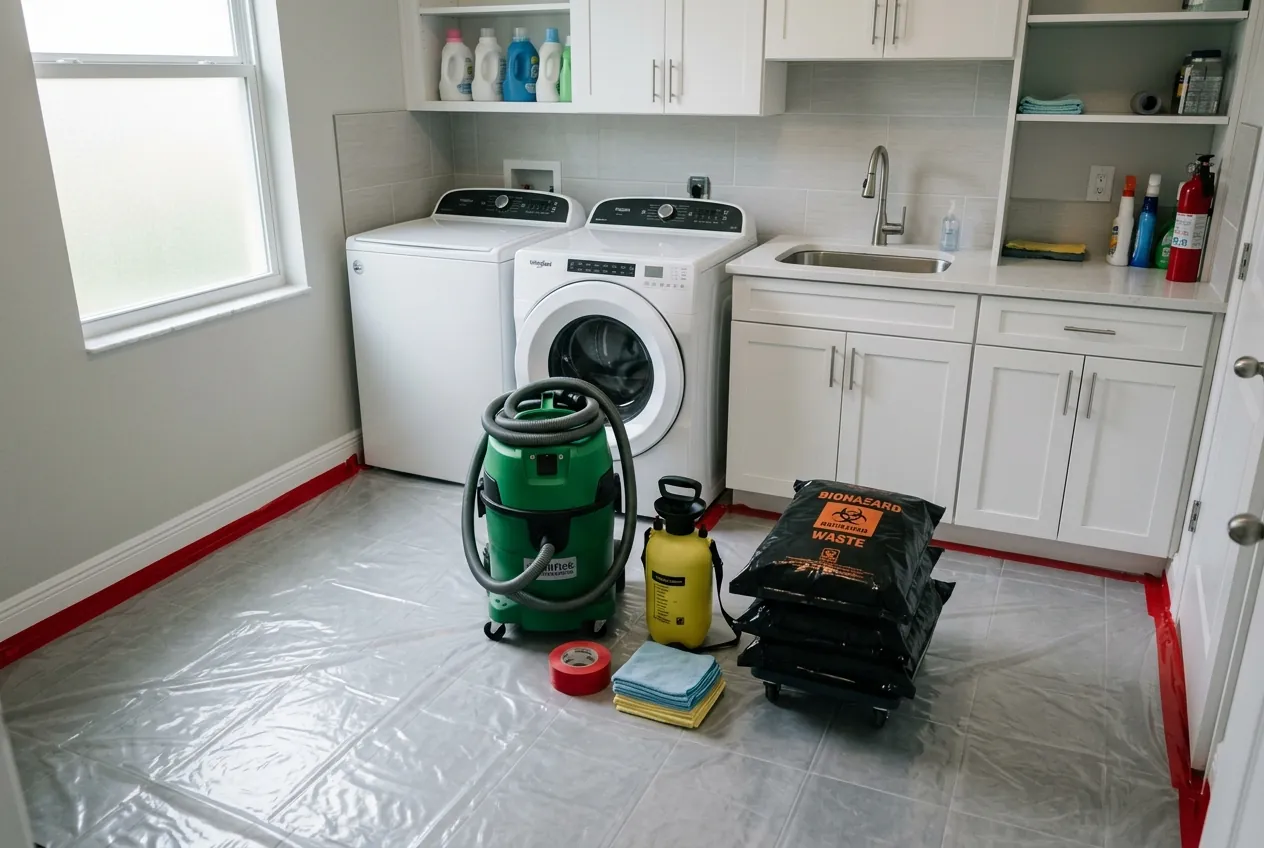
Cleanup of sewage backups and toilet overflows: containment, removal of contaminated materials, cleaning, antimicrobial treatment, and drying.
Learn more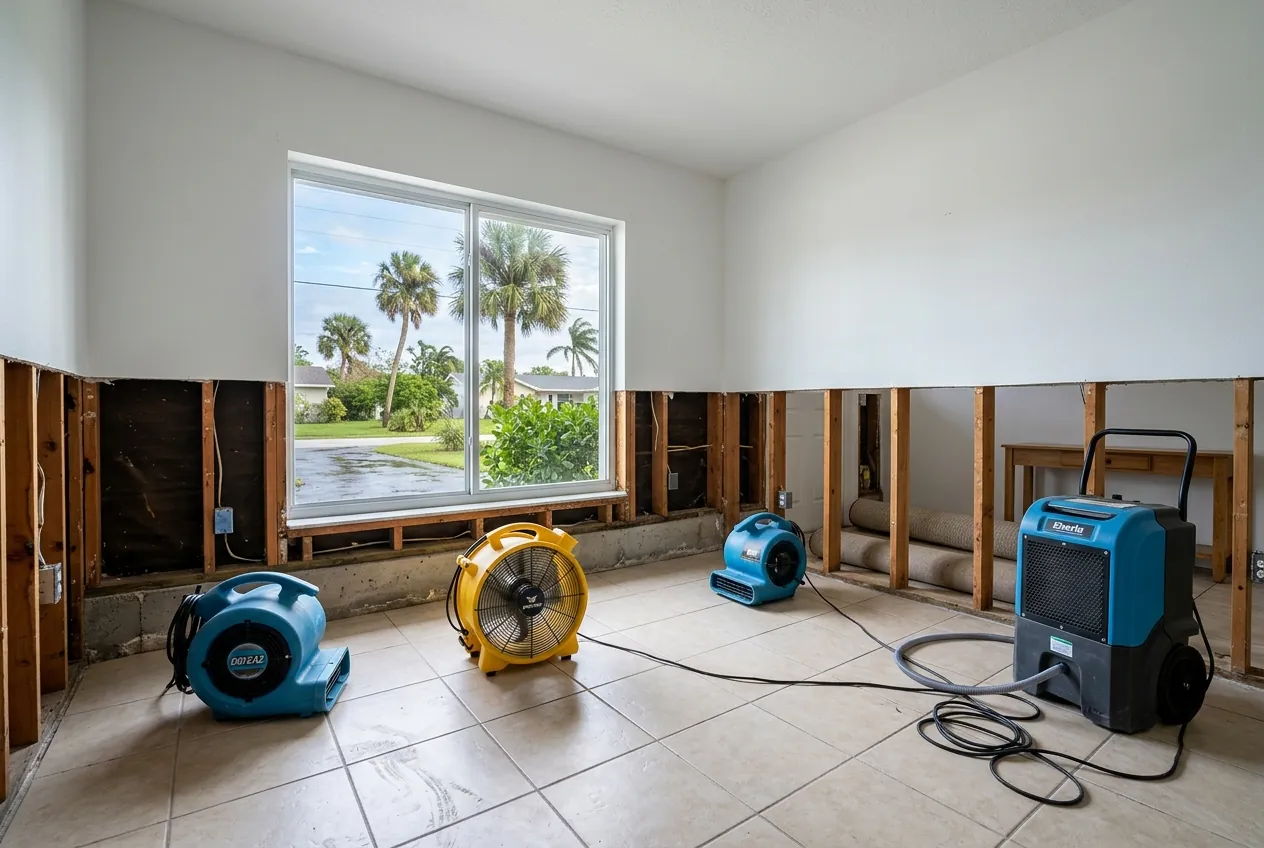
Storm & Flood Damage Cleanup
Water extraction, material removal, cleaning, and structural drying after hurricanes, flooding, and wind-driven rain.
Learn more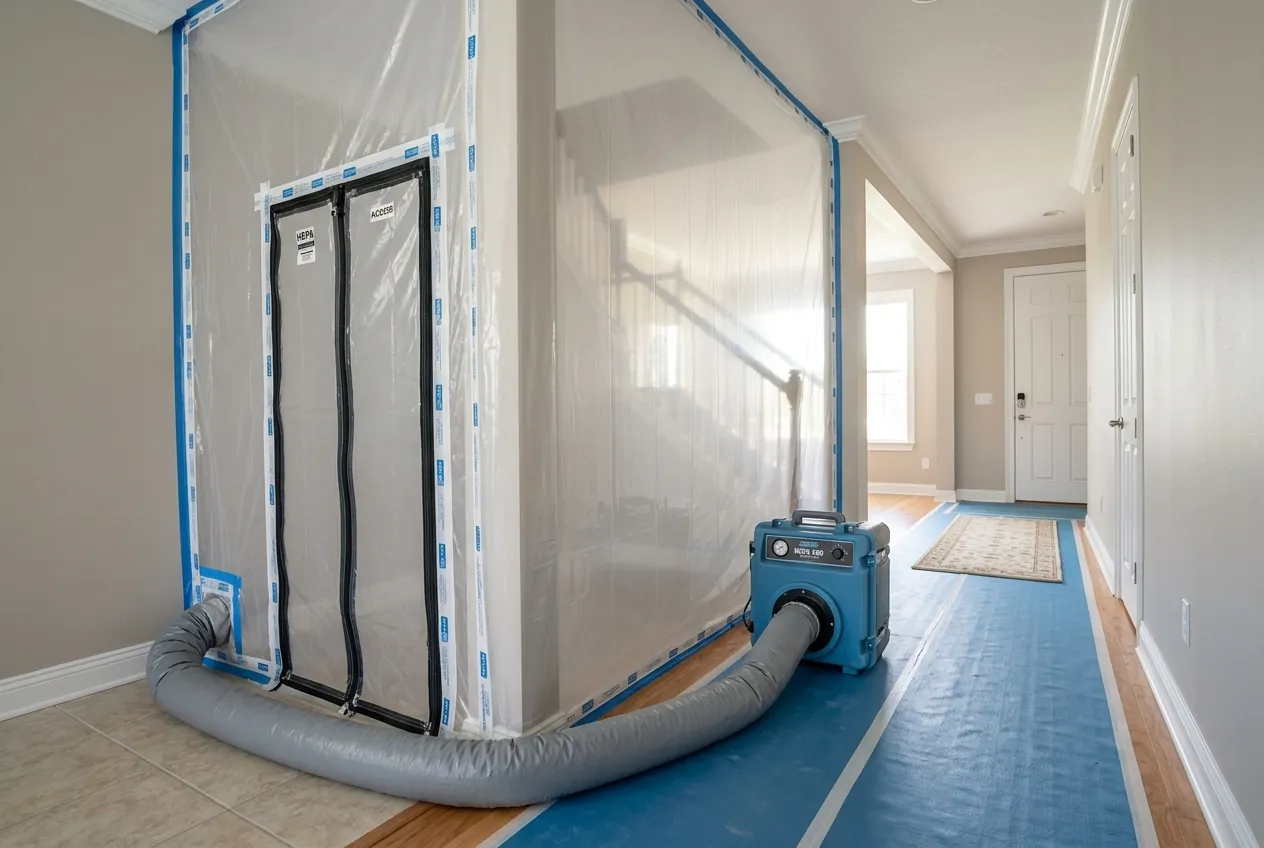
Mold Remediation
Licensed mold remediation from Vero Beach to Boca Raton: containment, removal, HEPA cleaning, drying, and clearance by an independent assessor.
Learn moreWater Damage Restoration by city
Local water damage restoration pages for the communities Sterling serves — from the Treasure Coast to Palm Beach County.

Water in the house? Call now.
We answer water emergency calls every day from 7 AM to midnight, at (786) 690-0329. The sooner the water is out and the drying starts, the less has to come out of the walls.