Short answer
Mold remediation, mold removal, and mold abatement usually mean the same job: containing the area, removing mold growth and damaged materials, and cleaning what stays. "Remediation" is the more accurate word, since no one can remove every spore from a home, and it's the term Florida law uses. What matters is the method, not the label.
Updated September 27, 2026
What is the difference between mold removal and mold remediation?
In practice, there usually isn't one. Companies use both terms for the same work, often on the same web page. The difference is in what the words promise.
"Removal" sounds like every trace of mold leaves the house, and that can't happen. Mold spores are a normal part of indoor and outdoor air, so no home is spore-free. What a good job does is remove the growth and the materials it damaged, then bring the area back to normal. There's no federal limit for indoor spore counts, so indoor air results are compared with an outdoor sample, not with zero.
What is mold abatement?
Mold abatement is another name for the same work. "Abatement" is the standard word in asbestos and lead-paint removal, and some contractors and property managers carry it over to mold. The job it describes is still containment, removal, cleaning, drying, and clearance.
Calling it abatement doesn't make it a bigger or more thorough service than remediation. Read the scope, not the name.
Is mold mitigation the same thing?
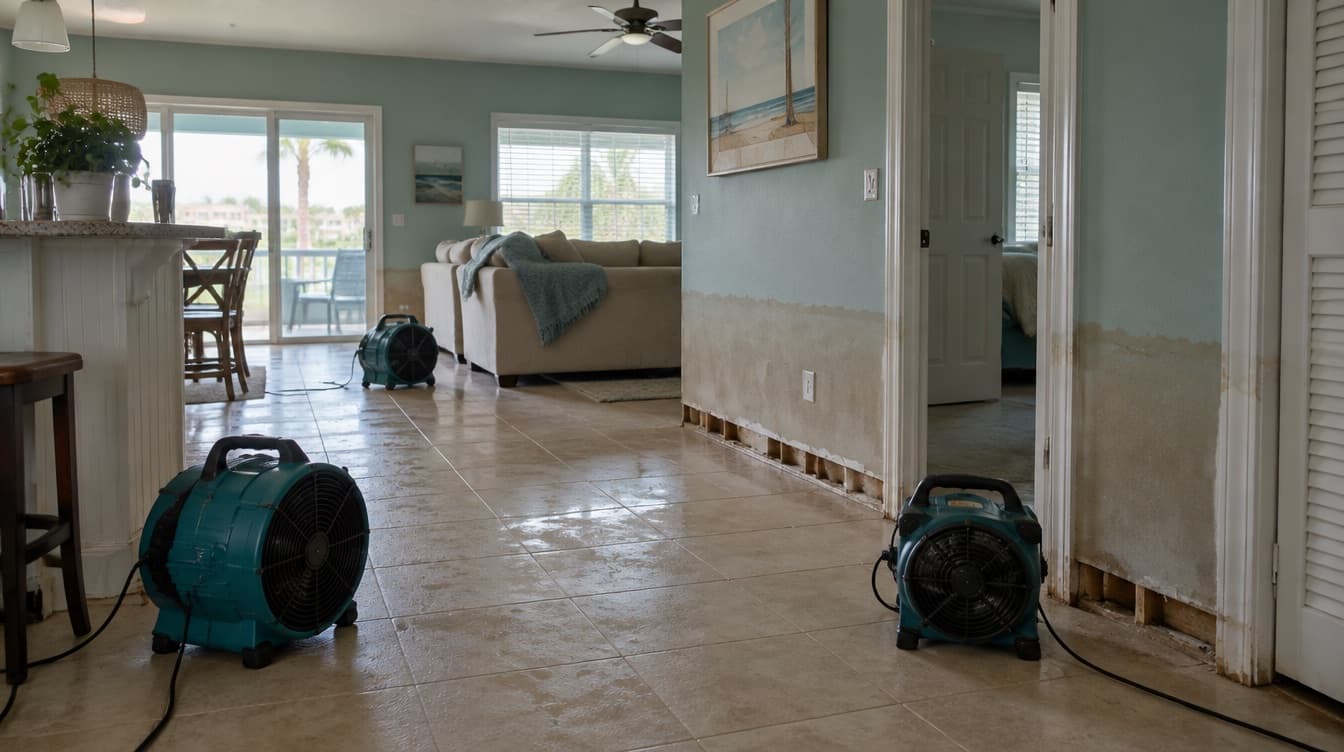
Not quite. People often say "mold mitigation" when they mean remediation, but in the restoration trade "mitigation" is mostly a water-damage word. Water mitigation is the emergency work after a burst pipe, a storm, or a flood: extracting water, drying the structure, and removing wet materials so mold doesn't get a start.
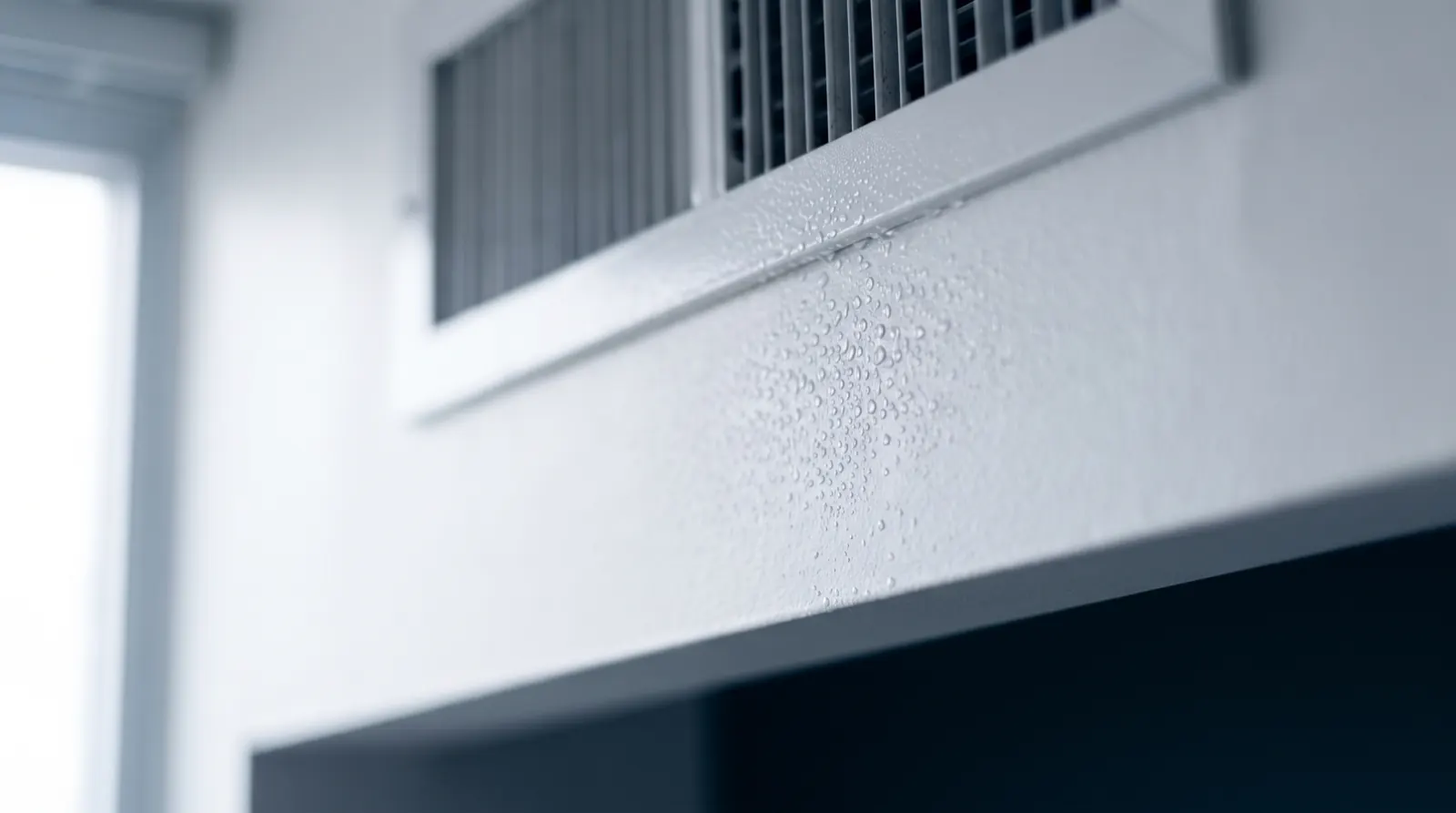
The two often land on the same job. A slow leak behind a shower or under a sink can leave both wet materials and existing growth, so drying and remediation get planned together. Drying alone doesn't remove growth that's already there, and remediation without drying doesn't last.
What does Florida law call it?
Florida law calls it "mold remediation." Florida Statute § 468.8411 defines it as "the removal, cleaning, sanitizing, demolition, or other treatment, including preventive activities, of mold or mold-contaminated matter of greater than 10 square feet that was not purposely grown at that location."
That definition is what a Florida mold remediator license covers. Remediators are licensed by the Department of Business and Professional Regulation (DBPR), their license numbers begin with MRSR, and anyone can look one up at myfloridalicense.com. The definition itself includes "removal," so the word on a company's truck doesn't change what the work is. This is general information, not legal advice.
What should you look for, whatever it's called?
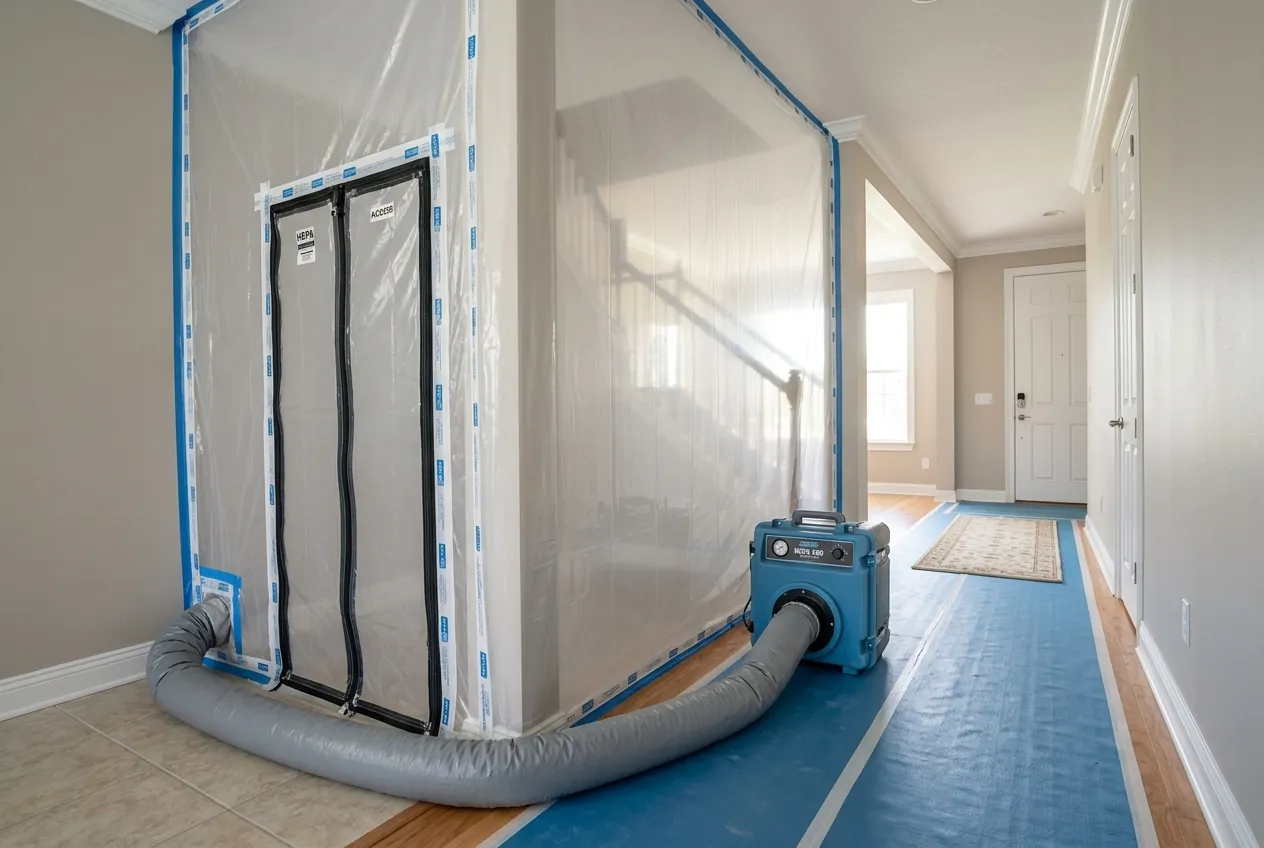
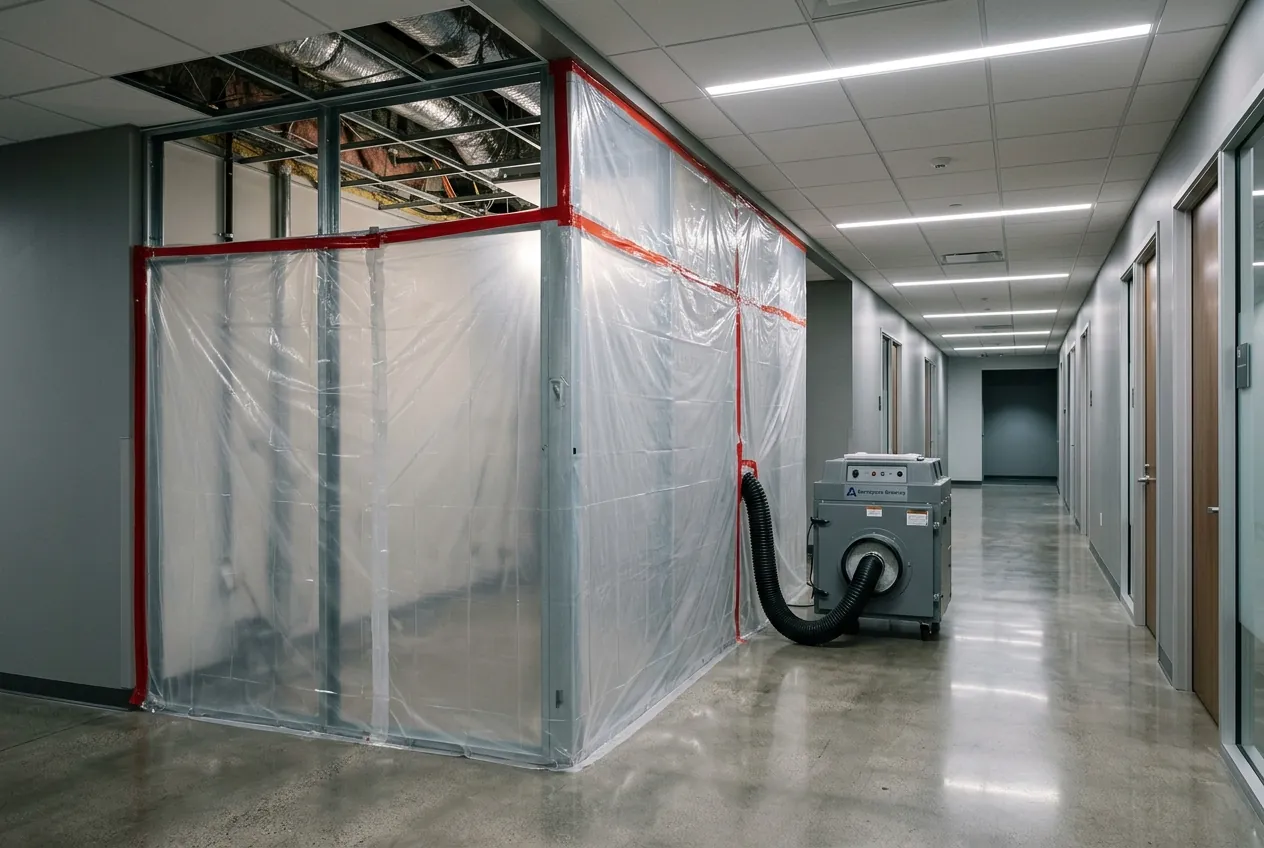
Look at the method, not the name. A proper job includes containment with plastic sheeting, negative air through HEPA air scrubbers, removal and bagging of moldy porous materials, HEPA vacuuming and damp wiping of what stays, moisture readings that show the materials are dry, a plan for the water source, and clearance by an independent assessor before containment comes down.
Mold removal works when the growth is physically removed and the moisture that fed it is fixed. Be careful with a quote built around spraying, fogging, or painting instead of removal, or one that promises a "mold-free" home.
What to do next
Whatever a company calls the service, ask it to walk you through containment, what it will remove, how it will confirm drying, and who does clearance. Then get those answers in the written estimate, along with the license number.
Sterling Mold (FL Licensed Mold Remediator MRSR5761) remediates to IICRC S520 whether you call it removal, abatement, or remediation, and every job starts with a free on-site estimate and a written, itemized quote. When we remediate, Florida law bars us from testing our own work, so your clearance comes from an independent assessor.
| Term | What it usually means |
|---|---|
| Mold remediationThe term Florida law uses (§ 468.8411). | Contain, remove, clean, dry, and clear |
| Mold removalIt can't mean removing every spore; spores are in all indoor and outdoor air. | The same work, in everyday words |
| Mold abatement | The same work, in asbestos and lead-paint language |
| Mitigation"Mold mitigation" often means remediation, so ask which one is being quoted. | Usually water-damage work: extraction and drying |
Whatever the label, ask for containment, removal of moldy porous materials, drying confirmed by moisture readings, and independent clearance.