Short answer
Mold on a ceiling usually comes from one of three things: a leak from above, condensation on a cold spot, or moisture building up in the attic. In Florida homes, roof leaks and AC air handlers or condensate lines in the attic are frequent culprits. Fix the water source first, then clean or remove the growth.
Updated September 27, 2026
What causes mold on a ceiling?
Usually one of three things: water leaking from above, condensation on the ceiling surface, or moisture building up in the attic. Leaks come from the roof, from an AC air handler or condensate line in the attic, or from plumbing on the floor above, which in a condo can mean a neighbor's unit. Do ceiling leaks cause mold? Yes, when the drywall stays wet. The EPA's advice: “It is important to dry water-damaged areas and items within 24-48 hours to prevent mold growth.”
The pattern usually tells you which cause you're dealing with. Rings with brown edges point to a leak, because each ring marks where water spread and dried. Spotty growth near supply vents or in exterior corners points to condensation. Growth right over the shower points to bathroom humidity.
Can AC cause mold on a ceiling?
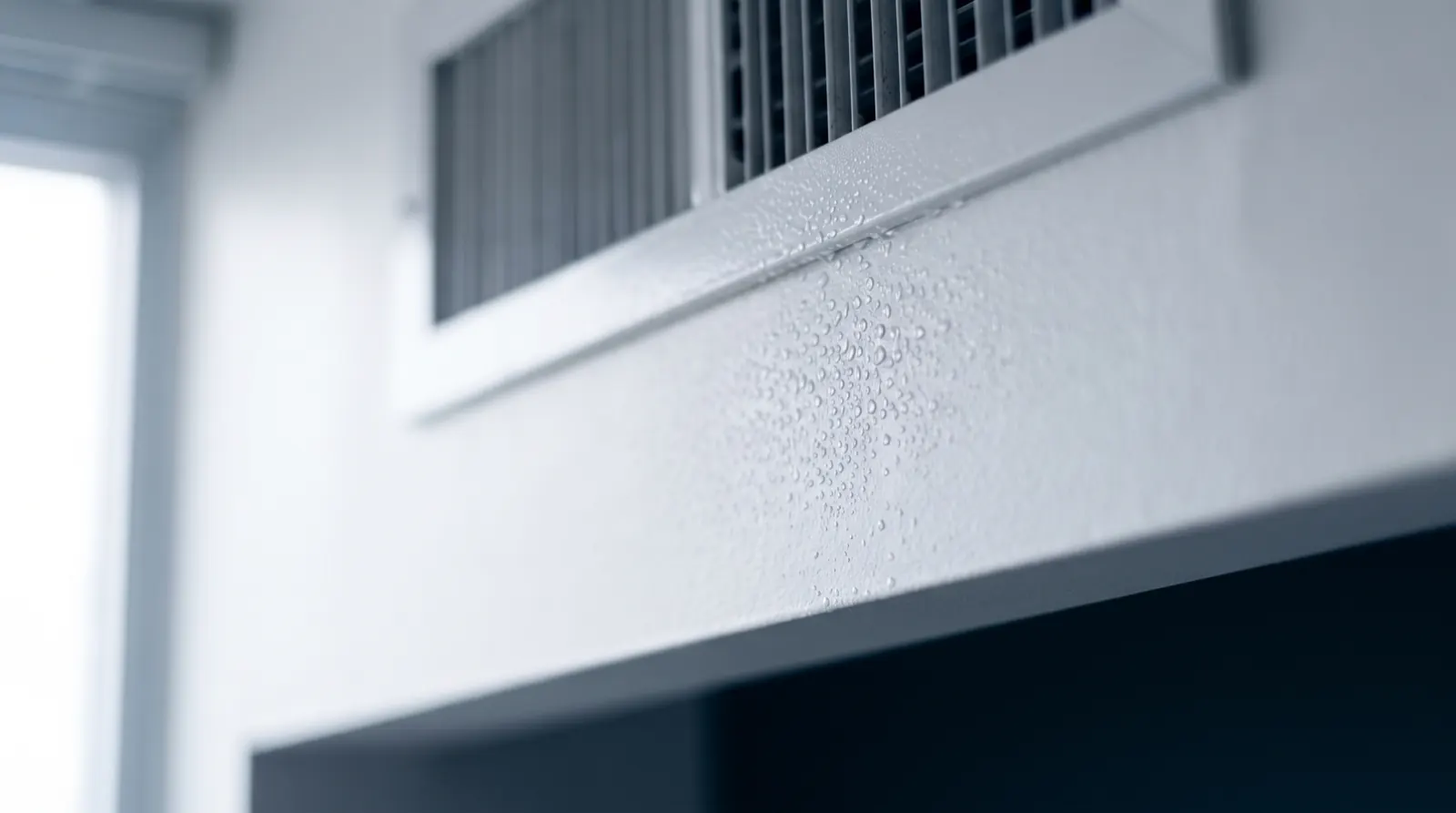
Yes, in two ways. An air handler in the attic makes water every time it runs, and a clogged condensate line or a rusted or overflowing drain pan can soak the ceiling below. Ducts and duct boots in a hot attic can also sweat and drip onto the drywall around a vent.
The other way is condensation on the room side. Where a duct boot leaks cold air or the ceiling around a vent stays cold, humid room air condenses on it and mold spots the paint in a ring around the register. That pattern calls for humidity control and a sealed boot, not just cleaning.
Why is there mold on my bathroom ceiling?
Usually because shower steam has nowhere to go. Warm, wet air rises, hits the cooler ceiling, and condenses. If the exhaust fan is missing, too weak, left off, or vented into the attic instead of outside, the ceiling stays damp long enough to grow mold.
Run a working fan during every shower and for a while after, and confirm it actually vents outdoors, because a fan that ends in the attic just moves the moisture upstairs. Small spots on a painted bathroom ceiling are often a simple cleaning job once the humidity is under control.
Can mold on a ceiling be fixed?
Yes, once the water source is fixed. Small surface growth on a painted ceiling can usually be cleaned. The EPA says: “If the moldy area is less than about 10 square feet (less than roughly a 3 ft. by 3 ft. patch), in most cases, you can handle the job yourself, follow the guidelines.” Clean it with water and detergent, dry it thoroughly, and don't paint over it. The EPA's advice is to clean up the mold and dry the surface before painting.
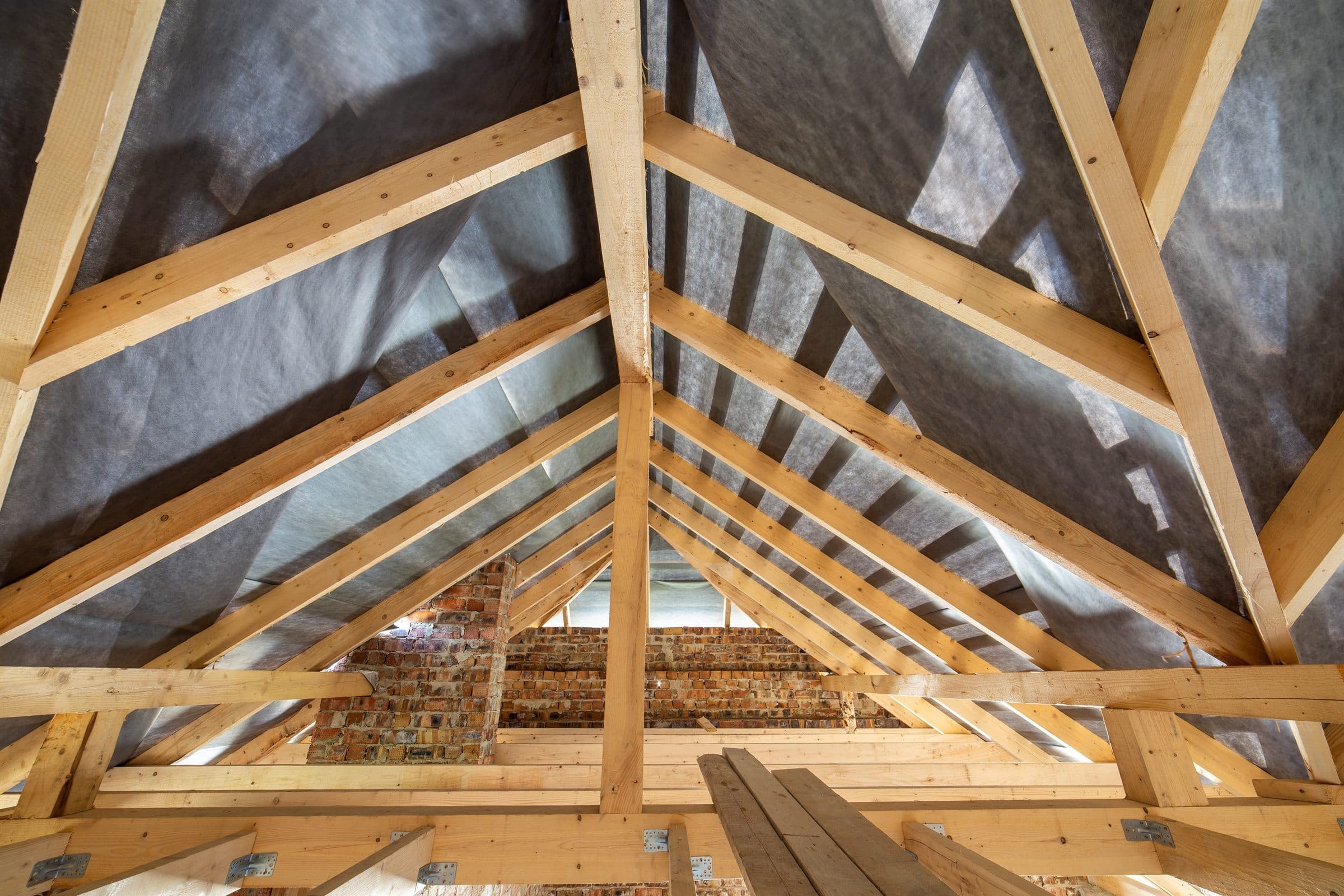
Larger growth, growth that keeps coming back, or a ceiling that's stained through, soft, or sagging is a job for mold remediation. Drywall (sheetrock) and ceiling tiles are porous, and the EPA notes that “Absorbent or porous materials, such as ceiling tiles and carpet, may have to be thrown away if they become moldy.” Check the attic side too, because the top of the drywall, the insulation, and the roof deck above can be wet or moldy where you can't see from below.
Is mold on a ceiling dangerous?
Whether it affects your health is a question for your doctor. Damp, moldy indoor spaces are associated with allergy and respiratory symptoms in some people. If anyone in the home has asthma, allergies, or a weakened immune system, is pregnant, or is an infant, ask a doctor before staying in or cleaning a moldy room.
There is a physical risk to watch for. A ceiling that's sagging or bulging with water can come down, so keep people out from under it and shut off the water or the AC that's feeding it.
Who should you call for mold on a ceiling?
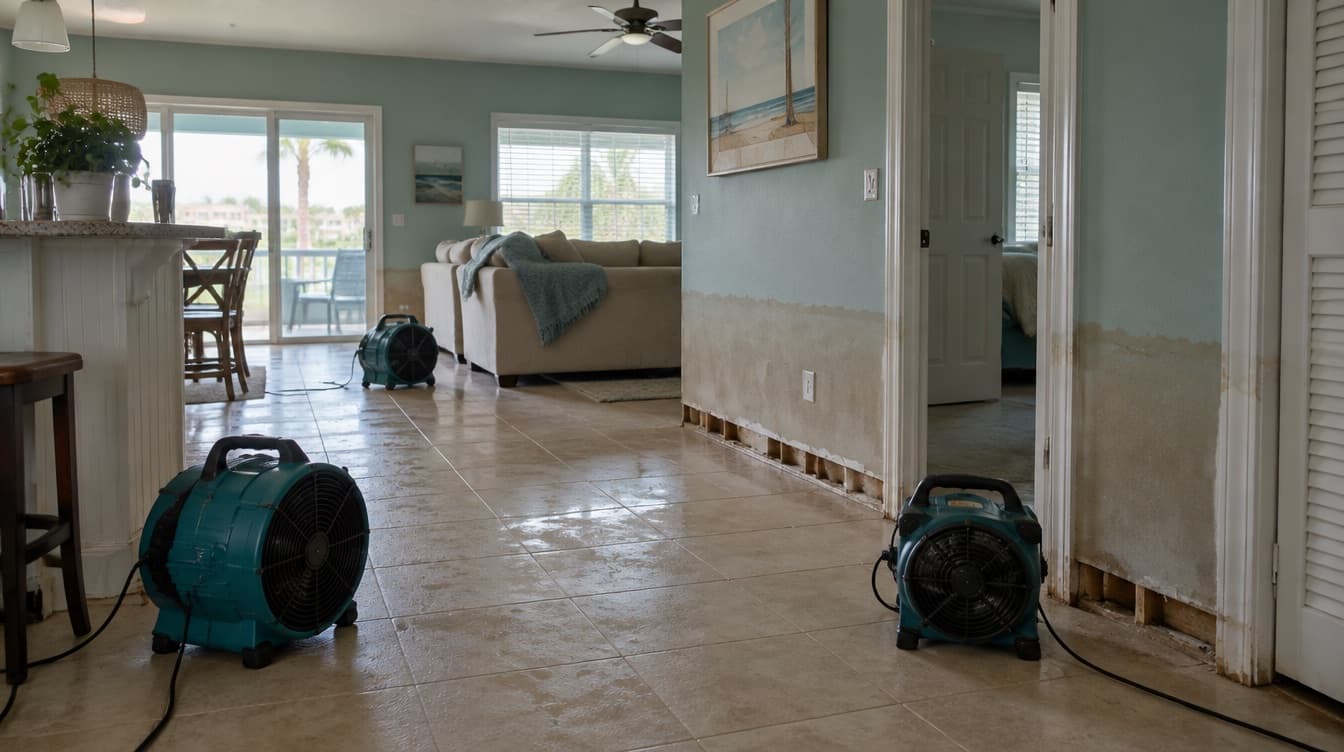
Start with whoever fixes the source: a roofer, a plumber, or a licensed HVAC contractor for the air handler and ducts. If the ceiling is actively wet, get it dried out fast with water extraction and drying (water mitigation). Small surface growth you can often clean yourself once it's dry. Larger or recurring growth calls for a licensed mold remediator, and if the cause isn't clear, a licensed mold assessor can trace it.
Sterling answers water emergency calls every day from 7 AM to midnight, and every mold remediation job, including attic mold above a ceiling, starts with a free on-site estimate and a written, itemized quote. If we remediate, Florida law also bars us from testing our own work, so your clearance comes from an independent assessor.
| What you see | What it usually points to |
|---|---|
| Stain rings with brown edges | A leak from the roof, AC, or plumbing above |
| Sagging, bulging, or soft drywall | An active leak: stay clear and stop the water |
| Spots in a ring around a supply vent | Condensation at the vent or duct boot |
| Spotty growth in exterior corners | Condensation, or a leak at the roof edge |
| Growth over the shower or tub | Bathroom humidity and a weak or missing fan |
A pattern points to a likely cause. Moisture readings confirm it, and the source gets fixed before anything is cleaned or rebuilt.