Short answer
Mold on AC vents is usually caused by condensation: cold supply air chills the register below the dew point of warm, humid room air, and the water that beads there feeds mold in the dust. In Florida the usual drivers are high indoor humidity, an oversized AC, and leaky duct connections. Cleaning the grille only treats the symptom.
Updated September 27, 2026
What causes mold on AC vents?
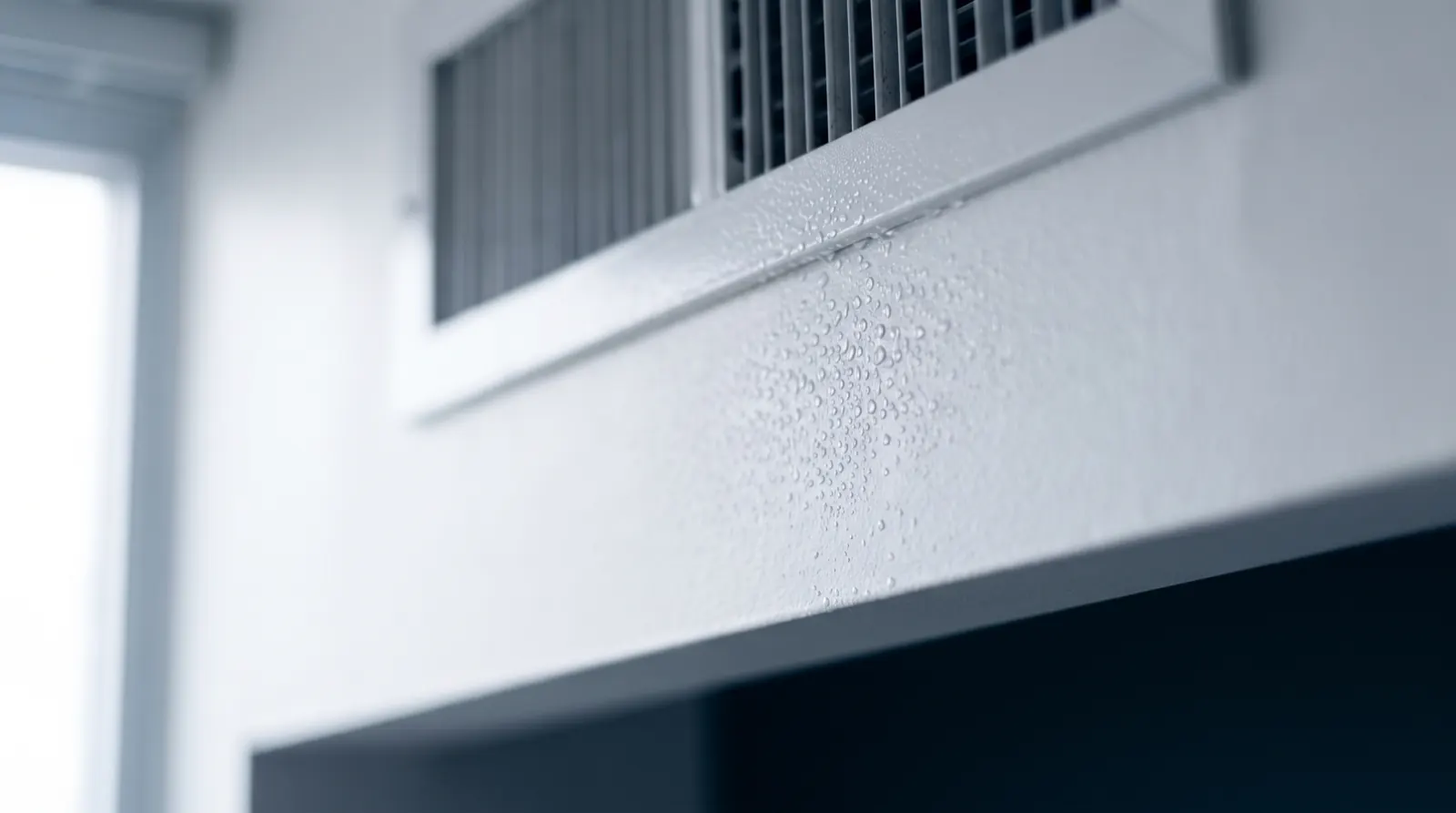
In a humid climate like Florida's, the usual cause is condensation. Supply air is much colder than the room, so when warm, humid room air touches the cold grille, it cools below its dew point and leaves water behind, the way a glass of iced tea sweats on the porch. Dust on the slats holds that water and feeds the mold.
High indoor humidity is the biggest driver. The EPA's guidance: “If possible, keep indoor humidity below 60 percent (ideally between 30 and 50 percent) relative humidity.” Florida homes can drift above that in the wet season, especially a house that sits closed up.
The equipment adds to it. An oversized AC short-cycles: it cools the house fast and shuts off before it has pulled the moisture out, so rooms feel cold but clammy. Leaky or poorly insulated duct connections let cold air escape where the duct meets the register box (the boot), keeping the metal and drywall there cold and wet. Dirty coils and drain pans that hold water add more.
What does mold on AC vents look like?
Mold on a vent usually shows up as black, gray, or dark green specks on the slats and on the ceiling or wall right around the register. It forms separate dots or fuzzy patches, returns to the same spots after cleaning, and often brings a musty smell.
Dust can look similar, but it usually lies as an even gray film, heaviest along the edges that face the airflow. Dark smudging on the ceiling around a register is often just dust carried by the air. If you can't tell which you have, a closer look usually settles it, and a tape-lift sample read by a lab gives a clear answer.
Is mold in air vents dangerous?
Whether mold is affecting anyone's health is a question for a doctor, but specks on a vent are a clear sign that something stays wet. A few speckled grilles are common in humid homes and often a modest fix. Damp, moldy indoor spaces are associated with allergy and respiratory symptoms in some people. If anyone in the home has asthma, allergies, or a weakened immune system, is pregnant, or is an infant, talk to a doctor before staying in or cleaning a moldy space.
You usually don't need a lab test for growth you can see. The EPA puts it plainly: “In most cases, if visible mold growth is present, sampling is unnecessary.”
How do you clean mold on AC vents?
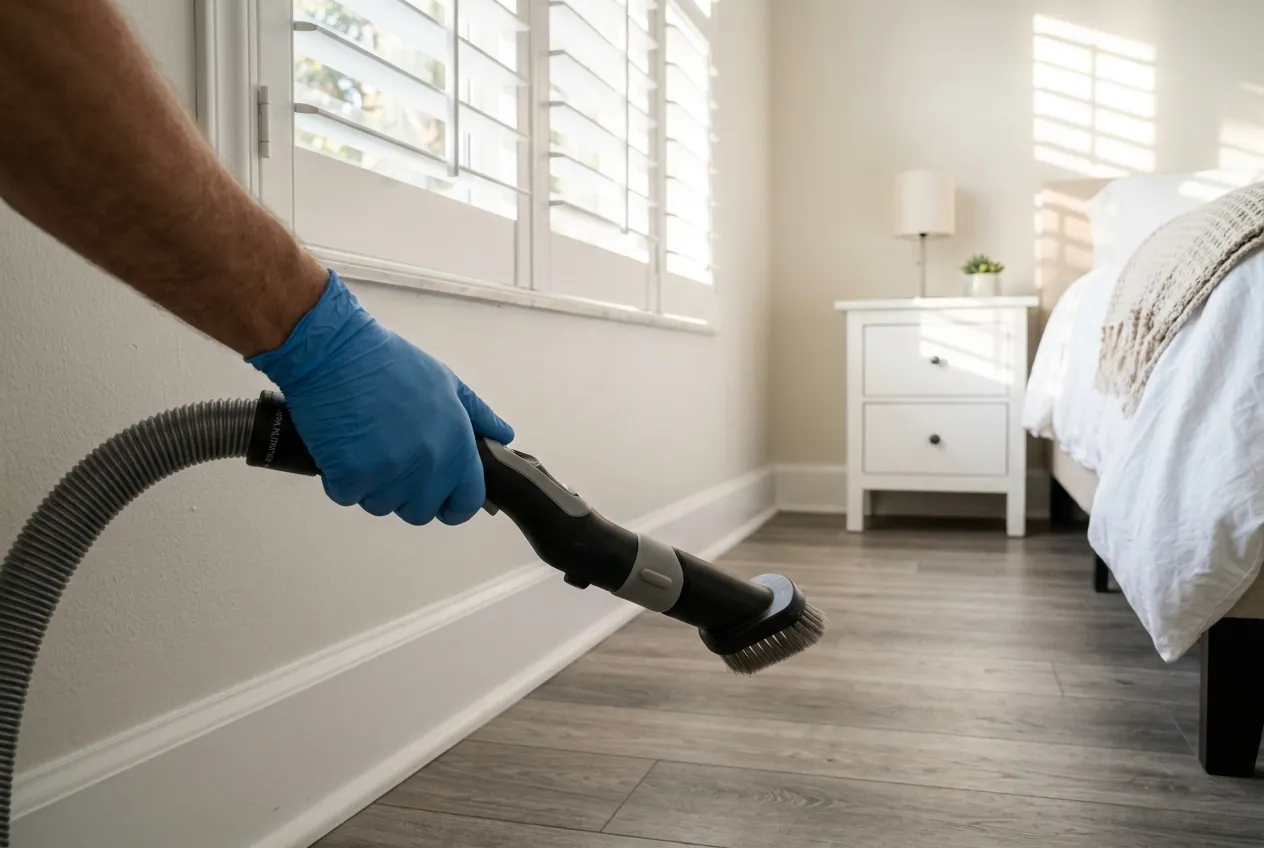
For a few speckled grilles, turn the system off, take the grille down, wash it with water and a little detergent, and let it dry completely before it goes back up. Wipe the painted surface around the opening with a damp cloth, not a dry one, so you don't send spores into the air. The EPA's advice applies: “Avoid breathing in mold or mold spores.” Gloves and an N-95 respirator make sense.
Skip bleach, sprays, and paint: none of them fixes the cause. If the drywall (sheetrock) around the register is stained, soft, or growing mold, it's porous and usually has to be cut out rather than cleaned, and a wet patch there often means a duct boot is sweating above the ceiling. Cleaning the grille treats the symptom. If nothing else changes, the specks come back.
How do you prevent mold on AC vents?
Take away the condensation: bring indoor humidity down and stop cold air from meeting warm, humid air at the register. Keep an inexpensive hygrometer in the main living area and hold relative humidity within the EPA's range. Leave the thermostat fan on AUTO rather than ON, because a fan that runs nonstop can blow water off the wet coil back into the house between cooling cycles. If the house still runs damp, a dehumidifier can carry the extra load.
Then have a licensed HVAC contractor check whether the system is oversized and short-cycling, whether the coil is clean and the drain pan drains, and whether the duct boots and connections are sealed and insulated. That repair is the source fix.
What if the mold is inside the ducts or air handler?
Then the vents are only the visible end of it. Suspect the system itself when many vents grow specks at once, when they return soon after cleaning, when the AC smells musty as it starts, or when the drain pan has overflowed. In Florida homes, growth usually starts in the air handler, on the coil, drain pan, blower, and cabinet, which stay wet whenever the system runs.
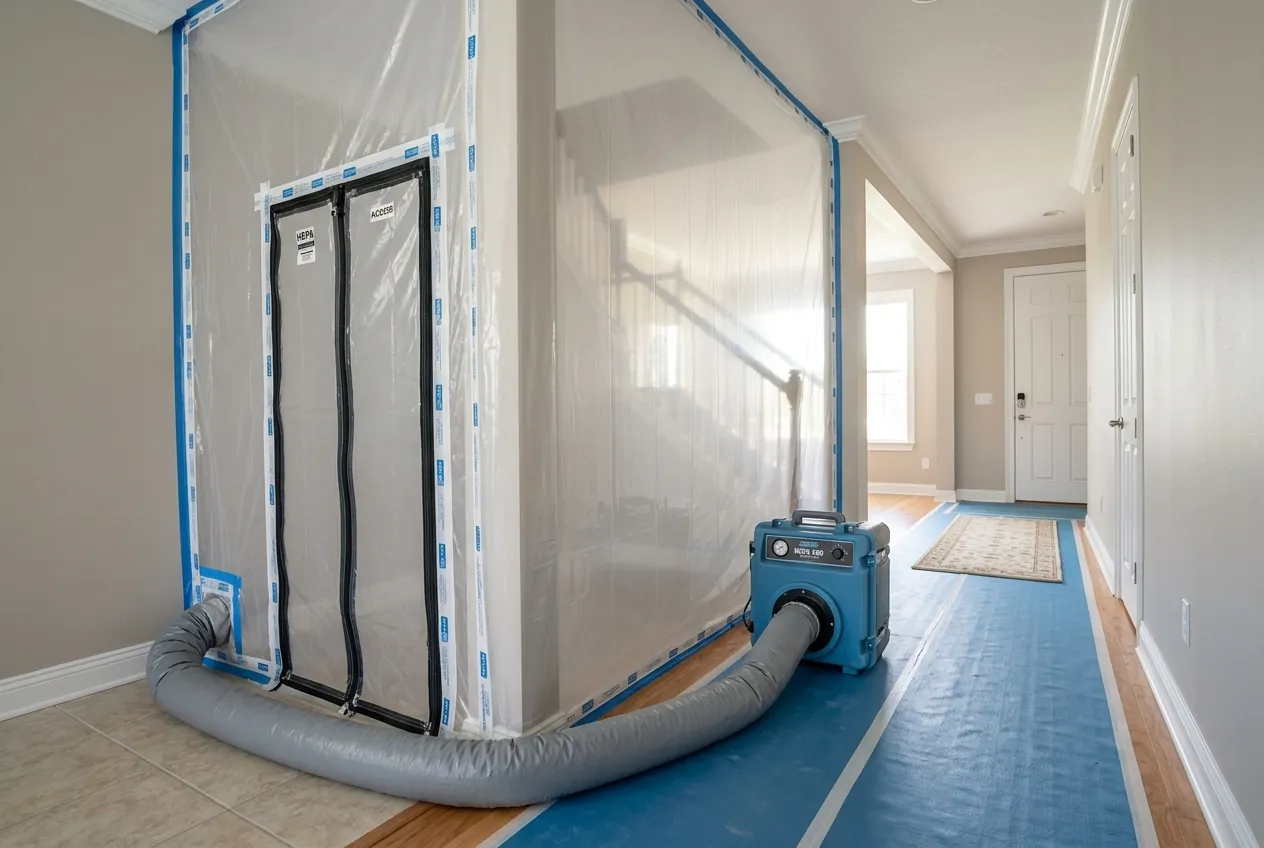
Sterling's HVAC and air handler mold remediation starts with a free on-site estimate with the air handler opened, then a written, itemized quote. We shut the system down, HEPA-clean the affected components, the cabinet, and the registers, and write down what's keeping it wet for your HVAC contractor, who handles repairs. One limit applies: if we inspect your home, we can't be the ones who remediate it. Florida law bars it for 12 months.