Short answer
Mold in air ducts can be cleaned when the ducts are bare sheet metal, but moldy flex duct and fiberglass duct board are generally replaced, because insulation that's wet or moldy can't be cleaned effectively. In Florida homes the growth usually starts in the air handler, and it comes back unless the moisture behind it is fixed.
Updated September 27, 2026
How does mold get in ductwork?
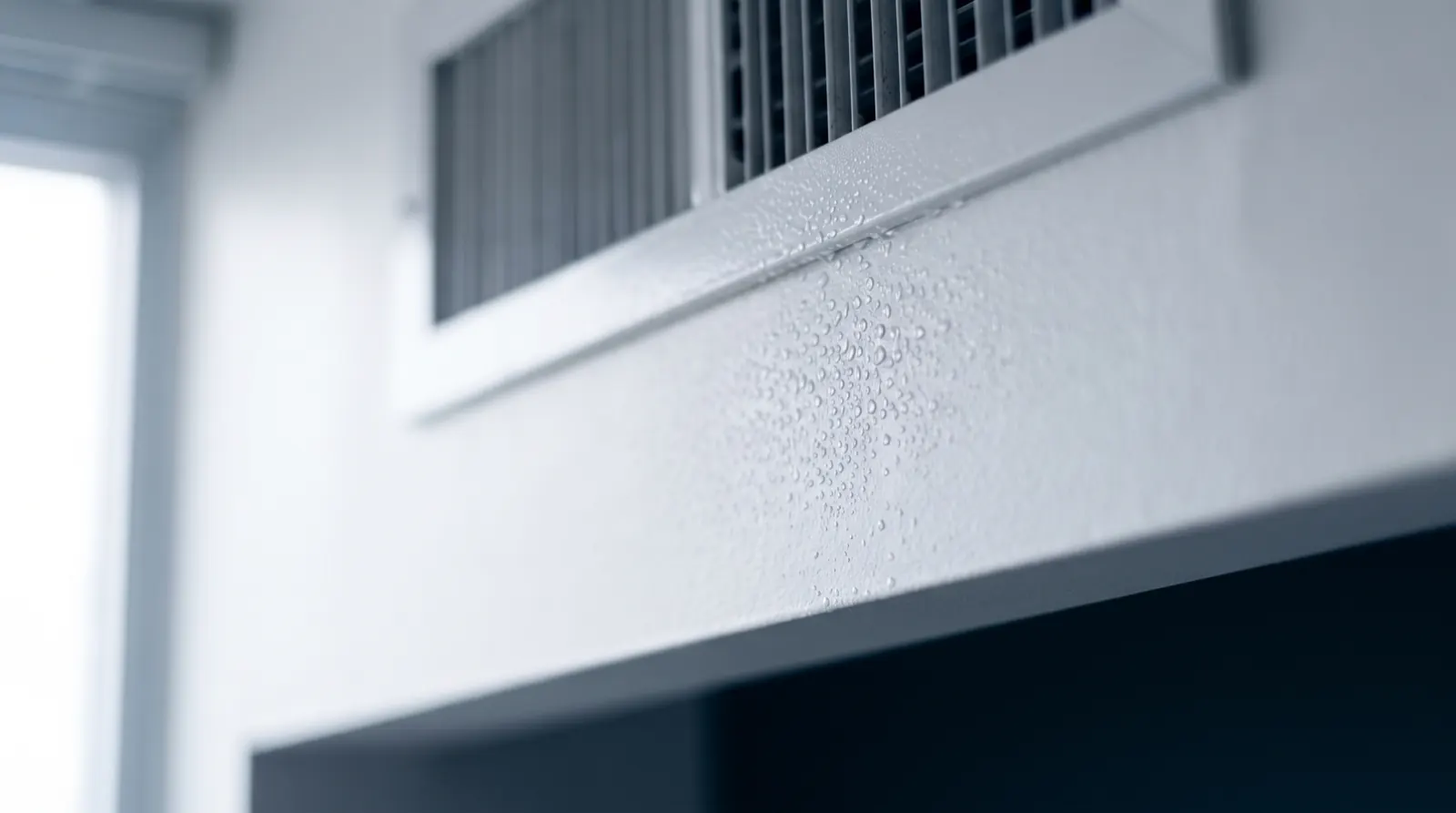
Mold spores are in essentially all indoor and outdoor air, so they reach every AC system. They grow only where moisture and dust sit long enough, and an AC makes water by design: the coil pulls moisture out of the air, and the drain pan and condensate line carry it away. When any part of that stays wet, mold has what it needs.
In humid climates, mold somewhere in the system isn't unusual, and in Florida homes it usually starts in the air handler, on the coil, drain pan, blower, and cabinet. From there it can reach the supply plenum and the first run of duct. Growth deeper in the ducts usually has its own water source: a clogged condensate line or overflowing pan, ducts sweating in a hot attic where the insulation or outer jacket is damaged, humid attic air pulled in through leaky return connections, or indoor humidity that stays high because the AC is oversized.
How do you clean mold in air ducts?
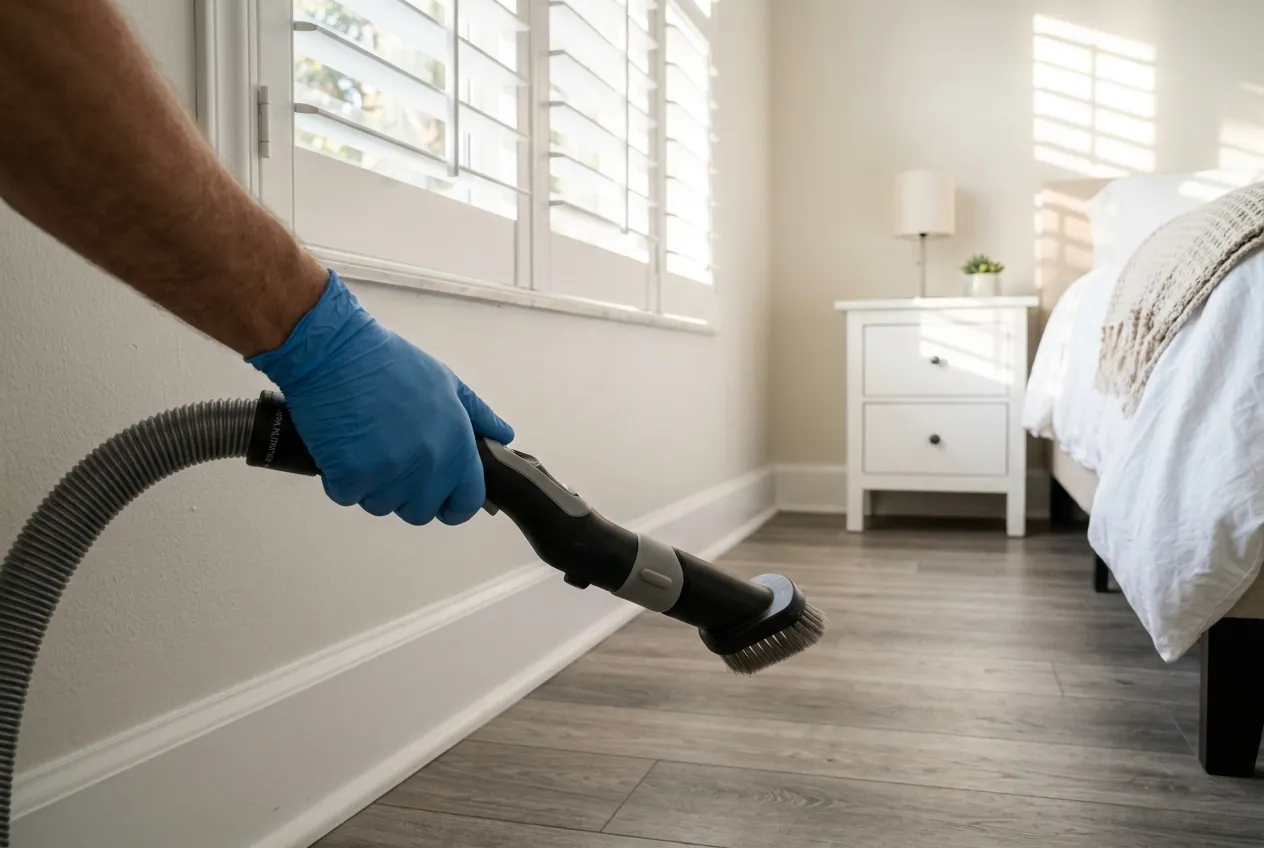
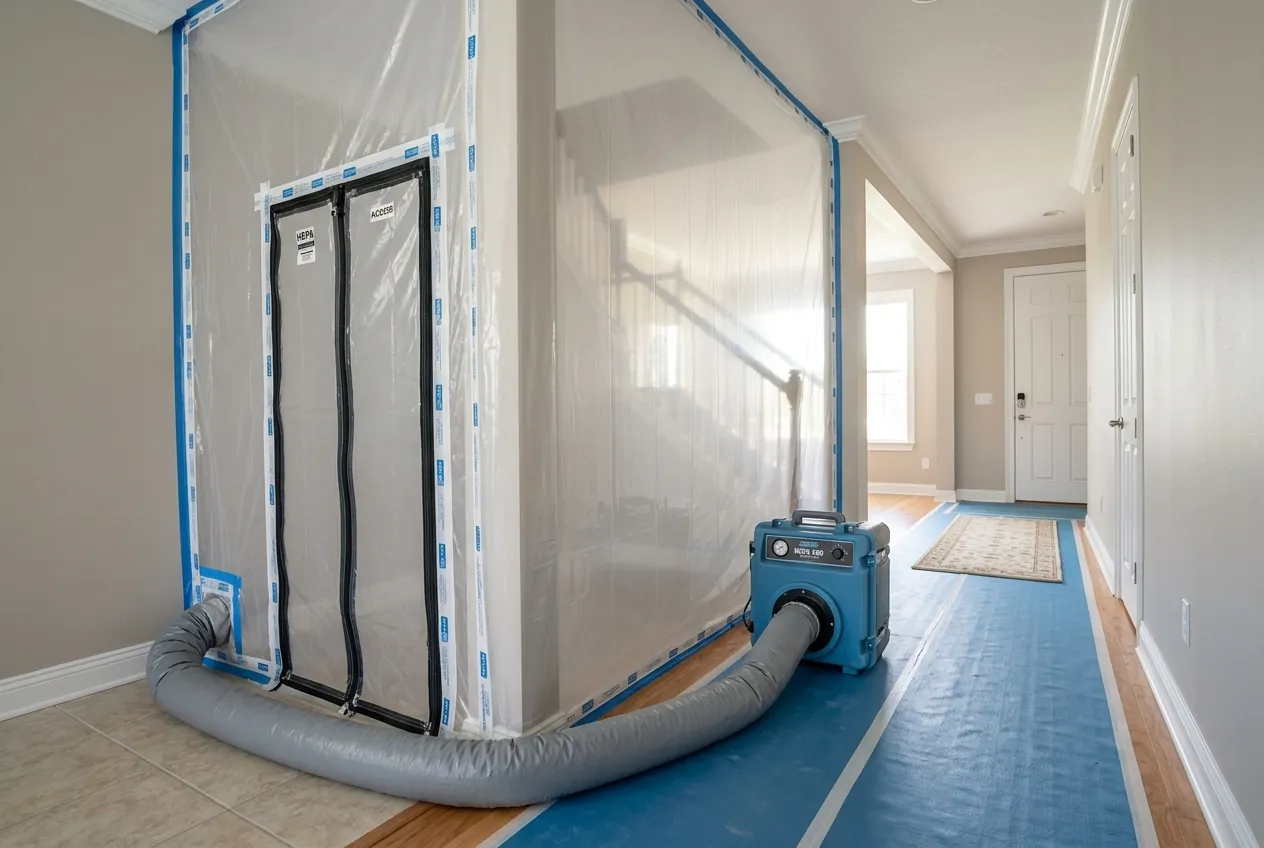
Bare sheet metal ducts can be cleaned by source removal: the system is put under negative pressure with a vacuum collector, and the growth and debris are loosened with brushes or air tools and pulled out. The air handler's coil, drain pan, blower, and cabinet are usually cleaned in place. Whether a rusted pan or a badly fouled coil should be replaced instead is a call for your HVAC contractor.
Insulated ducts are different. The EPA says: “If you have insulated air ducts and the insulation gets wet or moldy it cannot be effectively cleaned and should be removed and replaced.” That covers flex duct, the round, flexible duct common in Florida attics, which is a thin plastic liner wrapped in fiberglass insulation. It also covers fiberglass duct board and metal duct lined with fiberglass inside. Moldy sections of those are replaced, not cleaned.
What kills mold in ductwork?
Nothing sprayed or fogged into a duct fixes mold on its own. The growth has to be physically removed from surfaces that can be cleaned, and moldy porous duct materials have to come out. The EPA doesn't recommend routine biocides either: “The use of a chemical or biocide that kills organisms such as mold (chlorine bleach, for example) is not recommended as a routine practice during mold cleanup.”
Fiberglass has a further problem. According to the EPA, “No products are currently registered by EPA as biocides for use on fiberglass duct board or fiberglass lined ducts”. Where an antimicrobial is used at all, it goes on after cleaning, never in place of it. If an offer to spray or fog your ducts is the whole plan, ask what happens to the growth and to the moisture behind it.
Will mold in air ducts spread?
It can. Growth in an AC system can release spores into the airstream, and the system carries them to every room it serves. It also keeps growing for as long as the moisture stays.
That's why the cause matters as much as the cleaning. The EPA is direct: “If the conditions causing the mold growth in the first place are not corrected, mold growth will recur.” In practice that means clearing the condensate line and fixing the drain pan, sealing and insulating leaky or sweating ducts, and bringing indoor humidity under control, sometimes with equipment sized to run long enough to dehumidify.
Who do you call for mold in air ducts?
Usually two trades. A licensed mold remediator removes and cleans the growth, and a licensed HVAC contractor handles duct replacement, drain and equipment repairs, and equipment sizing. Florida mold remediator licenses begin with MRSR and can be checked at myfloridalicense.com. If you're not sure the growth is mold, or how far it goes, a licensed mold assessor can open the air handler, look into the ducts, and sample only if a question remains. When growth is plainly visible, testing usually isn't needed.
Sterling's HVAC and air handler mold remediation cleans what can be cleaned: the coil, drain pan, blower, and cabinet, plus accessible plenums, registers, and grilles, with HEPA methods and the system shut down. What can't be cleaned, like moldy flex duct or duct board, we document for replacement and coordinate with your HVAC contractor, who does that work. Every job starts with a free on-site estimate and a written, itemized quote.
| Part of the system | Usual approach |
|---|---|
| Bare sheet metal duct | Cleaned by a professional |
| Coil, drain pan, blower, cabinetReplacing a part is your HVAC contractor's call. | Usually cleaned in place |
| Registers and grilles | Cleaned |
| Flex ductA thin plastic liner wrapped in fiberglass insulation. | Moldy sections replaced |
| Fiberglass duct board | Moldy sections replaced |
| Metal duct with a fiberglass liner | Moldy sections replaced |
Whatever is cleaned or replaced, the moisture problem behind it has to be fixed too, or the growth comes back.