Short answer
Usually, yes. Drywall (sheetrock) is porous and its paper face feeds mold, so growth that has gone into the paper or gypsum, or drywall that has been wet, soft, or stained repeatedly, should be cut out and replaced. Light surface mildew on sound, painted drywall can sometimes be cleaned. Either way, fix the moisture first.
Updated September 27, 2026
Can mold be cleaned off drywall?
Sometimes, when it's light surface mildew on sound, painted drywall. A few spots on a bathroom ceiling above the shower, where the paint is intact and the drywall is firm and dry, can usually be cleaned with a damp cloth and detergent, then dried. Improve the ventilation too, or it's likely to come back.
What about bleach? It isn't a fix for mold on drywall. It can lighten the stain on the surface, but it doesn't remove growth in the paper, and soaking drywall is the opposite of what you want. The EPA's guidance: "The use of a chemical or biocide that kills organisms such as mold (chlorine bleach, for example) is not recommended as a routine practice during mold cleanup." Paint isn't a fix either: "Do not paint or caulk moldy surfaces. Clean up the mold and dry the surfaces before painting."
Should I replace moldy drywall?
Yes, when mold has grown into the paper facing or the gypsum, when the drywall is soft, swollen, or crumbling, or when the same spot has been wet or stained more than once. Drywall is porous and has paper on both faces, which mold feeds on, so cleaning the front leaves growth in the material. The EPA's rule for porous materials applies: "Absorbent or porous materials, such as ceiling tiles and carpet, may have to be thrown away if they become moldy."
Stains that bleed through fresh paint, peeling or bubbling paint, and a musty smell at one wall often point to a problem in the drywall, not just on it.
Does mold on drywall spread?
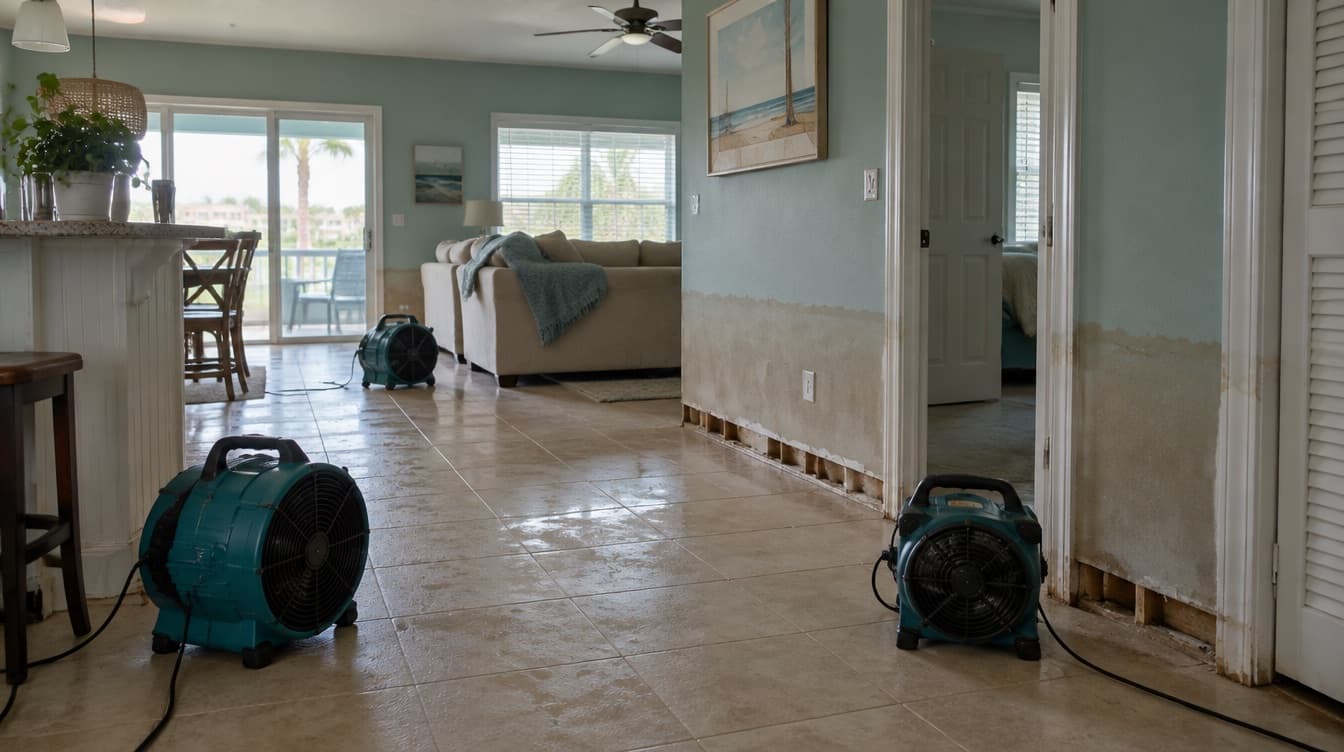
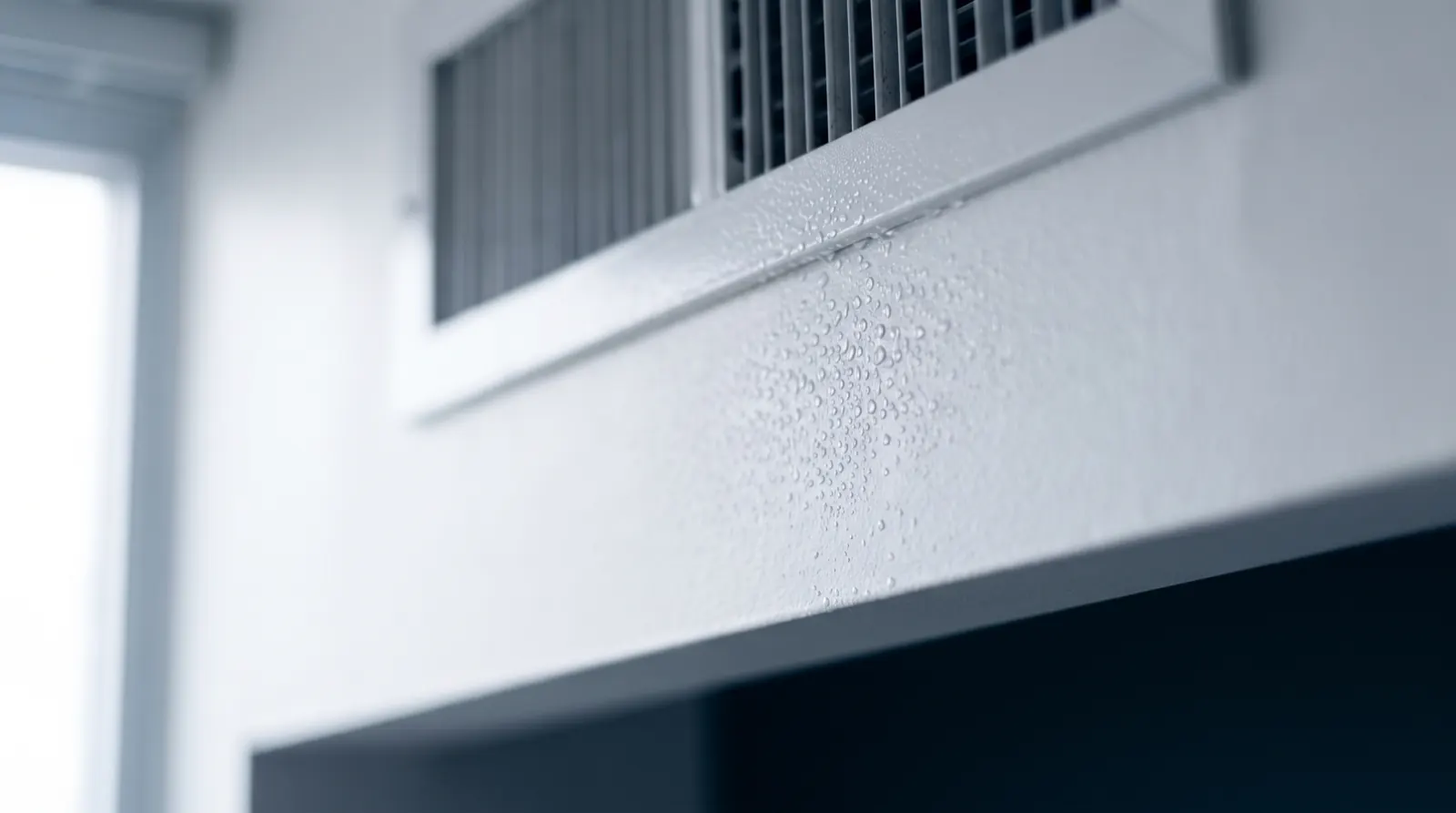
It can keep growing as long as the drywall stays damp, and the back side is often worse than the front. Many leaks start inside the wall: a slow plumbing leak, an AC condensate line in a closet, or rain getting behind stucco after a storm. The back paper meets that moisture first, so what you see on the room side can be the smallest part of it.
Drywall also wicks water upward, above the visible waterline, so growth can show up higher than the leak or flood line. Disturbing moldy drywall can release spores and debris, which is why larger areas are cut out inside containment.
How is moldy drywall removed?
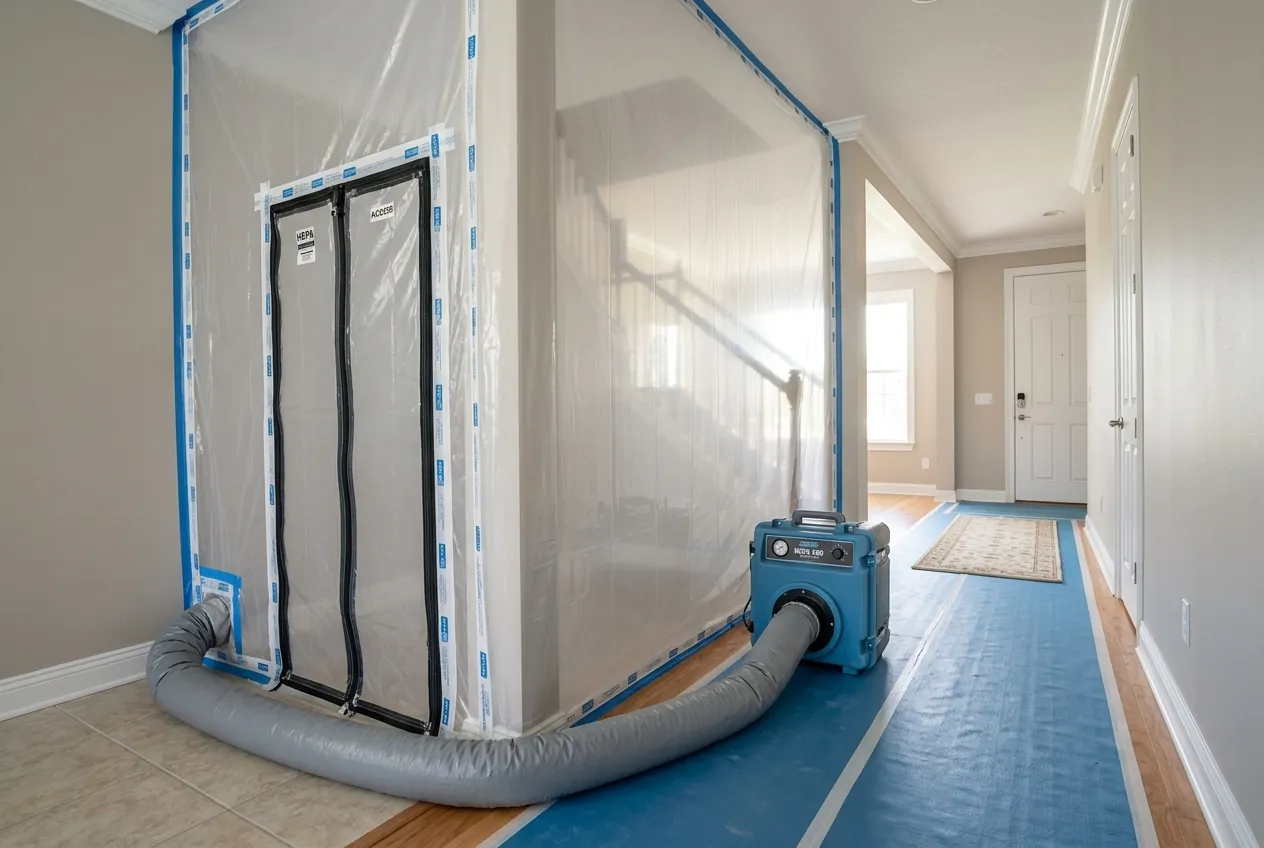
Professionals cut it out rather than scrub it, after the moisture source is fixed. For larger areas, that happens inside containment: plastic sheeting, a zippered entry, and HEPA air scrubbers keeping the work area under negative pressure. The cut goes past the visible edge of the growth to sound, dry material, confirmed with a moisture meter and a look at the back side and the wall cavity, not just the front.
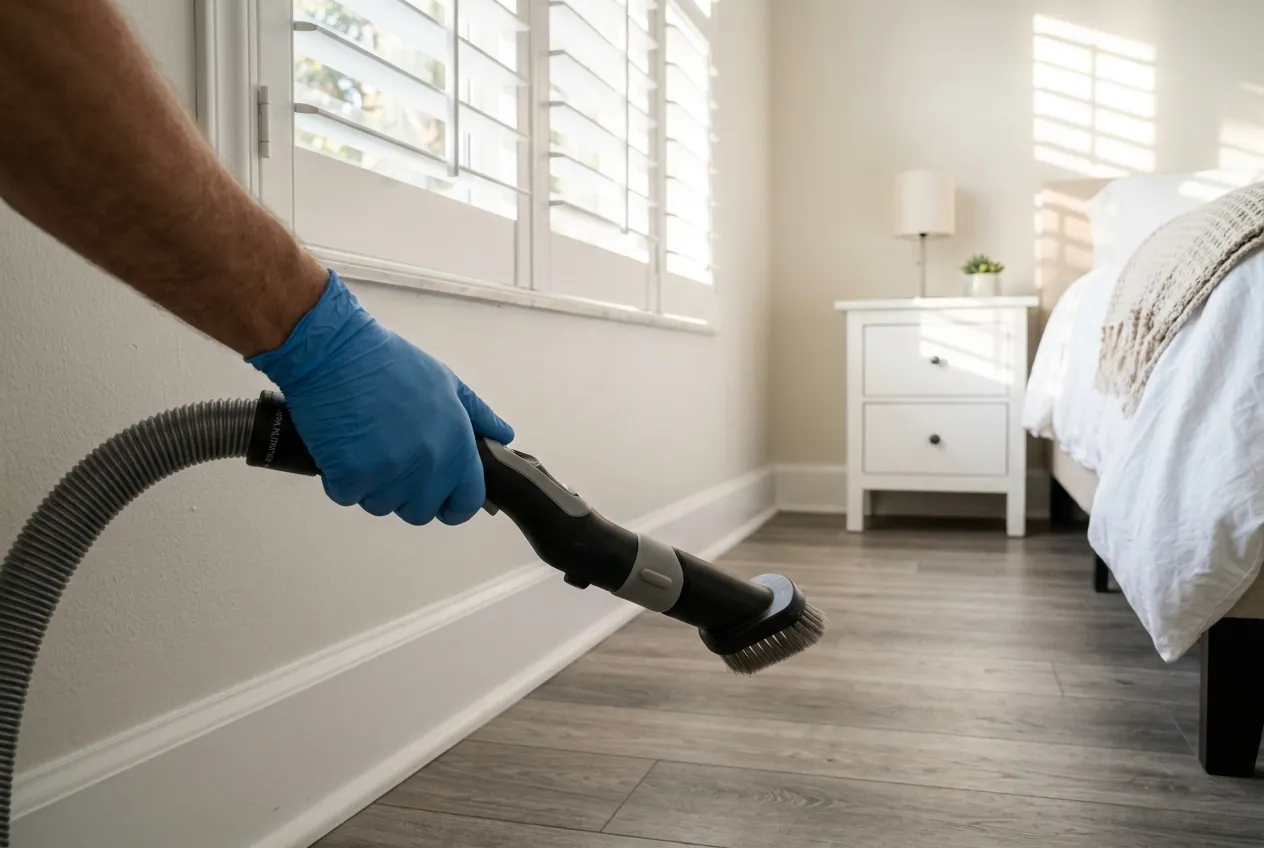
Removed drywall is bagged inside the work area. The framing and cavity are then HEPA vacuumed, cleaned, dried, and checked before any new drywall goes up.
Is mold-resistant drywall worth it?
It can be, in wet areas like bathrooms, laundry rooms, and around an AC closet, but it isn't mold-proof. Mold-resistant boards (sometimes sold as "mold tough") use facings designed to resist growth better than standard paper-faced drywall. If the wall stays wet, mold can still grow on dust and debris on the surface, and the leak still has to be fixed.
What to do next
Find and fix the water first: a leak, an AC drain line, or humidity that stays high. For a small area of surface mildew on sound drywall, clean it and dry it. If the drywall is soft or stained through, or the area is larger than about 10 square feet (the EPA's guideline for handling it yourself), have it removed properly with containment and have the wall cavity checked. People with asthma, allergies, or a weakened immune system, infants, and anyone with pregnancy concerns should ask their doctor before cleaning it themselves.
Sterling removes moldy drywall inside containment following IICRC S520 and dries wet walls following IICRC S500, with water emergency calls answered every day from 7 AM to midnight. Every job starts with a free on-site estimate and a written, itemized quote. If we remediate, Florida law also bars us from testing our own work, so your clearance comes from an independent assessor.