Short answer
Wet drywall can often be saved if it got wet with clean water, drying started quickly, and it hasn't swelled, sagged, crumbled, or grown mold. Drywall soaked by sewage or floodwater (Category 3) has to be removed. Moisture readings, the type of water, and the condition of the board decide, not how the wall looks.
Updated September 27, 2026
Is wet drywall ruined?
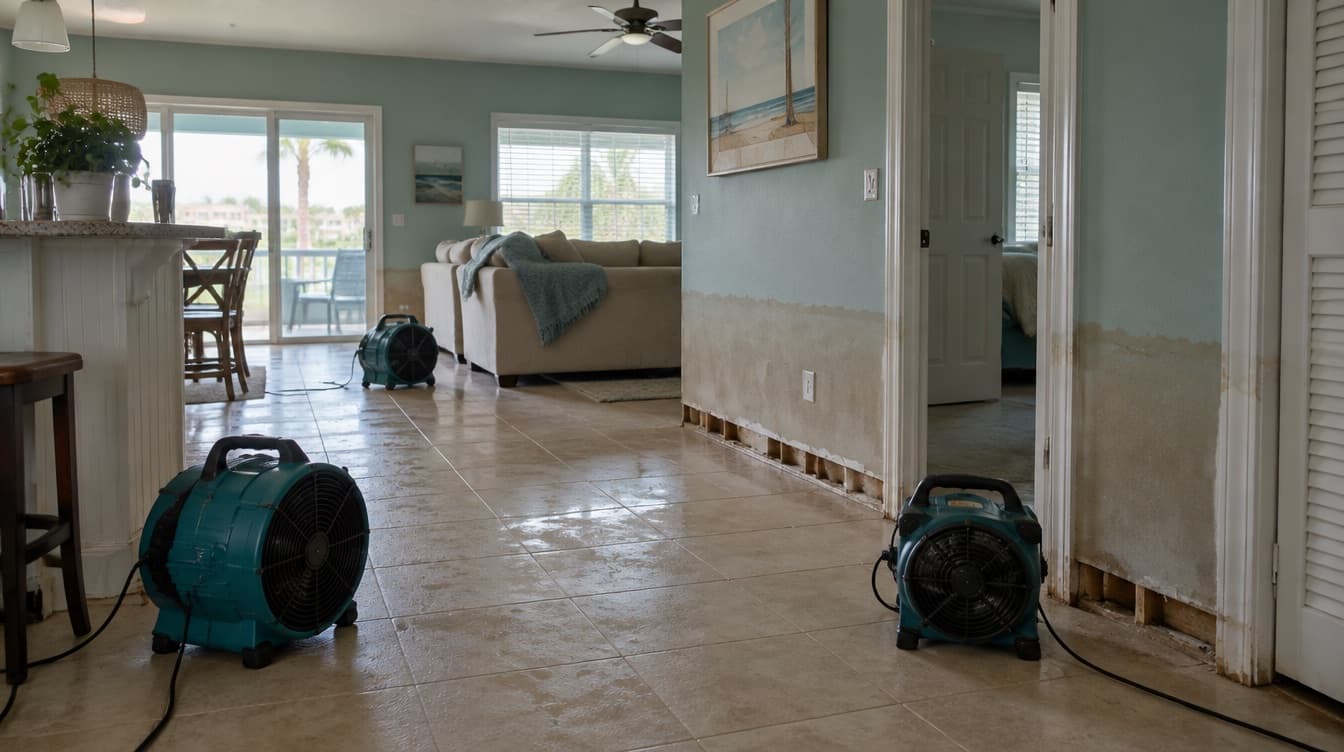
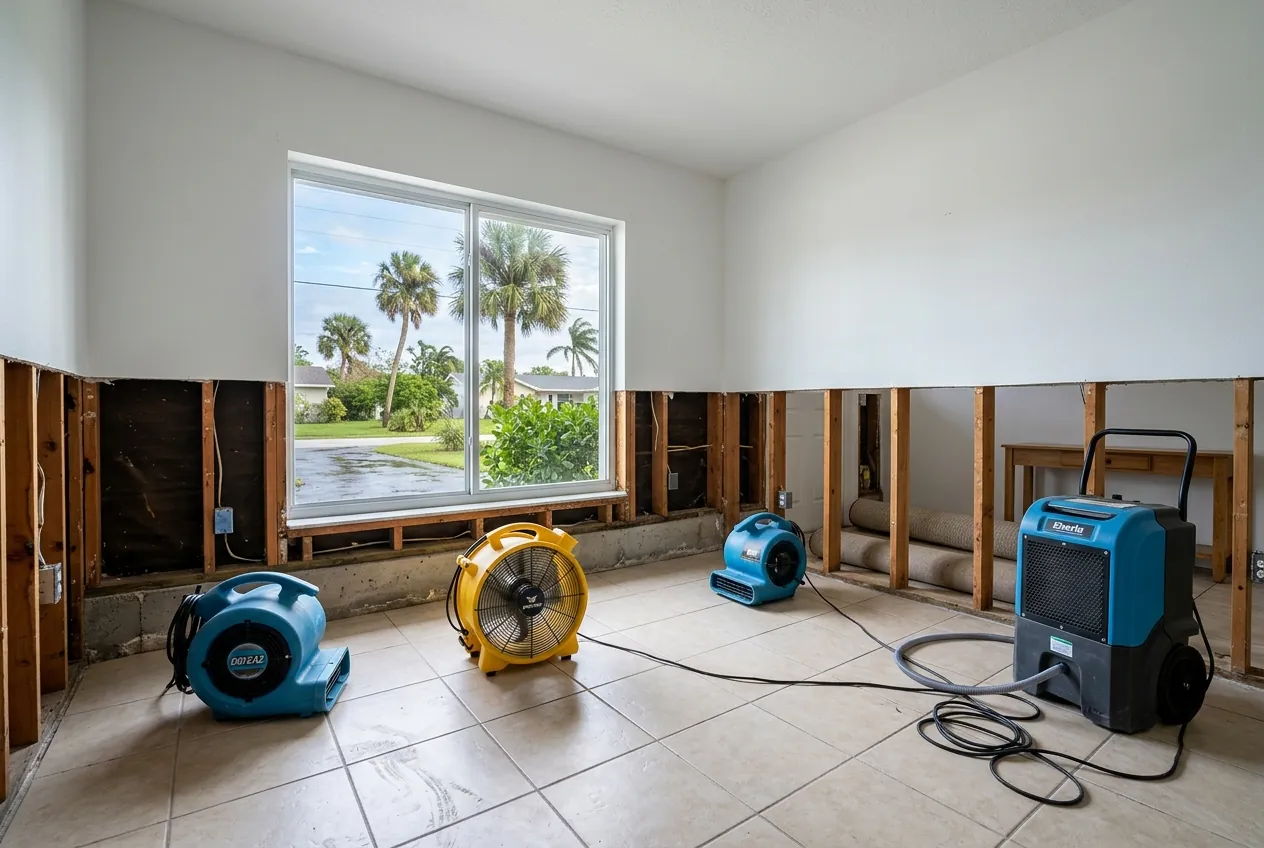
Often not. Drywall (sheetrock) that got wet with clean water can often be dried in place if drying starts quickly and the board is still firm, with no swelling, sagging, crumbling, or mold. The usual approach is to pull the baseboards so air reaches the bottom of the wall, then dry the room with dehumidifiers and air movers until the readings say dry.
The catch is that the wet area is usually bigger than it looks. Drywall wicks water above the visible waterline, and the back of the board, inside the wall cavity, can be wetter than the painted face. That's why the decision comes from moisture readings, not appearance.
Do you need to replace drywall that got wet?
Only in certain cases: when it was soaked by sewage or floodwater (Category 3 water), when it has swollen, sagged, softened, or crumbled, when it has mold growth, or when wet insulation behind it means the cavity can't dry with the wall closed. Ceiling drywall that sags from water can fall, so keep people out from under it.
When drywall comes out, it's usually with a flood cut: a straight cut along the wall above the highest wet reading, so the lower section can be removed and the cavity and framing can dry. After Category 3 water, the cut also gets the contaminated material out of the house. The framing is cleaned and dried, and new drywall goes up only after the readings confirm dry.
Does wet drywall always grow mold?
No. Drywall that's dried quickly usually doesn't. The risk climbs the longer it stays wet, because the paper facing is food for mold and Florida's warm, humid air does little to dry it. EPA guidance is to dry water-damaged materials within 24 to 48 hours, and when growth does start, it's often on the back of the board, where nobody sees it.
Once drywall has mold growth, it's removed, not dried and kept. As the EPA puts it, "Absorbent or porous materials, such as ceiling tiles and carpet, may have to be thrown away if they become moldy." Removing growth that covers more than 10 square feet is mold remediation under Florida law (§ 468.8411).
Can wet carpet be saved?
Often, after a clean-water leak caught early. Carpet that's extracted thoroughly and dried with air movers can often be saved. The pad under it is a different story: it holds water like a sponge and is frequently replaced so the floor beneath can dry.
Will wet carpet dry on its own? Rarely all the way. The pad and the slab or subfloor under it stay wet long after the surface feels dry. And after sewage or floodwater, both carpet and pad are removed: porous materials soaked by Category 3 water aren't cleaned and kept.
Can wet insulation mold?
Yes. Fiberglass itself isn't much of a food source, but its paper facing and the dust caught in it are, and wet batts hold moisture against the framing and the back of the drywall. That's why wet insulation in a wall cavity usually comes out, so the cavity can dry. Baseboards, floors, and cabinets have their own rules, summarized in the table below.
What to do next
Stop the water and photograph the wall and the waterline before anything is removed. Don't patch, caulk, or paint over a wet or stained wall. Get moisture readings from the floor up, including behind baseboards and cabinets, so the decision about what stays and what goes is based on numbers. If the water came from a sewer line or from outside, treat it as Category 3 and keep people and pets away.
Sterling maps the moisture with meters and thermal imaging, dries what can be saved, and removes what can't, with photos, daily readings, and drying records for your claim. Water emergency calls are answered every day from 7 AM to midnight, and every job starts with a free on-site estimate and a written, itemized quote.
| Material | After a clean-water leak |
|---|---|
| Drywall (sheetrock)Removed, usually with a flood cut, if soaked by Category 3 water, swollen, sagging, or moldy. | Often dried in place if still firm, with no swelling or mold |
| CarpetRemoved after Category 3 water. | Often saved after thorough extraction and drying |
| Carpet padRemoved after Category 3 water. | Frequently replaced; it holds water like a sponge |
| Wall insulation (batts)Replaced after the framing reads dry. | Usually removed so the wall cavity can dry |
| BaseboardsSwollen baseboards, common with MDF, are replaced. | Pulled so the bottom of the wall can dry |
| Laminate and luxury vinyl plankWater trapped under the planks can't dry through them. Laminate's fiberboard core swells and usually isn't reusable. | Often lifted so the floor underneath can dry |
| HardwoodSome floors recover as they dry; buckled boards may need replacing. | Needs specialty (Class 4) drying |
| Cabinets and toe kicksParticleboard and MDF that swell usually can't be saved. | Toe kicks pulled so the space underneath can dry |
General guidance, not a rule for every job. Moisture readings, the category of water, and the condition of each material decide what stays.