Short answer
Sterling's Basic Mold Inspection is $400 and the Premium Indoor Air Quality Inspection, which adds accredited third-party laboratory testing, is $700 — both for properties up to 2,500 sq ft, plus $50 per additional 500 sq ft. Across the wider Florida market, mold inspections typically run $200–$650 depending on whether the inspection includes only a visual walk-through or full instrument diagnostics and lab analysis. The price difference between a cheap inspection and a thorough one is almost entirely a difference in equipment and independence.
How much does a mold inspection cost in Port St. Lucie?
Sterling publishes two flat prices rather than making you request a quote to learn what anything costs. The Basic Mold Inspection is $400. The Premium Indoor Air Quality Inspection, which adds an accredited laboratory's analysis of your indoor air against a matched outdoor baseline, is $700. Both cover properties up to 2,500 square feet, and the only size adjustment is $50 per additional 500 square feet.
Across the broader Florida market you will see quotes from roughly $150 to $650. That is a wide band, and the spread is not arbitrary — it maps almost perfectly onto what equipment the inspector actually brings and whether anything gets sent to a lab.
Why does a $150 inspection cost so much less than a $700 inspection?
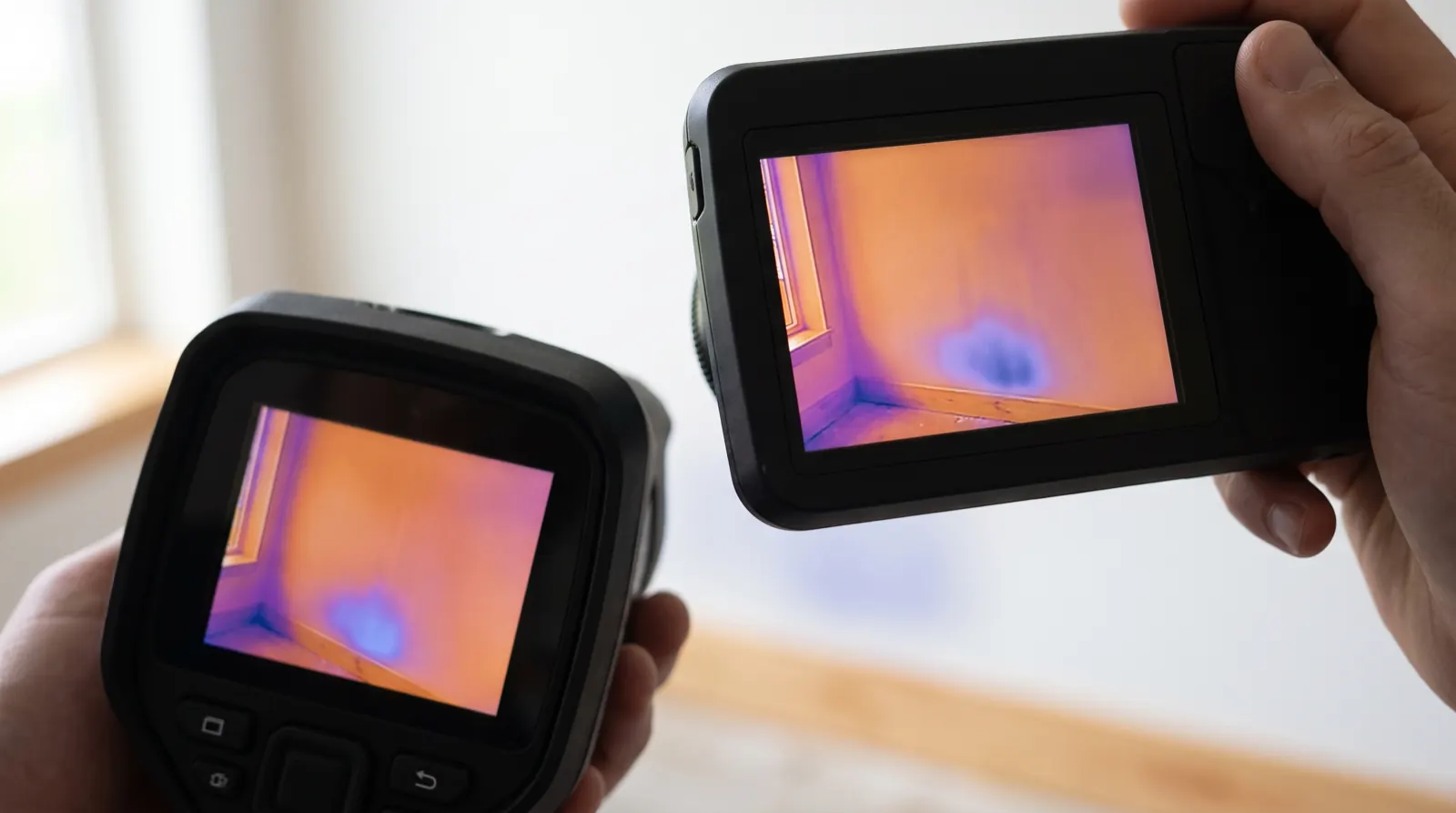
At the bottom of the market, an inspection is a person walking through your home, looking at surfaces, and writing a summary. There is nothing dishonest about that, but it is bounded by what human eyes can see. It cannot find moisture inside a wall cavity, under flooring, or above a ceiling, because nothing in that price buys an instrument capable of detecting it.
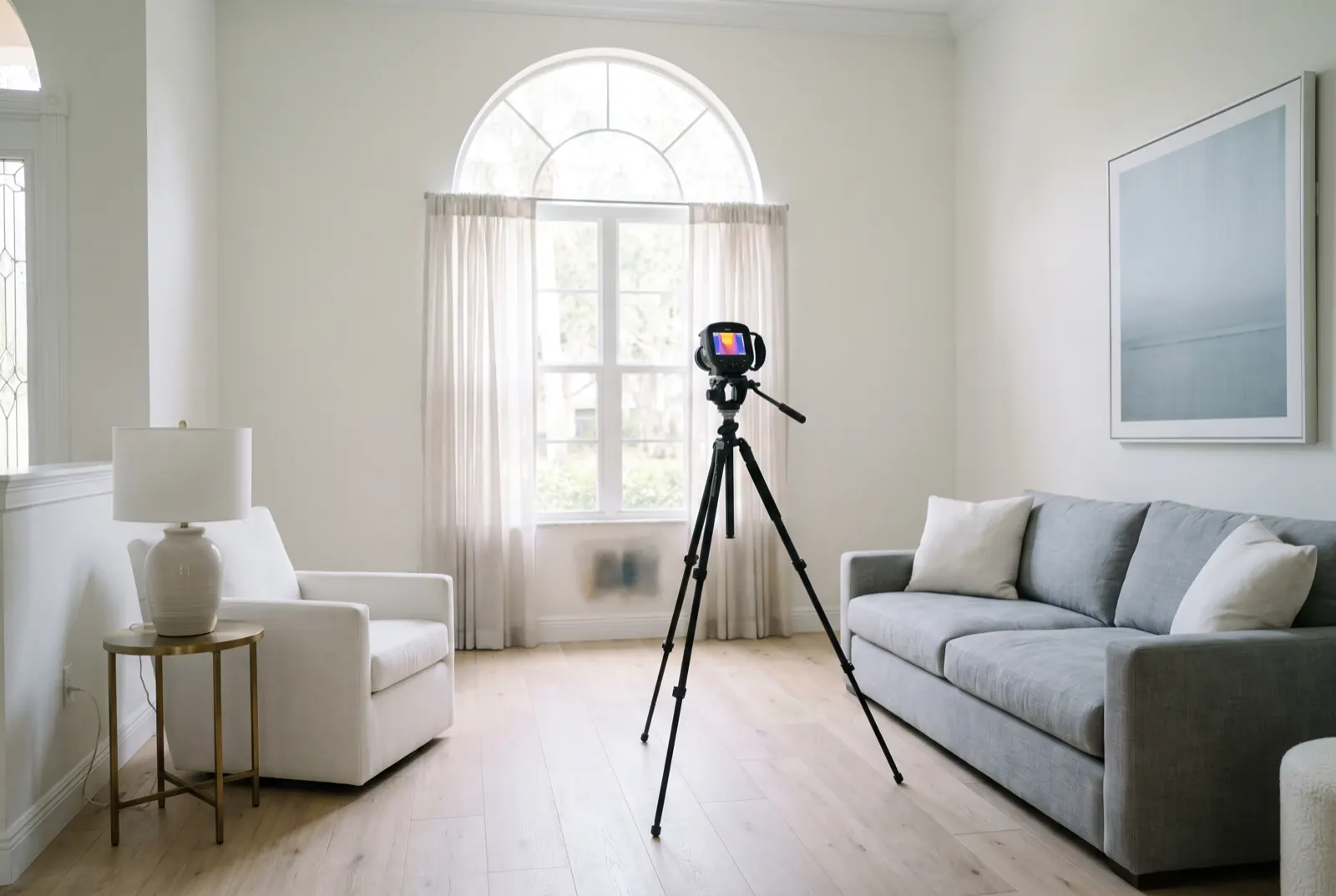
A full diagnostic inspection adds infrared thermal imaging to reveal temperature differences that indicate hidden dampness, moisture meters to confirm what the camera suggests, and accredited laboratory sampling where the findings warrant identifying what is actually present.
The gap in price is a gap in what the inspection is capable of concluding. A cheaper inspection is not a discount on the same answer — it is a narrower question.
What actually drives the price of a mold inspection?
Property size is the most common factor, which is why most inspectors quote a base price for a typical home and adjust upward beyond it. A second story, a detached structure, or a crawl space adds scope.
Accessibility matters more than people expect. An area of concern behind built-in cabinetry, above a finished ceiling, or inside a tight attic takes longer to assess safely, and sometimes cannot be assessed non-invasively at all.
Sampling is the other large variable. Every laboratory sample carries a real analysis fee, typically $35–$75 each in the Florida market, which is why inspections that include lab work sit at the upper end of any price range. The question worth asking is not whether sampling is included, but whether it is warranted for your situation.
How does inspection cost compare to remediation cost?
Almost nobody books a mold inspection because they want the report. They book one because they are about to make a much larger financial decision and do not want to guess.
Mold remediation ranges from about $300 into five figures and up, depending on what's wrong and what has to be done. Against that, the inspection is the least expensive step in the entire process.
That asymmetry cuts both ways, and this is the part most cost articles skip. An inspection protects you from paying for remediation you never needed just as much as it protects you from missing a problem. Both errors are expensive. The assessment is what makes either one avoidable.
Why is a "free" mold inspection not really free?
Many remediation companies offer a free inspection. That offer is real, and so is the incentive behind it: the person performing it is compensated only if you buy the cleanup they recommend. This is not an accusation about anyone's honesty — it is a plain description of how the arrangement is structured.
Florida's licensing framework recognizes this tension directly by separating mold assessment from mold remediation as distinct licensed activities, and by restricting the same party from performing both on the same project. The separation exists precisely because the party diagnosing a problem should not be the party paid to fix it.
When you compare prices, compare incentives too. An assessment you pay for is an assessment that owes you nothing but an accurate answer — including the answer that you do not need to spend anything at all.
What should you ask before booking a mold inspector?
Ask what instruments will actually be used, and whether thermal imaging and moisture metering are included or extra. Ask whether the inspector holds a Florida mold assessor license and what the number is, since the state requires it on advertising and reports and maintains a public verification tool.
Ask whether the company could also end up remediating your home. Ask what the report includes and how quickly you receive it. Ask whether the quoted price can change after the visit, and get the answer in writing.
An inspector who answers all six of those without hesitation is telling you something useful about how they work, regardless of what they charge.