Short answer
DIY mold test kits are inexpensive but of limited value. A settling-plate kit will almost always grow something, because mold spores are everywhere, so a positive result rarely means anything on its own. Kits do not locate the moisture source, lack an outdoor baseline for context, and cannot tell you whether a home has a real problem. A professional assessment answers those questions.
| DIY mold test kit | Professional assessment | |
|---|---|---|
| Cost | Low retail cost, plus per-sample lab fees if the sample is mailed in | Flat $400 (Basic) or $700 (Premium Indoor Air Quality) at Sterling, up to 2,500 sq ft |
| Outdoor baseline | Almost never included, so the indoor result has nothing to be compared against | A same-day outdoor control sample is standard |
| Locates the moisture source | No | Yes — moisture meter, hygrometer, and thermal imaging |
| How it samples | Most kits are settle plates, which grow whatever happens to land on them. Spores are present in all indoor air, so a plate almost always grows something | Volumetric spore-trap sampling measures a known volume of air |
| Chain of custody | None | Documented, with accredited third-party lab analysis |
| Weight in a sale or claim | Little — no license, no baseline, no stated methodology | A written report from a licensed assessor, with photos and readings |
| What you actually learn | That mold exists somewhere, which was already true | Where the water is, what it is doing, and what to do next |
A positive DIY result is close to a foregone conclusion, which is why it so rarely changes a decision. If a kit result is what prompted your concern, an assessment is what interprets it.
What does a DIY mold test kit actually do?
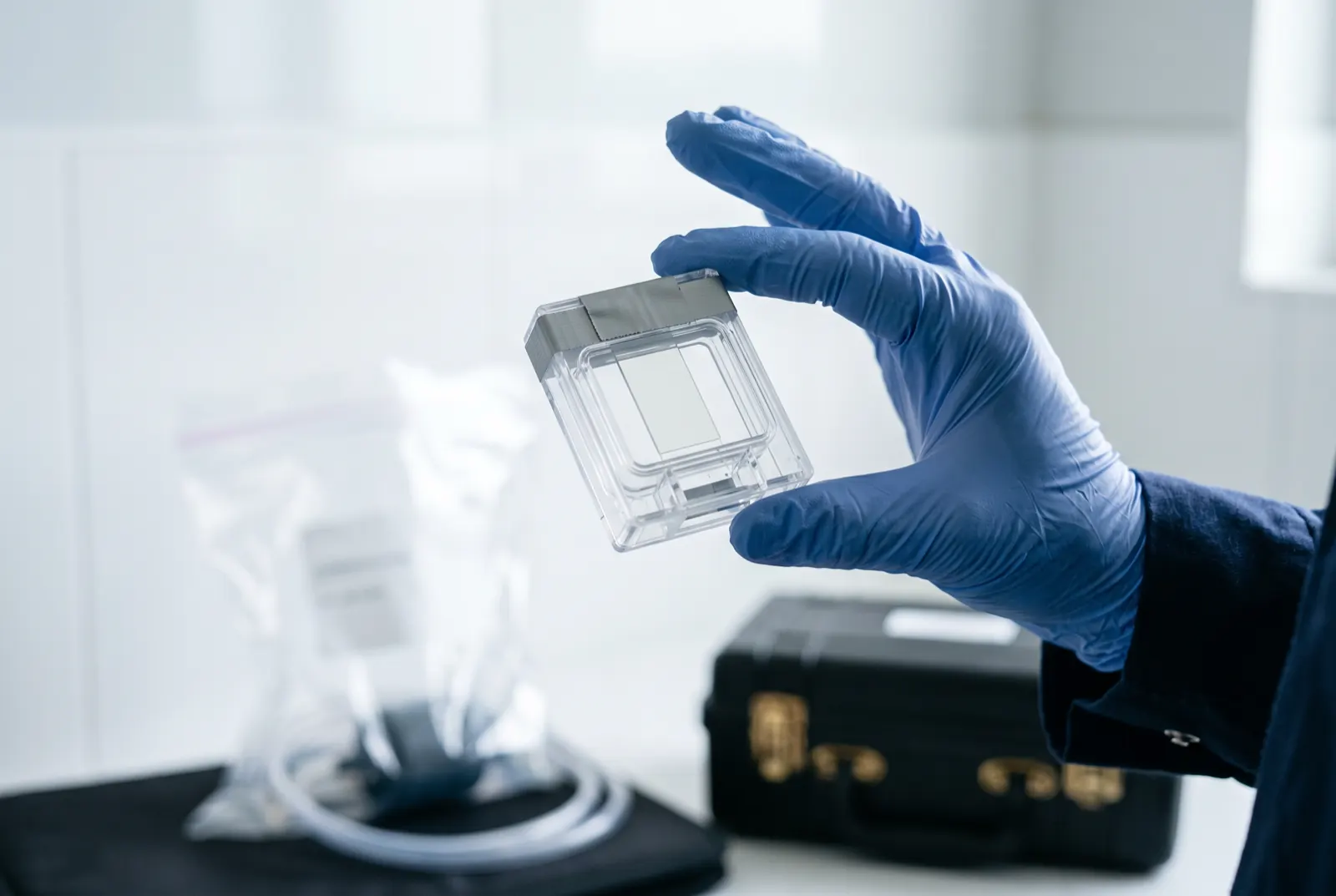
The typical hardware-store kit is a settling plate: you expose a dish of growth medium to the air, close it, and wait to see what colonizes it. Some kits offer to send the plate to a lab for an added fee. That is the whole method.
Here is the problem baked into it: mold spores are present in essentially all indoor and outdoor air. Leave a growth plate out anywhere and something will grow. A plate that "tests positive" has told you what you already knew — that spores exist — not that your home has a mold problem.
Why does a DIY kit have no outdoor baseline?
Professional air sampling is interpreted by comparing indoor results against an outdoor baseline taken the same day, because outdoor air sets the reference. DIY kits provide no baseline, so even a lab-analyzed plate gives a number with nothing to compare it to.
Settling plates also do not measure a known volume of air the way a calibrated spore-trap pump does, so the results are not quantitative in any meaningful way. They cannot be read as "how much" is in the air.
What question can a DIY mold kit never answer?
Even a perfect airborne measurement would not tell you the thing that matters most: where the moisture is. Mold is a moisture problem first, and no plate on a countertop finds the leak behind a wall or the sweating duct in the attic. Without the source, you cannot fix the problem — you can only measure it.
This is why a clean-looking DIY result can be dangerously reassuring in a home with a hidden leak, and why an alarming result can send people into panic with no idea of the cause.
What does a professional mold assessment add?
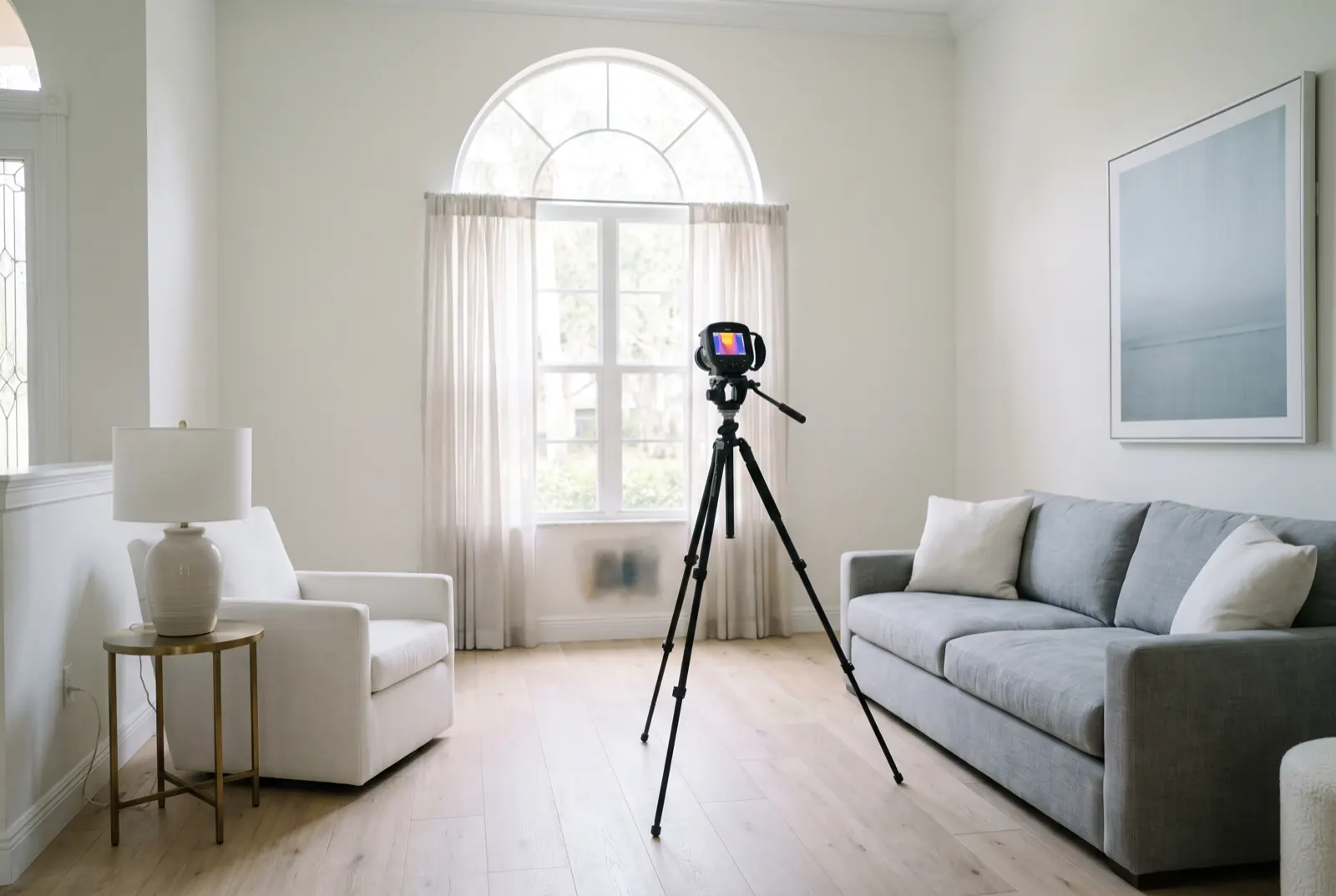
A professional inspection is an investigation, not a single measurement. It reviews the property's history, visually assesses accessible areas, and uses moisture meters, a hygrometer, and thermal imaging to find the moisture that mold needs. When sampling genuinely helps — scoping, a documented baseline, or clearance — it is done with proper controls and an accredited lab.
Crucially, an assessor interprets the results in context and points to a cause and a corrective direction. That is the difference between data and an answer.
Is a DIY mold test kit ever useful?
A DIY kit can satisfy idle curiosity, but it should not drive a real decision — a home purchase, a remediation, a health concern, or a dispute. For any of those, the modest cost of a professional assessment buys something a kit cannot: findings you can actually rely on. And an independent assessor has no incentive to inflate what those findings say.