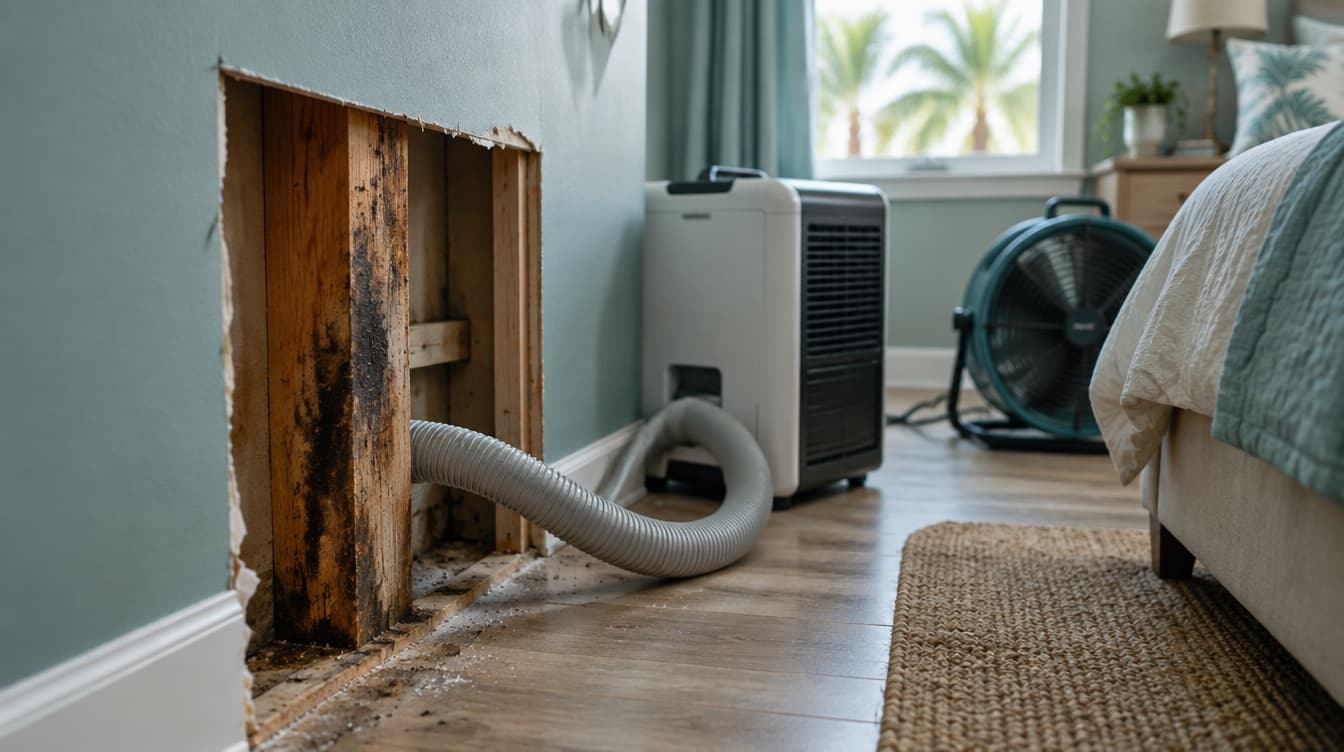
When a mold inspection finds mold, the first thing to do is fix the moisture source the report identified, because nothing else holds until that is done. Then decide, using the report, whether the affected area is small and accessible enough to handle yourself or large and involved enough to need a licensed remediator working from a written protocol. If a remediator is hired, get more than one bid against that protocol, and have independent clearance testing done afterward before you consider it finished.
That sequence is the whole answer, and every step in it exists because we have watched what happens when one is skipped. Across the Treasure Coast and Palm Beach County we regularly meet homeowners who cleaned before fixing the source and watched the growth return, who hired a remediator without a scope and paid for work the house did not need, or who accepted a remediator's own word that the job was done and later found it was not. This note walks through each step in order, what it looks like in practice, and what to watch for. It starts from the moment the report arrives.
Read the report for the source, not the mold
The most important sentence in a mold inspection report is the one that says where the water is coming from, and it is the sentence to read first, before the photographs of growth and before any lab table.
A well written report leads with it. A condensate line clogged with biofilm overflowing the pan onto the closet floor. A bathroom exhaust fan venting into the attic. Wind driven rain entering at a failed window sill on the west wall. A supply line weeping under the kitchen sink. Indoor humidity averaging sixty three percent because the air conditioner is oversized and short cycling. The growth in the report is the consequence of one of those, and the growth will return after any cleaning unless the cause is corrected. Our note on why mold keeps coming back after cleaning is about exactly that.
The report should also tell you whether the moisture is active or historical, using meter readings rather than guesses, because that changes the urgency. An active source needs to be stopped now. A historical one that has already dried means the growth is a cleanup question rather than an emergency. And the report should tell you the extent of what was found, whether it is confined to a surface you can see or whether the readings indicate it continues into a wall cavity or under flooring.
If the report you have does not clearly state a source, or says the source could not be determined without opening finishes, that is a legitimate finding and the next step is deciding whether to open the wall or to sample first. Our note on what a professional mold inspection should include describes what a complete report looks like, and if yours is a single page with a cleanup quote on the back, a second opinion is worth its cost before anything else is spent.
Fix the moisture source first
Stop the water, then dry what it touched, and do both before any cleaning or removal, because cleaning a surface that is still being wetted is wasted money.
For most sources the fix is a trade rather than a remediator. A plumber for the supply line, the trap, the water heater. An air conditioning technician for the condensate line, the float switch, the coil, and the drain pan, and for the conversation about whether the system is sized correctly. A roofer for the flashing and the penetrations. A handyman or an electrician for the bathroom fan that needs to be re-ducted to a roof cap. A window contractor for the sill and the caulk. A landscaper or the homeowner for the downspout extensions and the grading. Our note on condensate drain line failures covers the most common one, and our note on bathroom exhaust fans covers the second most common.
When the source is humidity rather than a leak, the fix is about the air conditioning's runtime and supplemental dehumidification, and it starts with the thermostat fan on auto and a hygrometer reading in the mid forties to mid fifties percent. Our note on what indoor humidity should be in coastal Florida has the targets.
After the source is stopped, the wet materials have to actually dry, and in a Florida house that does not happen on its own. Drywall, framing, and subfloor that were wet for more than a couple of days often need fans and a dehumidifier directed at the area for days, and materials that stayed saturated long enough may need to be replaced rather than dried. A moisture meter reading on the affected material after drying, compared against a dry reference, is how you know it worked. A remediator or a water damage contractor can do this, and for a small area a homeowner with a rented dehumidifier and fans can too.
Decide what you can handle yourself
A small area of growth on a hard, non porous surface, or on a surface that will be removed anyway, with the source already fixed and no one in the home who is sensitive, is reasonable for a homeowner to handle. A large area, growth on porous materials that cannot be cleaned, growth inside a wall cavity or under flooring, growth in the air handler or the ducts, or any situation involving a sensitive occupant is a job for a licensed remediator.
The dividing line most guidance uses is the size of the affected area, and a commonly cited threshold is around ten square feet, roughly a three foot by three foot patch. Below that, on a surface like tile, sealed concrete, or metal, cleaning with detergent and water, drying thoroughly, and disposing of any porous material that was affected is the standard homeowner approach. A bathroom ceiling with a haze of specks above a shower whose fan has now been fixed is the classic example. Bleach is not necessary and on porous surfaces is counterproductive, since it wets the material and does not reach growth below the surface. Wear a respirator rated for particulates, gloves, and eye protection, work with the area ventilated, bag the debris, and clean the surrounding area afterward.
Above that threshold, or on porous materials like drywall, insulation, carpet padding, and ceiling tile that cannot be cleaned and have to be removed, or anywhere the growth extends beyond what you can see, the work involves containment to keep spores from spreading to the rest of the house, negative air pressure, controlled removal, HEPA cleaning, and disposal, and that is what a remediator is licensed and equipped to do. The air handler and the duct system are always professional territory. And where someone in the home has symptoms a physician associates with damp environments, the threshold for professional work drops to nearly zero, because the disturbance of cleaning releases exactly what that person should not be breathing.
An independent assessor's report should tell you which side of that line your finding is on, in writing, and Sterling's reports do, because an assessor who cannot remediate the home has nothing to gain from steering the answer.
Get remediation scoped in writing before anyone bids
If a remediator is needed, the scope of the work should be written by an independent assessor, not by the remediator, and every bid should be against that same document.
This is the step that most controls what remediation costs and whether it works. A remediator who writes their own scope is estimating their own job, and the scope tends to grow. A written protocol from the assessor who found the problem defines the affected areas by location and extent, specifies which materials are to be removed and which cleaned, sets the containment and air filtration requirements, states how the work area is to be dried and verified, and defines what clearance will require. Sterling's sample remediation protocol shows what that document looks like. Hand the same protocol to three remediators, and the bids become comparable, and the one that adds a great deal beyond the protocol has to explain why.
Florida licenses mold assessors and mold remediators separately, requires the remediator license for anyone who performs remediation for a fee above a small threshold, and its statute prohibits an assessor from remediating a property they assessed within the previous twelve months and bans referral fees between the two. The Florida mold law page quotes the statute in full. In practice that means the person who wrote your protocol should have no relationship with the person bidding on it, and if an inspector hands you a remediation quote from their own company or a partner, the inspection was a sales visit. Our guide to the mold assessor versus mold remediator roles covers that conflict.
Verify the remediator's license on the state's public search the same way you would an assessor's, using the steps on our verify my license page. Ask for references for similar jobs. Ask whether they will work to the protocol as written and put that in the contract. Ask what their process is for containment and for protecting the rest of the house. And ask what happens if clearance fails, which should be that they return and correct the work at their cost.
Verify with independent clearance testing
Remediation is not finished when the remediator says it is. It is finished when an independent assessor has inspected the work area, confirmed the materials are dry and the growth is gone, and, where the protocol calls for it, taken samples that compare acceptably against the baseline taken before the work and against an outdoor control.
Clearance testing, sometimes called post remediation verification, is the step that most people skip and the one that most often reveals a problem. The visual portion checks that the removal was complete, that no growth remains on exposed framing or the back of adjacent materials, that the area is dry by meter reading, and that containment did not fail and spread debris into the rest of the house. The sampling portion, when used, compares the air in the work area to the outdoor control and to the pre remediation baseline, and it is why a baseline sample before the work matters. Our note on what passing clearance testing means explains what a pass does and does not prove, and the mold clearance testing page describes the service.
Have clearance done before the area is rebuilt. Once new drywall is up and painted, a failed clearance means opening it again. The right sequence is remediation, clearance, then reconstruction, and a remediator who wants to close the wall before clearance is asking you to trust rather than verify.
Keep the house from doing it again
Once the source is fixed, the area is clean, and clearance has passed, the remaining work is holding the moisture picture where it belongs, and that is habits rather than contractors.
Hygrometers in a bedroom, the living area, and near the air handler return, read occasionally, with the target in the mid forties to mid fifties percent. Thermostat fan on auto. Condensate pan and drain line flushed monthly during cooling season, float switch tested, filter changed every sixty to ninety days. Bathroom fans run for twenty minutes after every shower, ideally on a timer. Gutters clear, downspouts extended, drips fixed the week they appear. Closets on exterior walls kept a little open with the contents off the wall. A look in the usual places every spring and fall. Our guide to preventing mold in Florida homes goes through all of it.
If the growth comes back in the same place after all of that, the source was not what everyone thought, and the next step is an assessor rather than another cleaning.
What to do next
Today, read the report for the source and call the trade that fixes it. This week, get the wet materials drying. Then decide, from the report's description of extent and materials, whether the cleanup is yours or a remediator's. If a remediator, get a written protocol first and bid it to three. Book clearance before the wall is closed. Then set the house up so it stays dry.
Sterling's assessor has personally completed more than three hundred inspections since January 2026 across the Treasure Coast and Palm Beach County, and the reports are written to be handed to the plumber, the air conditioning technician, and the remediator without translation. If your inspection was done by someone else and the report does not tell you the source, the extent, and which side of the do it yourself line you are on, a second opinion from an independent assessor is the right next call, and you can request a quote for one. If it was done by us, the what you receive page describes the protocol and the clearance services that follow, and none of them involve us doing the remediation, because Florida law bars us from remediating a home within twelve months of inspecting it, so the protocol goes to any licensed remediator you choose.
Frequently asked questions
What should I do first if a mold inspection finds mold?
Fix the moisture source the report identified before anything else. Call the plumber, air conditioning technician, roofer, or handyman that the source requires, stop the water, and get the wet materials dried with fans and a dehumidifier. Cleaning or removing mold before the source is corrected wastes the money, because growth returns wherever moisture lingers. The report should state the source, whether it is active, and the extent of the affected area.
Can I clean up mold myself after an inspection?
For a small area, roughly under ten square feet, on a hard non porous surface, with the moisture source already fixed and no one in the home who is medically sensitive, cleaning with detergent and water, drying thoroughly, and disposing of any porous material is reasonable for a homeowner with a respirator, gloves, and eye protection. Larger areas, porous materials that must be removed, growth inside walls or floors, and anything in the air handler or ducts call for a licensed remediator.
Do I need clearance testing after mold remediation?
Yes. A remediator's own statement that the work is complete is not verification. Independent clearance testing by a licensed assessor inspects the work area for remaining growth and moisture, confirms containment held, and where the protocol calls for it compares air samples against the outdoor control and the pre remediation baseline. Clearance should be done before the area is rebuilt, so that a failed result does not mean reopening finished walls.