Short answer
Air sampling is most useful when you need to document conditions for a third party, when you suspect a problem you cannot see, when someone in the building has ongoing symptoms and you want objective data, or when you need to verify that remediation worked. It is least useful when mold is already visible and the moisture source is obvious — in that case sampling usually confirms what you can see and delays the repair that actually matters. An air sample is only interpretable when paired with a matched outdoor baseline taken the same day.
| Air sampling | Surface sampling | |
|---|---|---|
| What it measures | Airborne spore concentration in a known volume of air | Whether one specific visible spot is mold, and what type |
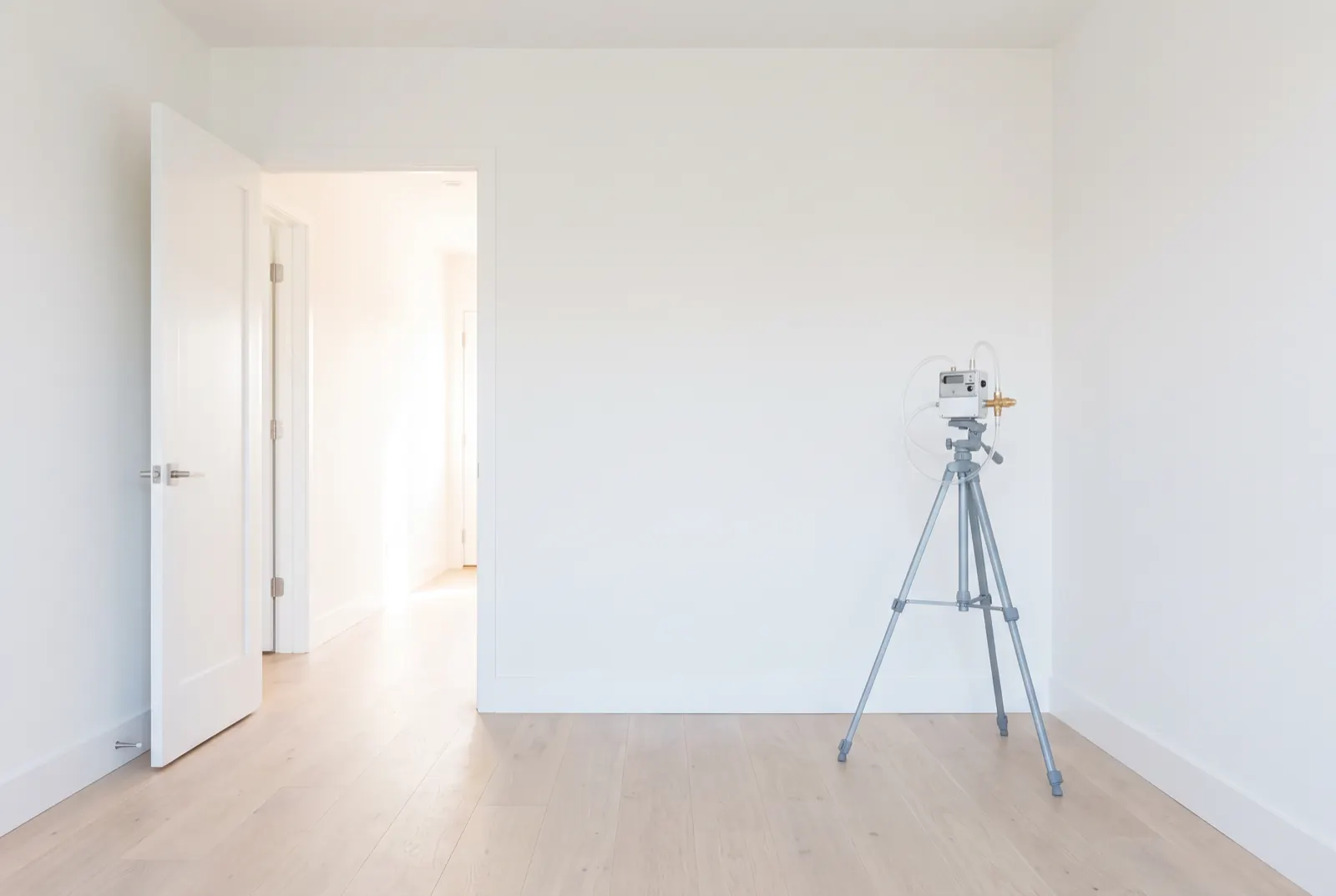
| Method | Spore-trap cassette drawn by a calibrated pump | Swab, tape lift, or bulk sample |
| Outdoor baseline needed | Yes — indoor counts mean nothing without a same-day outdoor control | No |
| Best used for | Judging whether indoor air is elevated, and for post-remediation clearance | Identifying an unknown stain or suspected growth |
| What it cannot tell you | Where the moisture is coming from | Whether the rest of the building is affected |
| At Sterling | Included in the $700 Premium Indoor Air Quality Inspection | Quoted per sample, when it answers a specific question |
Both are tools used inside an assessment, not substitutes for one. Sampling is worth paying for when the result would actually change a decision.
What does a mold air sample actually measure?
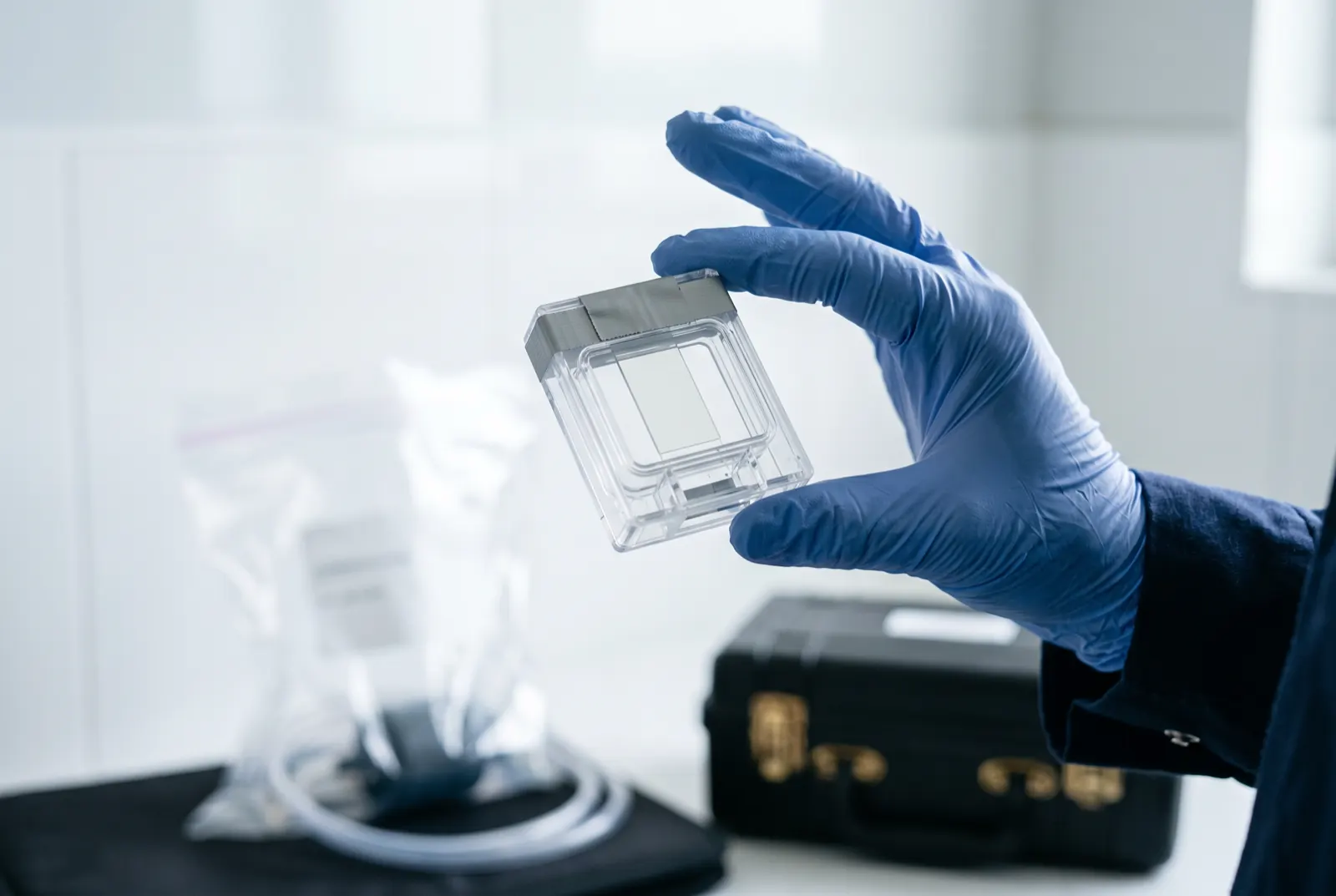
A spore-trap air sample draws a measured volume of air across an adhesive slide for a set period. The slide is sent to an accredited laboratory, where an analyst counts and identifies the spores captured on it. The result is a count of spore types per cubic meter of air at that location, on that day, during those few minutes.
That last clause matters more than anything else on the report. An air sample is a snapshot, not a monitor. Running the air handler, opening a door, or vacuuming an hour earlier changes what the sample captures.
Why is an outdoor baseline sample not optional?
Mold spores exist in the outdoor air everywhere on earth. Florida's climate keeps outdoor spore levels meaningfully high for much of the year. This means an indoor spore count, presented on its own, is an uninterpretable number — there is no universal threshold that separates 'normal' from 'a problem.'
The comparison is what creates meaning. An assessor takes an outdoor sample the same day, under the same conditions, and compares it to the indoor result. Indoor levels similar to or lower than outdoors, with a similar mix of spore types, generally suggests indoor air is reflecting what is drifting in from outside. Indoor levels substantially higher than outdoors, or dominated by types that are scarce outdoors, points toward an indoor source.
If anyone offers you air sampling without an outdoor baseline, the resulting number cannot support a conclusion. That is worth knowing before you pay for it.
When is mold air sampling worth the cost?
First, when you need to prove something to a third party. Buyers, insurers, landlords, attorneys, and courts want data produced by an independent laboratory, not a professional's opinion. This is the single most common legitimate reason to sample.
Second, when you suspect a problem you cannot locate. Persistent musty odor with no visible growth is the classic case — the odor is real, and thermal imaging plus moisture metering and sampling can help establish whether there is a hidden source worth opening a wall to find.
Third, when someone in the building has ongoing respiratory symptoms and their physician wants objective information about the environment. An assessor cannot and should not tell you what is causing symptoms; that is a medical question. What an assessor can do is characterize the building so the medical conversation has real data in it.
Fourth, post-remediation verification. After a cleanup, sampling is how you confirm the work achieved what it was supposed to achieve, rather than taking the remediator's word for it.
When is mold air sampling a waste of money?
If there is visible growth on a wall and an obvious moisture source feeding it, a lab result will tell you that you have mold. You already know that. The useful work is identifying the water source, determining how far the moisture has traveled, and scoping the repair — none of which a spore count answers.
Sampling to 'prove there is no mold' also does not work. A single clean sample cannot establish absence. Conditions vary by room, by day, and by whether the air handler was running. No inspection and no sample can certify a property mold-free, and any report claiming to is overreaching.
There is also a real cost to unnecessary sampling beyond the fee: it delays the repair. Water inside a wall keeps doing damage while everyone waits on lab turnaround.
What is the difference between surface sampling and air sampling?
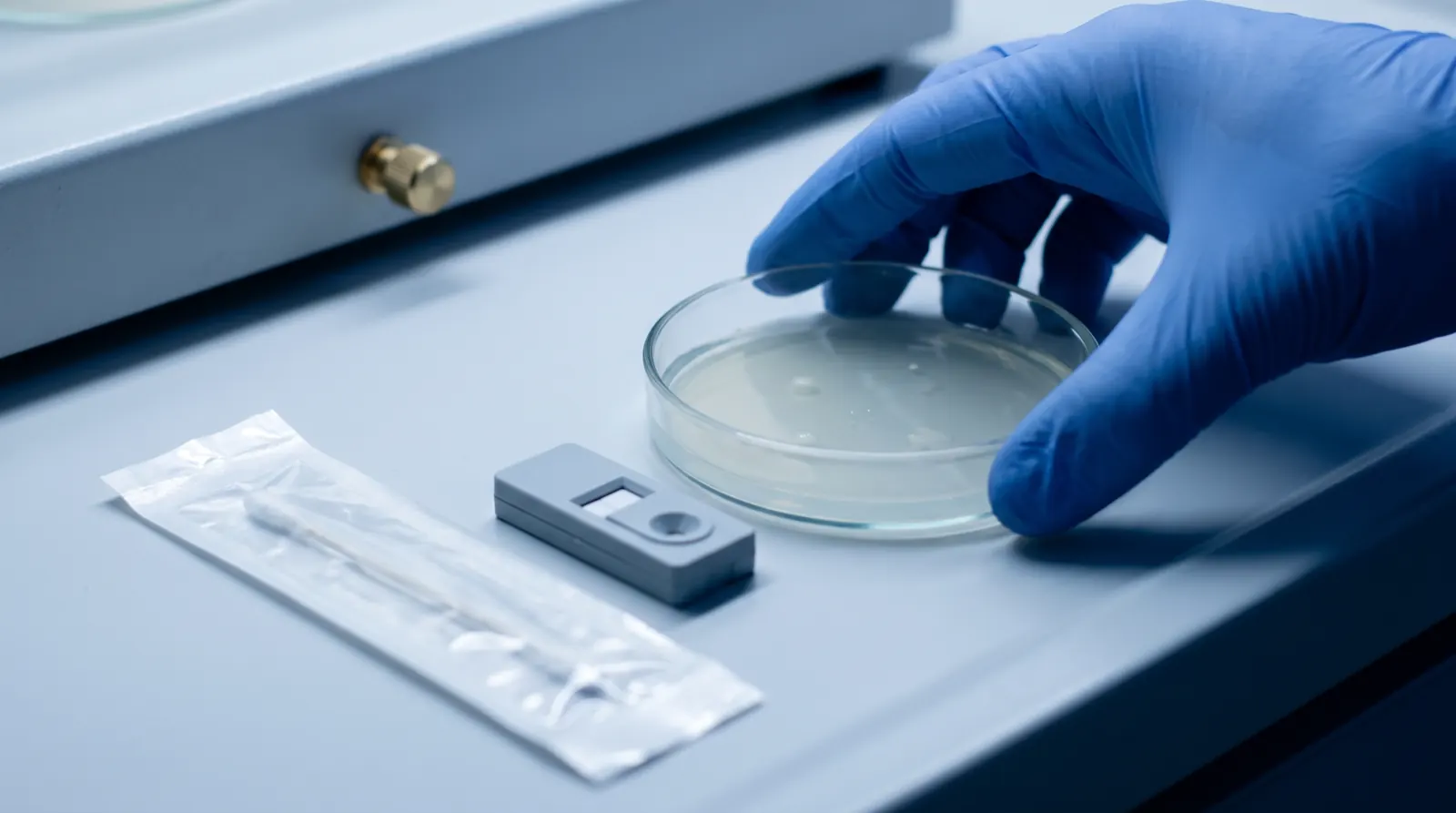
Surface sampling — a tape lift or a swab sent to the laboratory — answers a different question. It tells you what is on a specific surface. If you want to know whether a dark stain on drywall is active growth or just water staining, a surface sample answers that directly.
Air sampling tells you what is airborne and therefore breathable and mobile. Neither substitutes for the other, and neither substitutes for finding the moisture.
This is the practical difference between Sterling's two packages: the $400 Basic inspection addresses "is there a moisture problem and where is it coming from," using thermal imaging and moisture metering, while the $700 Premium package adds the lab-analyzed air sampling that addresses "what exactly is airborne, and can I prove it."
How do you decide whether to sample?
Ask yourself who needs to be convinced. If the answer is 'me, so I know what to fix,' a thorough visual and moisture inspection usually gets you there, and you can always sample later if findings warrant it. If the answer is 'someone else — a buyer, an insurer, a landlord, a judge,' you need the independent laboratory documentation.
A good assessor will tell you which one your situation calls for, including when it is the less expensive one. If someone recommends sampling before they have looked at the property, that recommendation was not based on your property.