Short answer
Choose a Florida-licensed mold assessor who is independent of whoever will remediate your home, carries insurance, uses a clear sampling methodology with an accredited lab, and gives a defined report turnaround. Verify the license number on the state DBPR website before you book.
Updated July 24, 2026
Confirm the license — and verify it yourself
Florida licenses mold assessors under Chapter 468, Part XVI. A legitimate assessor holds an MRSA license and must display the number on advertising and reports. Sterling's is MRSA5798.
Do not take the number on faith. Look it up on the Florida Department of Business and Professional Regulation (DBPR) license-verification site to confirm it is active and in good standing. It takes two minutes and tells you the license is real.
Insist on independence
The single most important filter is whether the inspector wants to be the one paid to fix your home. An independent assessor who won't be remediating the home it inspects has no financial stake in finding more work, so the findings are not shaped by a cleanup quote. If the same company wants to both diagnose and fix the problem on your home, you have lost your second opinion.
Check insurance, method, and lab
Ask whether the assessor carries general liability and errors-and-omissions coverage. Ask how they decide when to sample and what an accredited laboratory analyzes — a good inspector samples to answer a specific question, not by default. Sampling should go to an accredited lab with a documented chain of custody.
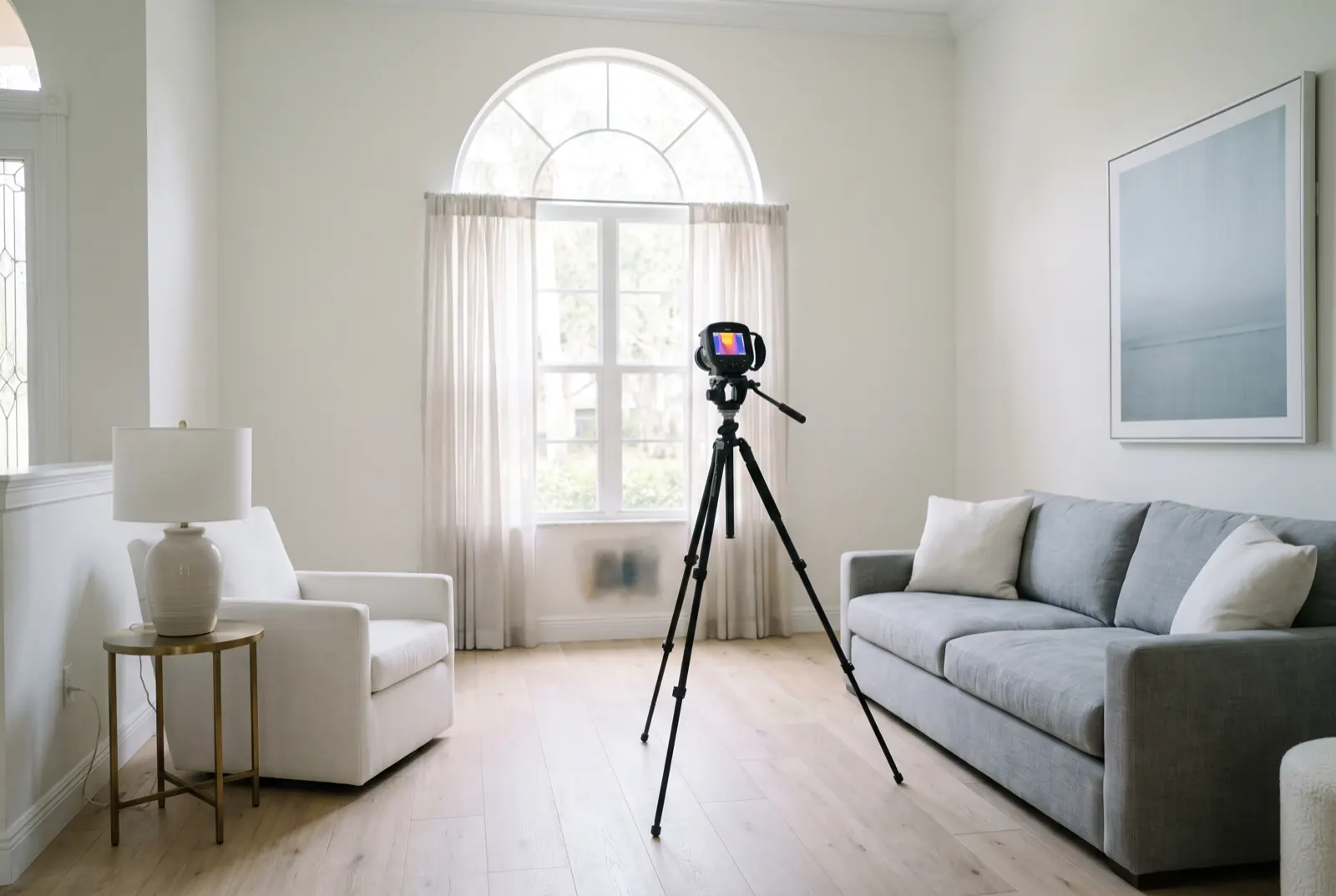
Ask what equipment they use. Moisture meters, a hygrometer, and thermal imaging are standard for finding the moisture that mold needs. Thermal imaging does not "see mold" — it reveals temperature differences that can indicate hidden moisture worth investigating.
Pin down the deliverable and turnaround
You should know before booking what you will receive: a written report with photos, readings, plain-language findings, and clear next steps — plus any lab results. Confirm the report turnaround. Sterling delivers reports within 24 hours, often the same day; laboratory results depend on the lab.
Finally, be wary of anyone who guarantees a home is "mold-free" or "completely safe." No honest inspection can certify that. What a good assessment gives you is documented conditions and an honest read on what to do next.
| What to verify | Why it matters |
|---|---|
| Active MRSA license (DBPR lookup) | Confirms a legitimate, current Florida mold assessor. |
| Independent of your remediator | No incentive to inflate scope to sell remediation. |
| GL + E&O insurance | Protects you if something is missed or damaged. |
| Clear sampling methodology | Samples answer a question rather than pad the bill. |
| Accredited lab + chain of custody | Results are defensible for transactions or claims. |
| Defined report turnaround | You know when you will have documented findings. |
Keep reading