Short answer
“Black mold” is not a scientific category — it is a colour description. Many unrelated mold genera appear black or dark green, and the organism people usually mean, Stachybotrys chartarum, cannot be identified by appearance alone. Colour does not reliably indicate species, and species alone does not determine how serious a situation is. What actually matters is the moisture source keeping materials wet, how far that moisture has spread, and how much material is affected. Health questions belong with a physician, not an inspector.
The term describes a colour, not an organism
There is no species called 'black mold.' The phrase is a colloquialism that usually refers to Stachybotrys chartarum, but many unrelated genera — including common Cladosporium — also present as black or very dark green.
You cannot identify a mold genus by looking at it. Laboratory analysis is what distinguishes one from another. Anyone who identifies 'black mold' by eye during a walk-through and quotes a price in the same breath is selling, not assessing.
Colour tells you almost nothing useful
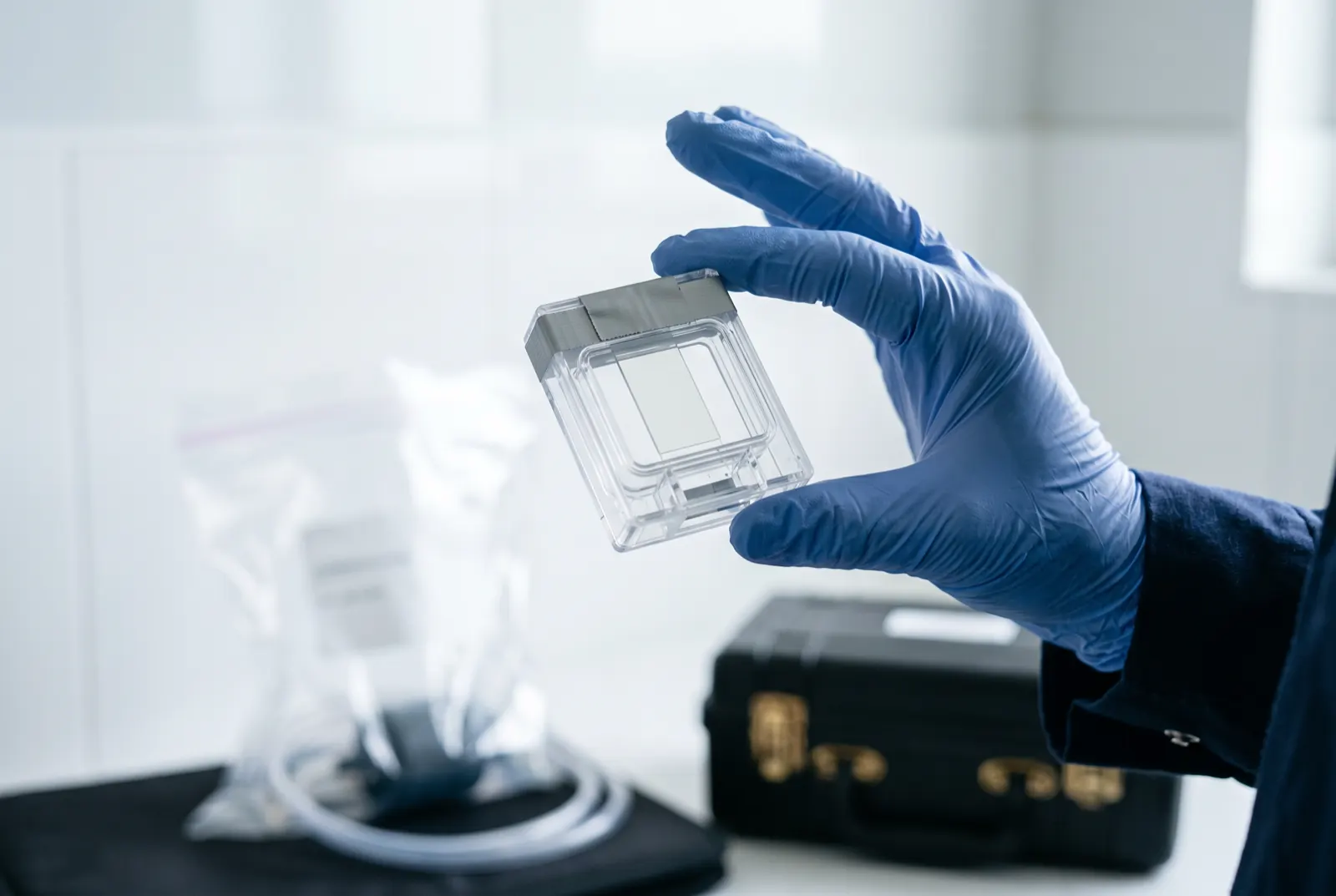
Dark staining on a surface may be active growth. It may equally be old growth that is no longer active, water staining, soot, or ordinary dirt. Determining which requires either lab analysis or, at minimum, an on-site test that measures biological activity rather than appearance.
This is why surface testing exists. Establishing whether a stain is biologically active changes what you do about it, and it is a far more useful question than what colour it is.
What actually determines how serious a situation is
Three things, none of which is colour. First, the moisture source: is something still actively wet, and what is feeding it? An organism on a wall is a symptom of water. Remove the water and the growth cannot persist; leave it and any remediation will fail.
Second, extent: how much material is affected and how far has moisture travelled through the assembly? A hand-sized patch on a surface and a saturated wall cavity are different projects with different costs.
Third, location relative to airflow. Growth inside or near an air-handling system is more consequential than the same growth in an isolated corner, because the system distributes air to every room it serves.
A competent assessment characterizes all three. A colour does not.
What we will and will not tell you about health
This is where most 'black mold' content goes wrong, and we are going to be direct about the boundary. Sterling documents building conditions — moisture, materials, spore data. We do not diagnose illness and we do not attribute symptoms to any building condition. That is not modesty; it is the limit of what a building professional is qualified to say.
Public health agencies including the CDC and EPA publish general guidance that damp indoor environments and mold exposure are associated with respiratory symptoms in some people, and that sensitivity varies considerably between individuals. That guidance is worth reading from the source rather than from a remediation company's landing page.
If someone in your home is unwell, the right professional is a physician. What an assessment contributes is objective information about the building so that conversation has facts in it. Any inspector who tells you what mold is doing to your body is overselling, and it is a reason to be more skeptical of everything else they tell you.
The myths worth retiring
'A home can be certified mold-free.' It cannot. Spores are present in essentially every building; the goal is normal conditions and no active growth, never sterility. Any certificate claiming otherwise is meaningless.
'Bleach kills mold, so the problem is solved.' Surface treatment addresses appearance on non-porous surfaces. It does not address moisture inside a wall cavity, and on porous materials it largely adds water. If the source is still wet, growth returns.
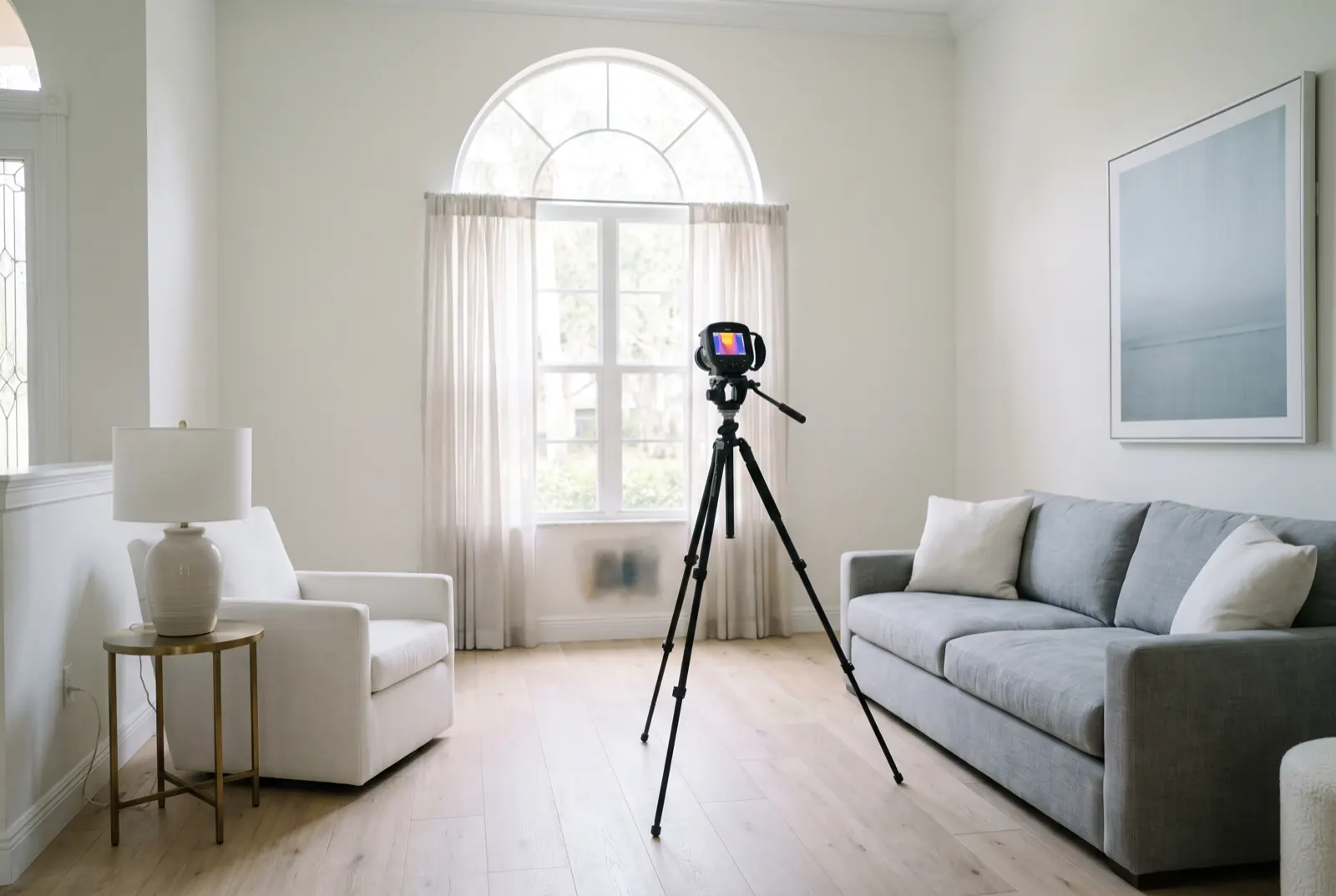
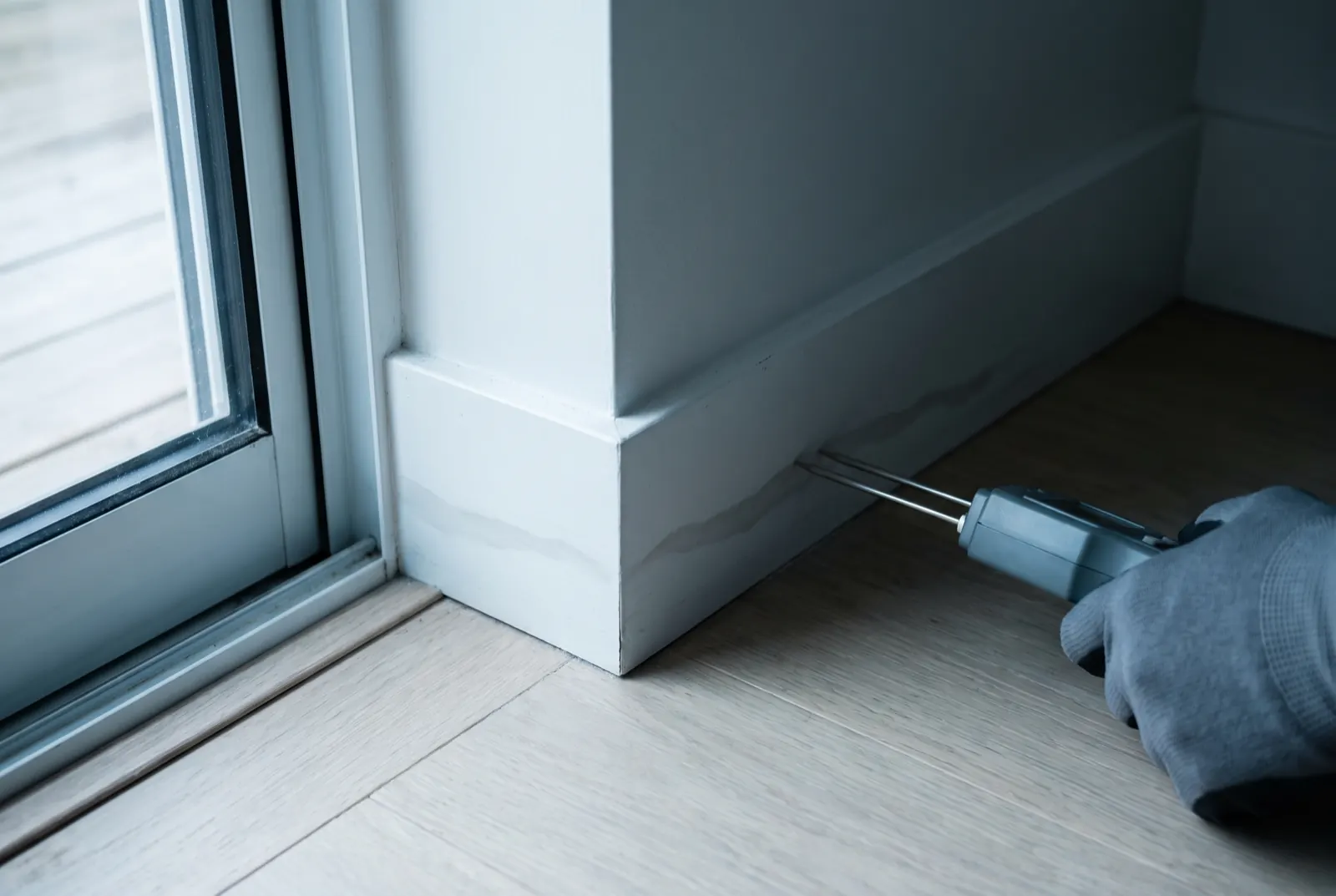
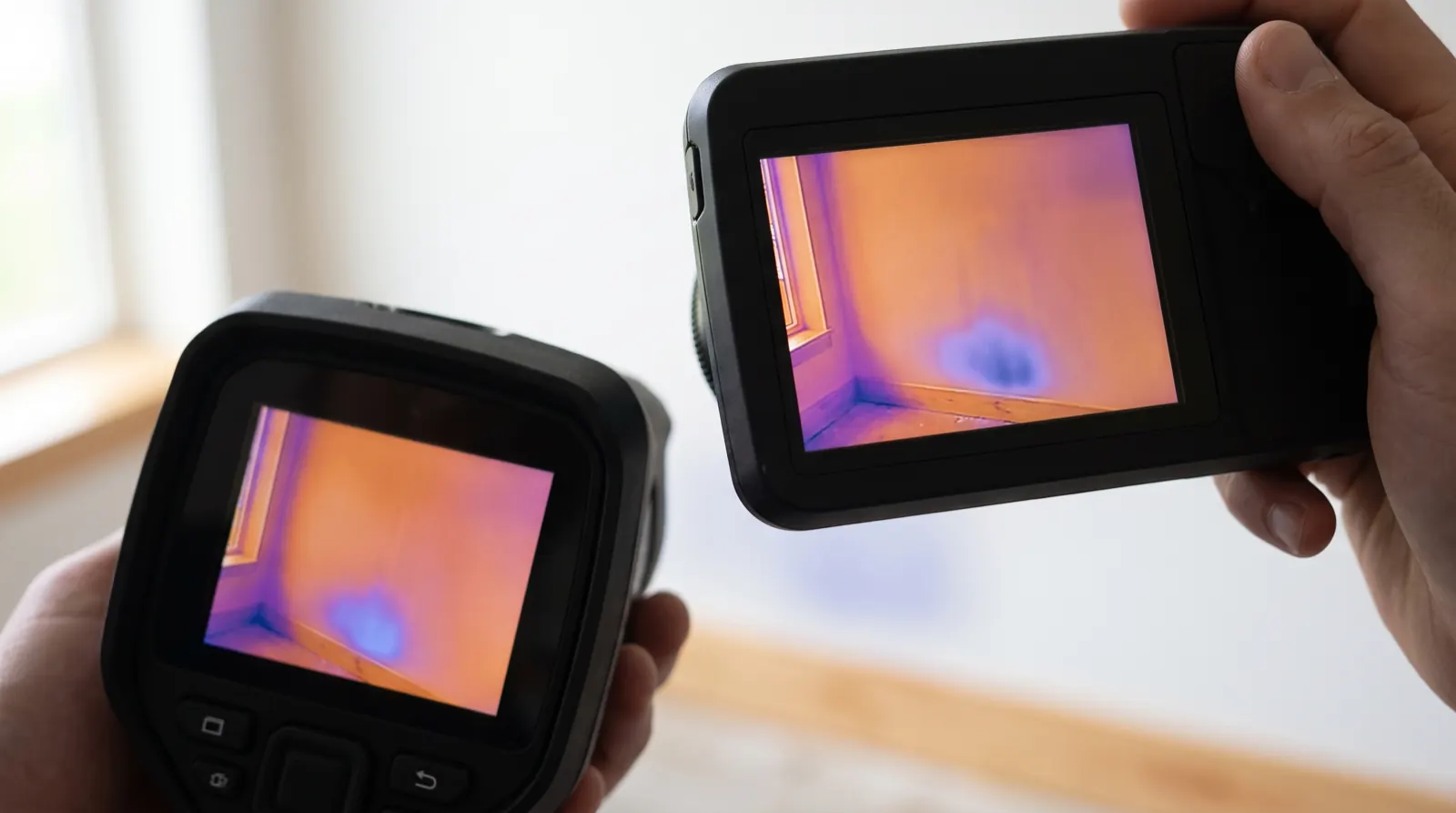
'If you cannot see it, you do not have it.' The majority of consequential findings are inside assemblies — behind cabinets, under flooring, above ceilings, inside wall cavities. That is precisely why thermal imaging and moisture metering are part of a real inspection.
'A home test kit will tell me if I have black mold.' A petri dish will grow something in nearly any building, because spores are everywhere. It cannot tell you the source, the extent, or whether levels are abnormal for your area.
What to do if you find something dark and are worried
Do not disturb it. Scrubbing, scraping, or running a fan at it can aerosolize spores and spread material to rooms that were previously unaffected. Leave it alone until someone has looked at it properly.
Photograph it, note when you first saw it, and look for the water. Check above and behind: a roof or plumbing leak, a failing window seal, an AC condensate line, or a supply line under a cabinet.
Then get an independent assessment before you get a remediation quote. Knowing the extent and the source before anyone prices a cleanup is what puts you in a position to evaluate whether the proposed scope is reasonable.