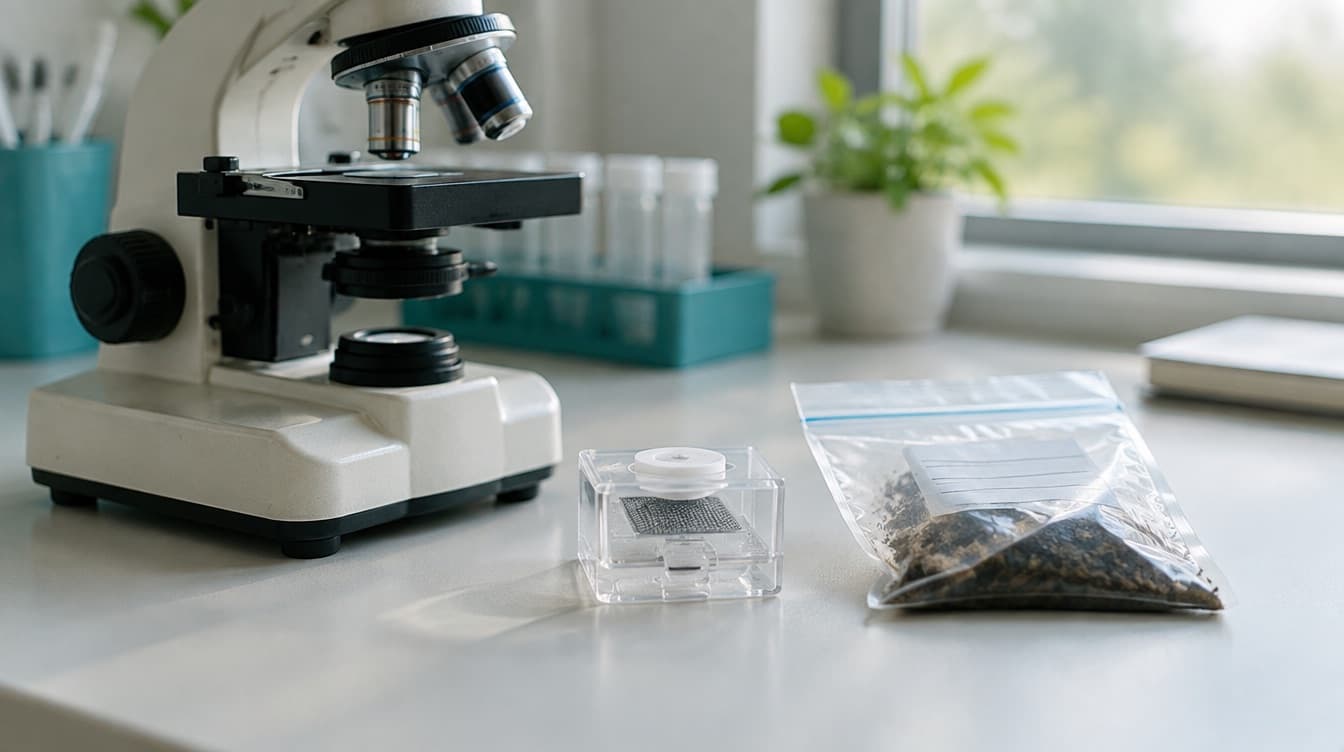
The most accurate way to test for mold depends on what you are asking. To identify what a visible growth is, a surface sample of the material itself analyzed by an accredited laboratory is the most accurate method. To learn whether the air in a room differs from normal, a spore trap air sample paired with an outdoor control from the same day is the standard. To find where mold is coming from, no lab test is accurate at all, and a moisture inspection with a meter and thermal imaging is the only method that answers it.
That framing matters because "accurate" gets used as though there is one test that tells you everything, and there is not. Every method answers one question well and the others poorly or not at all. Clients across the Treasure Coast and Palm Beach County send us lab reports from kits and from other companies and ask whether the result is accurate, and the honest reply is usually that the result is accurate for the question the method asks and irrelevant to the question the client actually has. This note goes through each method, what it measures, where it is reliable, where it misleads, and how to pick the right one for your situation. For the shorter comparison of the two lab methods, our note on air sampling versus surface sampling is the companion.
What is the most accurate way to identify visible mold?
A surface sample of the growth itself, collected as a swab or a tape lift and analyzed under a microscope by an accredited laboratory, is the most accurate way to determine what a visible growth is.
The method is direct. A sterile swab is rubbed across the growth, or a piece of clear tape is pressed onto it and lifted, and the sample goes to a laboratory in a sealed container with a chain of custody form. A microbiologist examines it under magnification and reports the genera present, their relative abundance, and whether the structures observed indicate actual growth on the surface rather than settled spores. That last distinction is one of the reasons a surface sample is so useful. Settled spores from outdoors can land on any surface and show up on a tape lift, but growth has recognizable structures, the threadlike hyphae and the spore producing bodies, that tell the analyst it was living there.
A surface sample is accurate for identity and it is usually the least expensive lab method, which is why it is the tool we reach for when a tenant needs to prove to a landlord that a species is present, when a buyer needs to document what the seller's disclosure did not, or when someone in the home is sensitive and the physician has asked what is growing. It answers "what is this" with a laboratory's authority.
It is not accurate for extent, for cause, or for air. A swab tells you what is on the square inch you swabbed and nothing about the wall cavity behind it, the room next door, or what is airborne. It also cannot tell live from dead, which for most purposes does not matter, because the question is whether growth occurred, not whether it is currently metabolizing.
What is the most accurate way to test the air for mold?
A spore trap air sample, drawn through a calibrated pump at a known volume and read in full by an accredited laboratory, compared against an outdoor control sample taken at the same property on the same day, is the standard method for characterizing airborne mold.
The mechanics are worth understanding because they define what the result means. A pump pulls air at a set rate, commonly around thirty liters a minute, through a small cassette for a set time, commonly five minutes, so that a known volume, around a hundred and fifty liters, passes through. Inside the cassette, airborne particles impact onto a sticky surface. The laboratory reads the entire trace under high magnification, identifies spores by genus or genus group, counts them, and converts the count to spores per cubic meter of air. The report also notes the debris level on a scale, because a sample loaded with dust is harder to read and its counts may be understated, and it notes the detection limit, which is the smallest concentration the sample volume can reliably show. Our answer on what air quality testing for mold is covers the method in more detail.
The comparison to the outdoor control is what makes the number meaningful, and it is the part that gets skipped by cheap testing. Outdoor spore counts on the Treasure Coast vary enormously with season, weather, and recent rain. An indoor count that would be alarming on a dry January morning is unremarkable on a wet August afternoon. The control sets the baseline for that property on that day, and the laboratory's conclusion for each indoor sample is drawn against it. Indoor air that looks like the outdoor air, dominated by the same common outdoor types at similar or lower levels, is the normal condition. Indoor air containing types the laboratory associates with water damaged buildings, or a common type at a much higher level than outdoors, points to an indoor source.
Accuracy for this method has three honest limits, and our field notes on when air sampling is actually useful and how to read your mold lab report go into each. The sample is a few minutes in one location, so it reflects that moment and that spot. Spores are released when material is disturbed or dried, so growth sealed inside a wall that is not releasing spores into the room at the time of sampling can be missed entirely. And the method is non viable, meaning it counts spores whether they are alive or dead, and it does not measure the chemical compounds that cause odor. A not elevated result in a house with a wet wall is a favorable data point about the air, not evidence that the wall is clean.
Done properly, with the control, with the air conditioning running normally, with nothing disturbed beforehand, and with one sample per air handler zone when the question is about the whole house, it is the most accurate picture of the air available. Done as a single indoor sample with no control by a technician who did not inspect the house, it is a number with no meaning.
What about other mold testing methods?
Culture methods, dust tests, DNA based tests, and home test kits each exist and each has a narrower use than their marketing suggests.
Culture sampling, where a sample is grown on a nutrient medium and the colonies are counted, was once common and is now used mainly when species level identification or viability specifically matters. It only grows what will grow on that medium under those conditions, which excludes some important genera, and it takes days to weeks. For most residential questions it is less useful than the spore trap and the surface sample.
Dust sampling, where settled dust is collected and analyzed, and DNA based methods that identify species from dust by their genetic material, produce detailed lists of what has settled in a home over time. They can be informative in specialized situations, particularly where a physician is working with a sensitive patient, but they describe accumulated history rather than current conditions, they are more expensive, and the results are harder to act on because they do not point to a location or a cause. We use them rarely and only for a specific reason.
Home test kits are the least accurate method in common use, and our guide to DIY mold test kits versus a professional assessment explains why in detail. The petri dish kits grow whatever lands on them, which in Florida is always something, and produce a positive result in essentially every home. The mail in swab kits are a surface sample without the inspection that tells you where to swab and without the chain of custody that makes the result usable with a third party. The air kits that use a dish rather than a pump have no calibrated volume and no outdoor control, so the result cannot be compared to anything.
None of those methods finds the water.
Why no lab test is accurate for finding the cause
Because every laboratory method describes what is present on a surface or in the air at one moment, and none of them measures moisture, which is the only thing that determines whether mold grows and the only thing that can be fixed.
This is the point people find hardest to accept, so it is worth stating plainly. The most accurate mold test in the world will tell you that a water damage indicator genus is present on the wall of your primary closet. It will not tell you that the wall is cold because it faces west, that the house has been running at sixty two percent humidity all summer because the air conditioner is oversized and shuts off before it dehumidifies, and that the closet has no airflow because the door is always shut and the clothes are pressed against the wall. That second set of facts is the finding, and it comes from a moisture meter, a thermal camera, a hygrometer, and an inspector who knows what a Florida house does. Our guide to where mold hides and the signs of hidden moisture explains the readings and clues that actually answer the cause question.
That is why an accurate answer to a mold question almost always starts with an inspection and adds a laboratory method only when a specific question remains. The inspection locates the moisture and, very often, explains the growth. A surface sample is added when the identity of the growth changes a decision. An air sample is added when the odor has no located source, when a physician or a third party needs a documented result, or when a baseline is needed before remediation. The laboratory result is then read against what the inspection found, which is the interpretation step that a lab report on its own never provides.
How to get the most accurate result for your situation
Start with the question. If you need to know what a visible growth is, ask for a surface sample of it, do not clean it first, and make sure the sample travels under a chain of custody to an accredited laboratory. If you need to know whether the air in your house is different from normal, ask for spore trap air samples with an outdoor control from the same day, one per air handler zone, taken with the system running normally and nothing disturbed beforehand. If you need to know where mold is coming from, ask for a moisture inspection, and treat any lab sampling as secondary.
Then choose who does it by the same logic. Florida licenses mold assessors and mold remediators separately and its statute prohibits an assessor from remediating a property they assessed within the previous twelve months and bans referral fees between the two, which the Florida mold law page quotes in full. A licensed independent assessor with no stake in the size of the finding is the person whose sampling decision and interpretation you can rely on, because the report is allowed to say the air is fine and the growth is a bathroom fan.
Sterling's assessor has personally completed more than three hundred inspections since January 2026 across the Treasure Coast and Palm Beach County, and the sampling on every one of them was chosen by the question rather than by the package. The pricing page shows how the inspection and each sample type are priced separately, the what you receive page lists the chain of custody, lab result, and written interpretation that come with any sampling, and you can request a quote and tell us what you need to know. We will tell you which method answers it and whether you need a lab at all.
Frequently asked questions
What is the most accurate mold test?
There is no single most accurate test, because each method answers a different question. A surface sample analyzed by an accredited laboratory is the most accurate way to identify visible growth. A spore trap air sample paired with an outdoor control from the same day is the standard method for characterizing airborne mold. Neither method locates the moisture source, which requires an inspection with a moisture meter and thermal imaging.
Are air tests or surface tests more accurate for mold?
They measure different things. A surface sample is more accurate for identifying what a specific visible growth is and for confirming that growth rather than settled spores is present on that spot. An air sample is the only method that characterizes what is airborne in a room, and it is accurate only when paired with an outdoor control sample and interpreted against what an inspection found in the house. Choosing between them depends on whether the question is about a surface or about the air.
Are home mold test kits accurate?
Not for any decision that matters. Petri dish kits grow whatever lands on them and produce a positive result in essentially every Florida home. Mail in swab kits identify what is on the swab but lack the inspection that shows where to sample and the chain of custody that makes the result usable with a landlord, seller, or insurer. Passive air kits have no calibrated volume and no outdoor control, so the result cannot be compared to anything.