Short answer
Mold usually looks fuzzy, velvety, or spotty, grows in clusters that spread, and shows up where something stays damp. Dirt and dust wipe off evenly, water stains are flat rings, and efflorescence is a white mineral crust. A musty smell and a nearby moisture source make mold more likely, and a tape-lift sample read by a lab confirms it.
Updated September 27, 2026
What does mold look like on walls and ceilings?
Mold usually has texture. It looks fuzzy, velvety, powdery, or slimy, and it grows as spots that cluster and spread outward, often thickest in the middle. It can be black, green, gray, white, brown, or pink, so color alone doesn't tell you much.
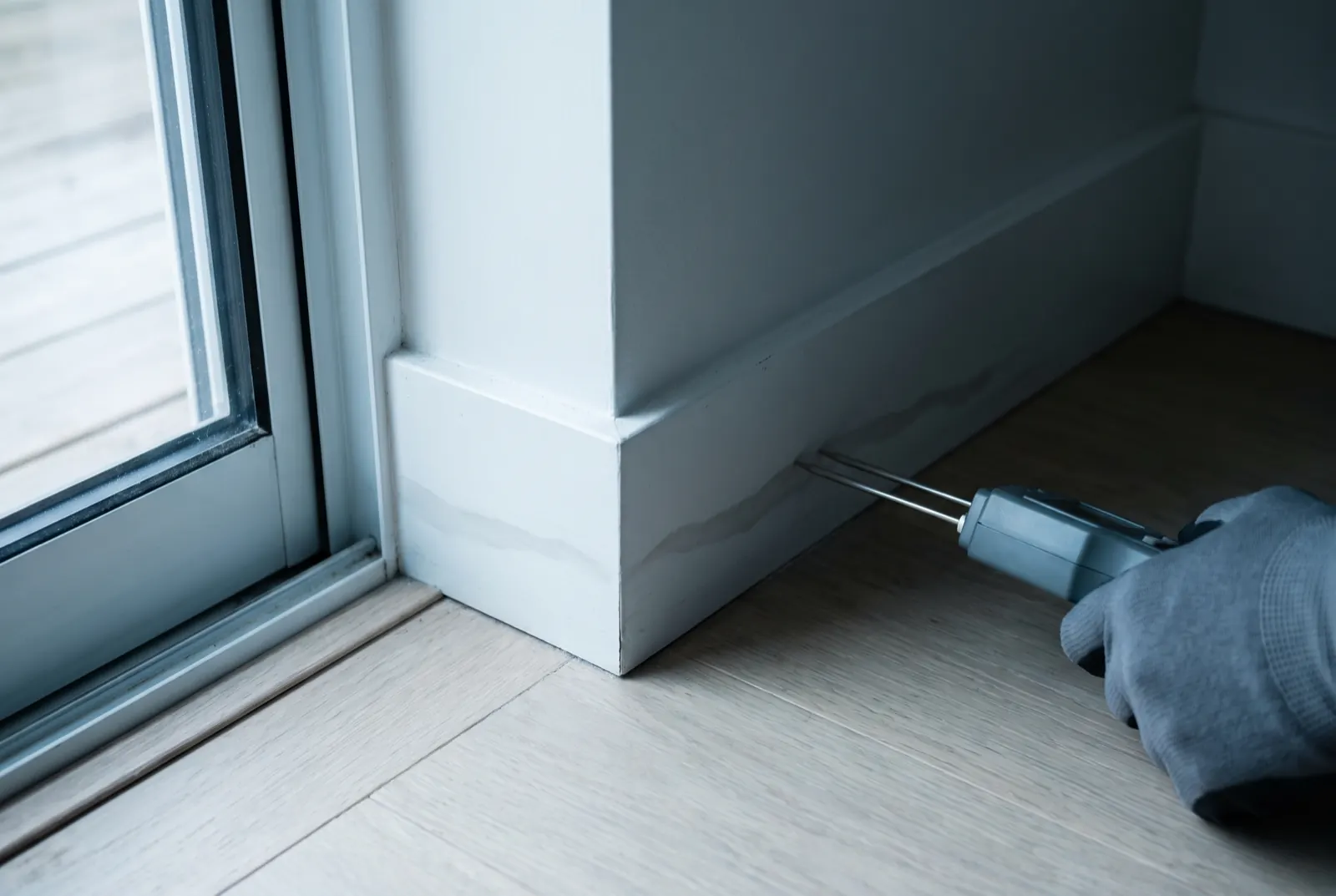
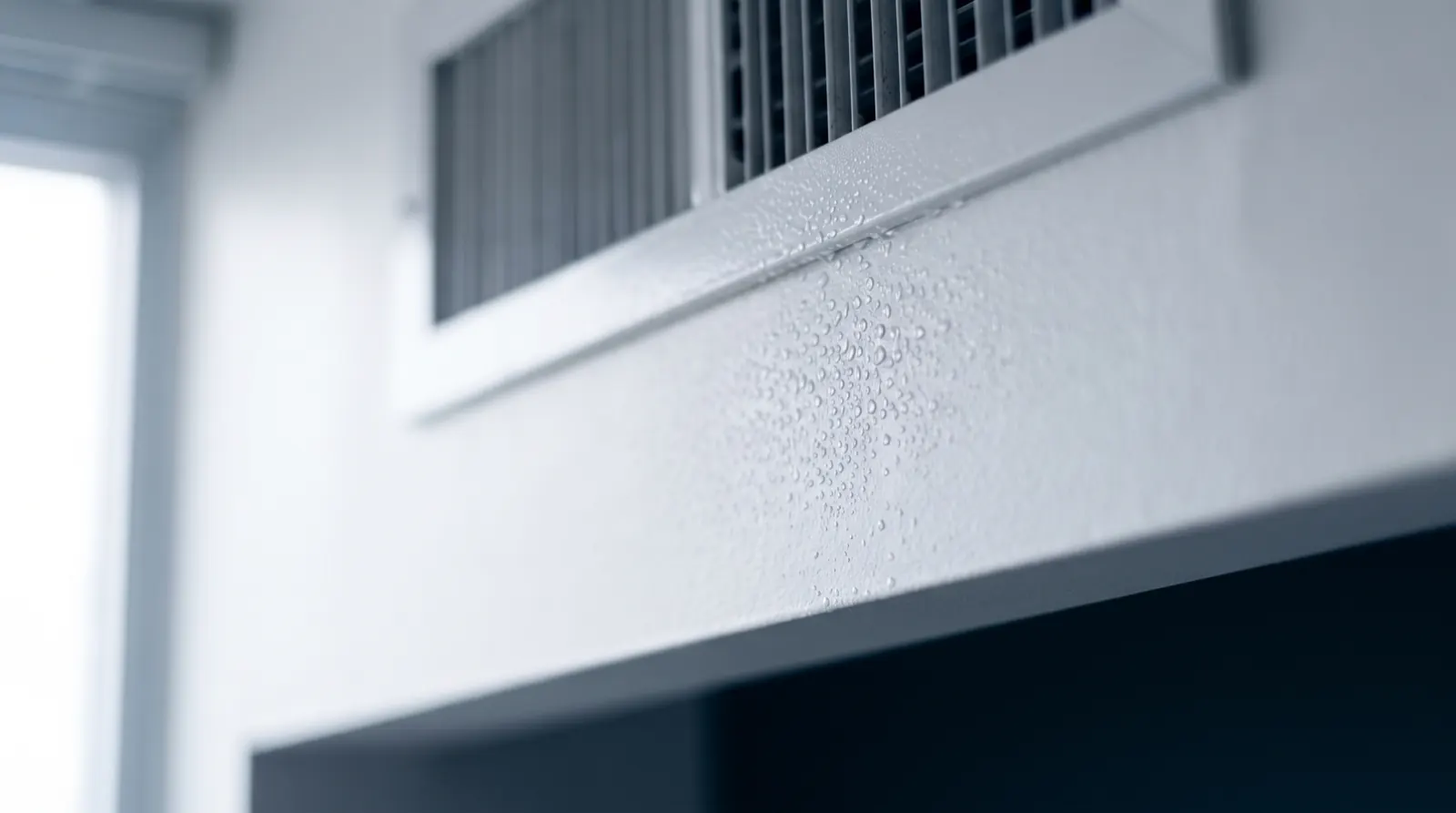
Where it grows is the bigger clue. Mold needs moisture, so in Florida homes it shows up on bathroom ceilings, around AC supply vents, behind furniture pushed against exterior walls, inside closets on exterior walls, under sinks, and along baseboards near a slow leak. Growth that comes back in the same spot after cleaning points to moisture that's still there.
Is it mold or dirt?
Dust and dirt usually lie as an even film. They're heaviest on surfaces that face the airflow, like the edges of a vent, and they wipe off cleanly with a damp cloth without leaving a stain. Mold tends to form separate spots, often leaves a stain when wiped, and comes back.
Dark lines that follow the studs or ceiling joists, or streaks around vents and along the tops of walls, are often dust or soot collecting on colder surfaces, sometimes called ghosting. They run in straight lines that match the framing, which mold rarely does.
Is it mold or a water stain?
A water stain is flat. It's usually a tan or brown ring with a darker tide-mark edge where the water spread and dried, and it's part of the surface rather than sitting on it. Mold has texture and can grow out of a stain if the material stays wet.
A stain that keeps growing, changes shape after rain, or comes with a musty smell means the leak may still be active. The EPA's advice applies either way: "It is important to dry water-damaged areas and items within 24-48 hours to prevent mold growth."
Is it mold or efflorescence?
White, chalky, or crystalline deposits on concrete block, stucco, or the edge of a slab are often efflorescence: minerals left behind as water moves through masonry and evaporates. It crumbles to a powder and never gets fuzzy. It isn't mold, but it does mean water is moving through that wall, which is worth tracing, especially behind baseboards on exterior walls.
Can you tell mold from a photo?
A photo can suggest mold, but it can't confirm it or show what's behind the surface. A lot of "is this mold?" questions online come with a picture, and the honest answer is usually "probably, and the water behind it matters more."
If it looks like mold and there's a moisture source nearby, treat it as mold: fix the moisture and clean or remove it. The EPA notes: "In most cases, if visible mold growth is present, sampling is unnecessary." When you need to be sure, for a sale, a landlord, an insurance claim, or a health question you're taking to your doctor, a licensed mold assessor can take a tape-lift sample for a lab to identify.
What to do next
For a small patch on a hard surface, find the moisture, then clean it. The EPA's guidance is that an area under about 10 square feet can usually be handled yourself. For anything larger, anything that keeps coming back, or a musty smell with no visible source, get it inspected.
Sterling's inspections trace the moisture first and sample only when a result answers a real question, with tape lifts analyzed by an accredited third-party lab. If we inspect your home, we can't be the ones who remediate it. Florida law bars it for 12 months.
| What you see | What it usually is |
|---|---|
| Fuzzy, velvety, or spotty patches that spread | Mold, especially near a moisture source |
| An even gray film that wipes off cleanly | Dust or dirt |
| Dark straight lines along studs or joists | Dust or soot on colder surfaces (ghosting) |
| A flat tan or brown ring with a darker edge | A water stain from a past or active leak |
| White crust on concrete, block, or stucco | Efflorescence: minerals left by moving water |
When the answer matters, a tape-lift sample read by a lab settles it.