Short answer
Mildew is a common name for a flat, surface-level mold growth — often powdery and white, gray, or yellow — that sits on top of a material. "Mold" is the broader term for fungi that can also grow into a material. Both need moisture, and both are corrected the same way: fix the water source and clean or remove affected material.
Updated July 24, 2026
Mildew is a kind of mold
In everyday use, "mildew" usually refers to a flat, surface-level growth — the powdery or downy film you see on a shower wall, windowsill, or damp fabric. It tends to be white, gray, or yellowish and sits on the surface.
"Mold" is the broader category. What people call mold often appears fuzzy or raised, in a wider range of colors, and can penetrate into porous materials like drywall, wood, and insulation rather than just resting on top.
Why the distinction is less useful than it sounds
The mildew-versus-mold line is fuzzy and not a scientific classification. More important than the label is the same underlying fact: both are fungal growth, and both require moisture. Trying to decide whether a patch is "just mildew" can distract from the question that matters — why is that surface wet.
Both are corrected the same way
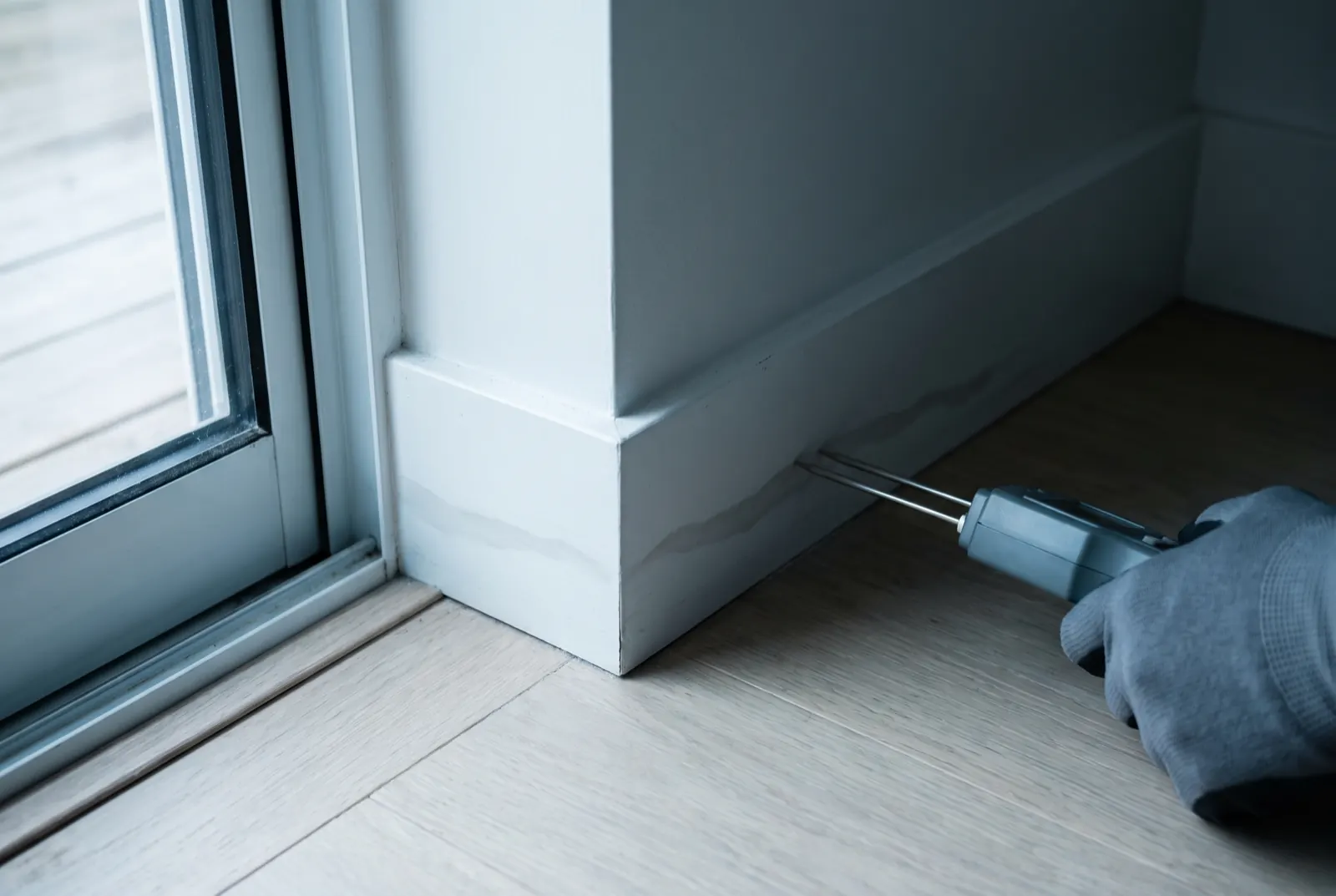
Surface growth on a hard, non-porous surface can often be cleaned. But if growth keeps coming back, or if it has moved into a porous material, cleaning the surface will not solve it. The durable fix is the same for both: find and correct the moisture source, then clean or remove affected materials.
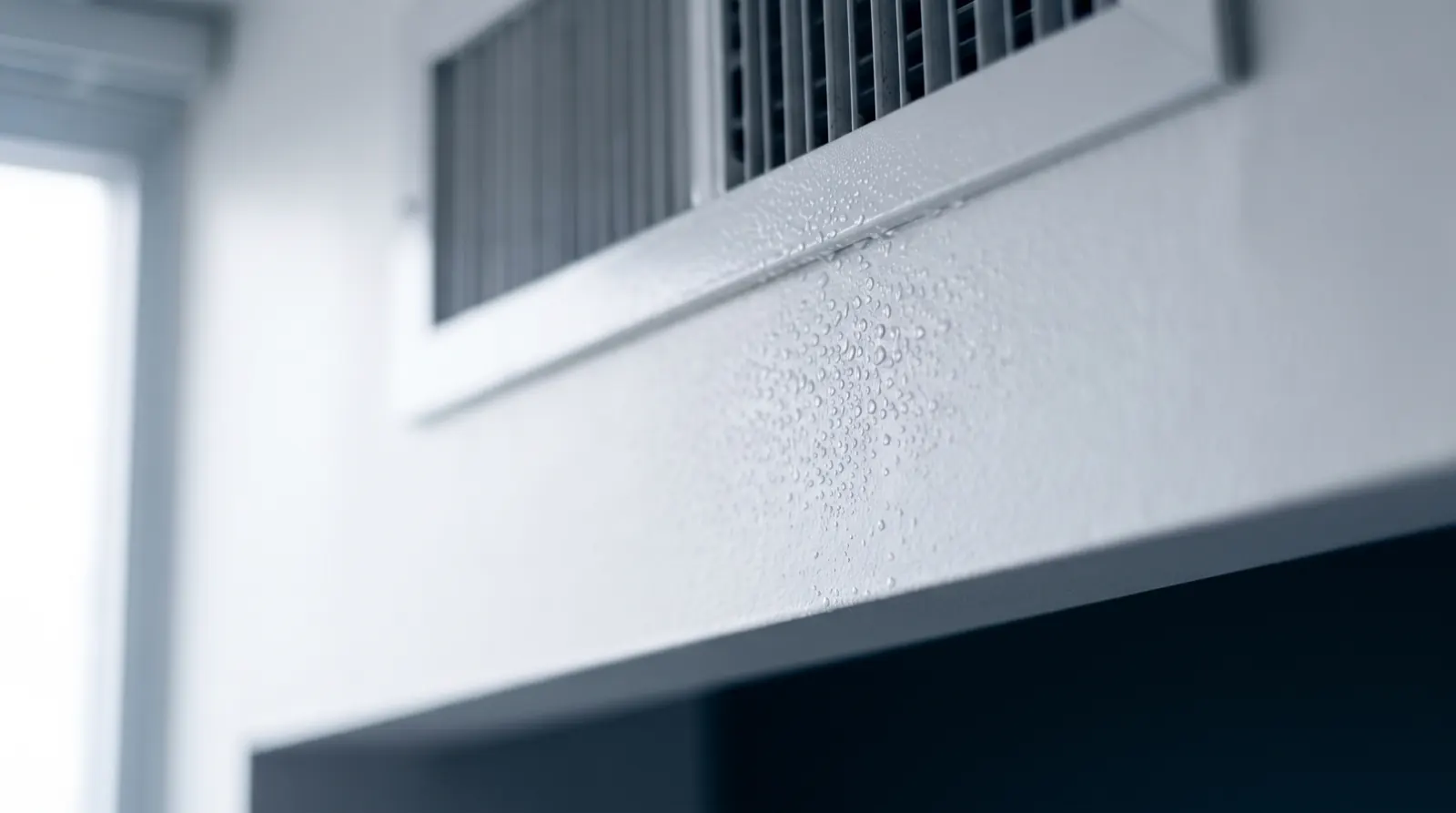
Persistent "mildew" in a bathroom or on a wall is frequently a sign of a humidity or ventilation problem — or hidden moisture — worth investigating rather than repeatedly wiping away.
When to look closer
If growth recurs, spreads, comes with a musty odor, or appears alongside staining or a known leak, it is worth a proper look. A moisture-focused inspection can tell you whether you are dealing with a simple surface issue or a wetted material behind the finish.